Diverse opinions emerge over E10 fuel
The Ministry of Industry and Trade said that the use of biofuels has become a global trend adopted by many countries to reduce emissions, diversify energy supplies, and lessen dependence on fossil fuels.
Associate Professor Dr. Dam Hoang Phuc from the School of Mechanical Engineering at Hanoi University of Science and Technology noted that E10 gasoline has been used for years in countries such as the United States, Brazil and Thailand. Most modern vehicles can use E10 fuel without requiring engine modifications, he said.
Similarly, Associate Professor Dr. Pham Huu Tuyen of Hanoi University of Science and Technology said ethanol blended at a 10 percent ratio improves combustion efficiency, reduces harmful emissions, and poses no significant risk to engines provided the fuel meets quality standards and vehicles are properly maintained.
The Ministry of Industry and Trade affirmed that more than 90 percent of vehicles currently operating in Vietnam are compatible with E10 gasoline. Deputy Minister Nguyen Sinh Nhat Tan said that authorities have so far received no official complaints indicating that E10 fuel causes engine damage.
Mr. Dao Duy Anh, Deputy Director General of the Department of Green Transition, Innovation and Industrial Promotion under the Ministry of Industry and Trade, said that most of the current debate stems from public concerns about changing fuel types rather than verified technical evidence showing widespread impacts on vehicles.
Despite these assurances, many consumers on social media platforms and automotive forums continue to express caution.
Mr. Nguyen Quoc Anh from Ho Chi Minh City said that after testing about two liters of E10 gasoline, his motorbike showed signs of sluggish performance and stalled twice while waiting at traffic lights. Through online discussions, he also learned that some users reported engine overheating, higher fuel consumption, or sudden stalling after using E10.
To help authorities promptly receive consumer feedback, several experts have proposed that the Ministry of Industry and Trade or the Ministry of Construction publish lists of vehicle models recommended for E10 use, establish an independent technical feedback system, and closely monitor market reactions during the early stages of implementation.
In the capital city of Hanoi, a resident said that his vehicle felt more responsive after switching to E10, but fuel consumption appeared noticeably higher.
Although E10 is currently cheaper than RON95 gasoline, fuel consumption is around 8-14 percent higher because ethanol has lower energy content than mineral gasoline, so overall operating costs may actually increase, he said.
Social media discussions have highlighted concerns that older vehicles, especially those built before 2010 or not regularly operated, may experience reduced performance, overheating, or higher fuel consumption with E10 gasoline. Users of agricultural and small-engine equipment also worry that improper storage could allow ethanol to affect fuel systems through moisture absorption.
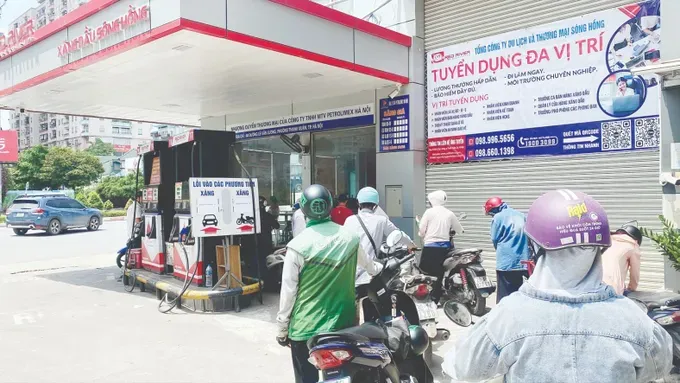
Phased approach suggested for nationwide E10 fuel rollout
At present, concerns surrounding E10 remain largely anecdotal and circulated through social media platforms. No verified technical conclusions or government statistics have shown that the fuel causes widespread damage to vehicles.
Many experts believe the key issue is not whether E10 should be used, but how the transition is implemented in a way that builds public consensus.
According to Associate Professor Dr. Nguyen Thuong Lang from the Institute of International Trade and Economics at the National Economics University, consumers will only voluntarily switch to E10 if there is a sufficiently attractive price difference compared to conventional gasoline. If E10 prices are not significantly lower, consumers will have little motivation to change their habits, he said.
Many consumers in Hanoi and Ho Chi Minh City have proposed maintaining both E10 and conventional gasoline during the initial transition period rather than implementing a rapid shift.
Meanwhile, Mr. Do Van Tuan, Chairman of the Vietnam Biofuels Association, advised consumers not to mix additional additives into E10 fuel or use fuels from unclear sources.
Addressing public concerns, Deputy Minister Nguyen Sinh Nhat Tan said that the Ministry of Industry and Trade will continue distributing E5RON92 gasoline alongside E10 until at least 2030.
The ministry also emphasized that the transition is an unavoidable trend to fulfill Vietnam’s Net Zero commitment. However, officials stressed that the roadmap is not intended as an immediate forced replacement, but rather as a gradual transition allowing both the market and consumers time to adapt.
The ministry will closely monitor market reactions once nationwide implementation begins on June 1. If verified technical problems arise, authorities will work closely with vehicle manufacturers to provide timely guidance and appropriate solutions.