The decree also introduces policies governing part-time personnel working at the grassroots level, aiming to strengthen local administration and community management.
SGGP Newspaper introduces the latest regulations governing the organization and operation of villages and residential groups.
Decree 185 grants communes flexibility in naming
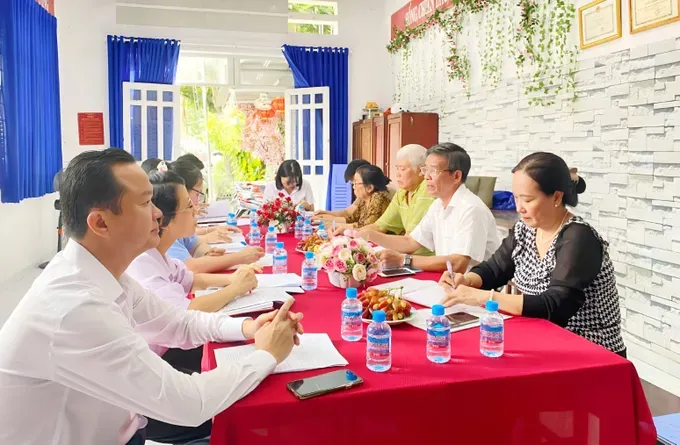
Decree 185 reaffirms that villages and residential groups are self-governing community organizations established in communes. At the same time, the decree allows local authorities greater flexibility in organizing and naming residential communities in accordance with local realities, instead of applying a rigid and uniform model across regions.
Accordingly, in areas with distinctive historical, cultural, ethnic, customary or urbanization characteristics, authorities in communes may decide to retain or use traditional names such as ban/ buon/ lang (village), soc (hamlet), khu pho (residential neighborhood) or residential group, based on the wishes and characteristics of local communities.
The regulation reflects respect for cultural identity, community self-governance and the right of local residents to choose organizational models and names closely tied to their traditions and daily life.
Decree 185 establishes principles for organization and operations aimed at streamlining and improving efficiency, while emphasizing the central role of residents in community life through direct grassroots democracy. Notably, the decree takes initial steps toward more clearly distinguishing between community self-governance activities and activities coordinated with or supporting authorities in communes, thereby limiting the trend toward excessive administrative control over villages and residential groups.
The decree also provides detailed regulations on the organization of villages and residential groups; the duties and authority of village heads and residential-group leaders; and qualification standards for these positions. Provincial people’s councils are authorized to determine the arrangement of personnel participating in activities at the village and residential-group levels based on local requirements, geographic conditions and budget capacity, either to support village heads and residential-group leaders or to carry out community self-governance activities.
Decree 185 strengthens community self-governance, respects local traditions
Regarding the establishment, reorganization, dissolution, naming and renaming of villages and residential groups, Decree 185 clearly defines principles and household-size standards for different regions.
In Hanoi and Ho Chi Minh City, a village must have at least 500 households, while a residential group must have at least 700 households. In the Northern midland and mountainous region, villages must have at least 150 households and residential groups at least 300 households.
In the Red River Delta, villages must have at least 400 households and residential groups at least 550 households. In the North Central region, villages must have at least 350 households and residential groups at least 450 households.
In the South Central Coast and Central Highlands regions, villages must have at least 300 households and residential groups at least 450 households. In the Southeast region, villages must have at least 400 households and residential groups at least 550 households.
In the Mekong Delta, villages must also have at least 400 households and residential groups at least 550 households.
Higher allowance allocations
Decree 185 establishes uniform rules for part-time positions at the village and residential-group level. The three roles are Party cell secretaries, village heads or residential group leader, and heads of the front working committee. The decree also adjusts state-budget allowances to match local conditions.
Villages and residential groups with special characteristics will see allocations rise from six to eight times the base salary. In all other areas, the allowance increases from 4.5 to 6.5 times the base salary.
In addition, the decree introduces regulations on training, professional development, social insurance, health insurance and policies for personnel affected by the reorganization of villages and residential groups, aiming to ensure organizational stability and protect the rights of these workers during implementation.
Earlier, on May 20, 2026, Deputy Prime Minister Pham Thi Thanh Tra signed Directive 21/CT-TTg issued by the Prime Minister on the reorganization of villages and residential groups, as well as the arrangement, utilization, policies and benefits for part-time personnel in administrations in communes, villages and residential groups.
Under the directive, provincial and municipal people’s committees are required to urgently review all villages and residential groups in their jurisdictions and develop comprehensive restructuring plans for submission to Party committees before issuance, with completion required before June 10, 2026.
People’s committees in communes are instructed to formulate restructuring proposals, organize public consultations in accordance with legal regulations, and submit proposals to people’s councils in communes for approval in a transparent manner that ensures public consensus during implementation. The process must be completed before June 30, 2026.