Toward the adoption of a “living wage" concept
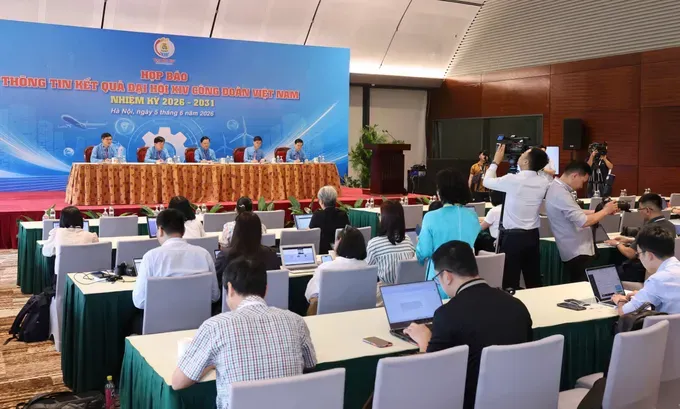
Responding to questions from reporters of Sai Gon Giai Phong (SGGP) Newspaper and several other press agencies, Mr. Ngo Duy Hieu, Vice President of the Vietnam General Confederation of Labour, elaborated on several proposals and policies concerning a living wage, adjustments to regional minimum wages, additional public holidays, reduced working hours, and mental health care for workers.
According to Mr. Ngo Duy Hieu, Vietnam’s current legal framework only provides for a minimum wage and does not yet recognize the concept of a “living wage.” While the minimum wage is intended to ensure a minimum standard of living for workers, a living wage has a broader scope, covering essential needs such as adequate nutrition, housing, healthcare, education, and other basic living conditions.

The Vice President of the Vietnam General Confederation of Labour (VGCL) said that the trade union organization is studying and consulting international standards as a basis for gradually proposing the incorporation of the living wage concept into Vietnam’s policy framework in the coming years.
Regarding regional minimum wages, Mr. Ngo Duy Hieu noted that there are currently neighboring localities classified under different wage zones, resulting in disparities in the applicable minimum wage levels, even though residents share the same infrastructure and access the same markets and supermarkets.
On this issue, the Vietnam General Confederation of Labour (VGCL) has regularly provided input and recommendations during the process of reviewing and adjusting regional minimum wage policies.
Paying attention to workers’ mental health

Explaining the Vietnam General Confederation of Labour’s proposal to increase the number of public holidays, specifically in relation to the National Day holiday on September 2, Mr. Ngo Duy Hieu said that the Vietnam General Confederation of Labour (VGCL) has repeatedly put forward this recommendation.
According to Mr. Ngo Duy Hieu, the number of public holidays in Vietnam remains lower than the average in many countries across the region, indicating that there is still room for further study and consideration of additional holidays. The proposal to increase the number of public holidays would not only help workers recover and restore their productivity but also provide more time for family care while stimulating consumer spending, tourism, and service-sector activities.
One proposal put forward by the trade union organization is to add an extra day off in connection with the National Day holiday on September 2. Mr. Ngo Duy Hieu noted that, through trade union activities, many workers have expressed a desire to accompany their children to school on the opening day of the new academic year. “It is a simple wish, yet a deeply meaningful and humane one,” Mr. Ngo Duy Hieu said.

A representative of the Vietnam General Confederation of Labour noted that the proposal to increase public holidays is one of the measures aimed at addressing occupational burnout. This issue has attracted growing attention from international organizations, particularly in the context of employees working long hours, having limited time for rest, or facing significant workplace pressures.
Mr. Ngo Duy Hieu also recommended that revisions to the Labour Code and the Law on Occupational Safety and Health should include more specific provisions on the prevention of occupational burnout. In this regard, increasing rest periods and reducing working hours are among the most direct measures to help mitigate burnout and protect workers’ well-being.
The Vice President of the Vietnam General Confederation of Labour (VGCL) emphasized that, alongside efforts to improve income and working conditions, greater attention should be paid to workers’ mental health.
According to surveys conducted through trade union activities, a considerable number of workers are facing issues such as depression, chronic insomnia, anxiety, and a decline in work motivation. These factors have a direct impact on both labor productivity and overall quality of life.