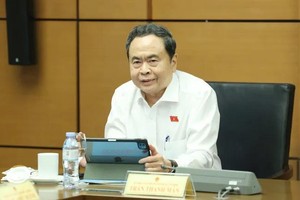
On October 20, the Dong Thap Provincial Party Committee held a conference to review the implementation of Politburo Resolution No. 16-NQ/TW on socio-economic development in mainland border communes in tandem with strengthening and consolidating national defense, security, and external relations.
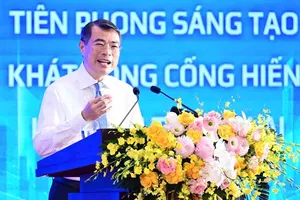
In his concluding remarks, Dong Thap Provincial Party Committee Secretary Ngo Chi Cuong emphasized that, despite the results achieved, border trade and border-gate economic activities had yet to fully realize their role as growth drivers. Investment attraction remained limited, while the capacity to generate local employment was still low. Investment programs and resources remained fragmented in some areas, with no strategic investors secured and no sufficiently large projects launched to create a breakthrough.
To address these challenges, Dong Thap has identified transport infrastructure, border gates, logistics, and key urban areas as priority investment areas. The province will strengthen connectivity within the province, across regions, and between countries; develop border trade, border-gate economies, services, and border tourism in a modern and civilized manner; promote cooperation with Cambodian localities and businesses; and help enterprises overcome difficulties and facilitate formal import and export activities.
On the same day, the Tay Ninh Provincial People's Committee held a workshop on a project to develop the province's border economy while ensuring national defense and security through 2035, with a vision to 2050.
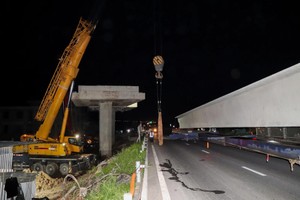
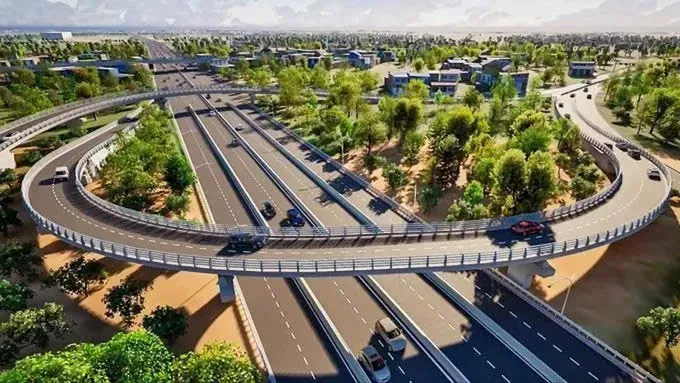
At the workshop, provincial leaders said that to address transport infrastructure bottlenecks hampering cross-border economic development, Tay Ninh needed to accelerate key projects, including the Ho Chi Minh City–Moc Bai Expressway, Ho Chi Minh City Ring Road 4, the Long An–Tan Ninh road, and the Go Dau–Xa Mat Expressway. The province also plans to upgrade and expand national highways 22 and 62 and develop inland waterway transport.
Once completed, the multimodal transport network is expected to improve connectivity between border gates, Ho Chi Minh City, industrial parks, and seaports; shorten transportation times and provide fresh impetus for border economic development.