The general master plan sets out a strategic roadmap to transform the municipality into an internationally attractive, multi-polar eco-coastal city and a major growth driver for the country.
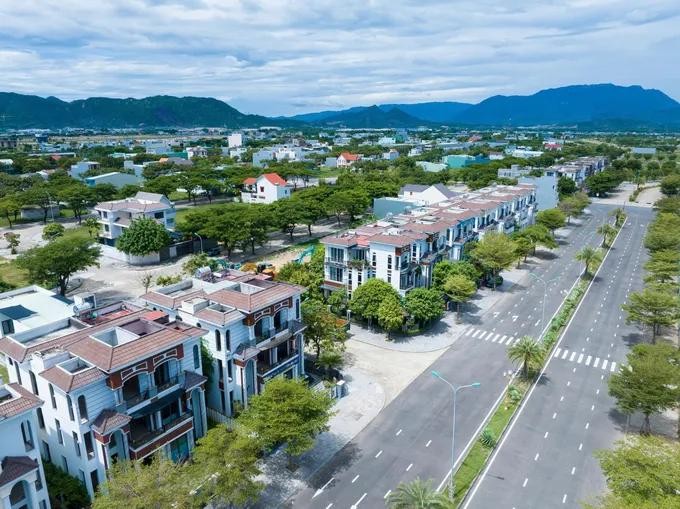
The decision opens a strategic turning point, shaping a comprehensive development space for Da Nang City to become an important growth pole for the nation and the region.
According to the decision, the planning scope covers the entire administrative boundary of Da Nang City (including Hoang Sa Special Zone) and the maritime space under its management authority, with a total natural area of approximately 11,870.34 square kilometers.
The goal by 2050 is to build Da Nang into a smart, livable, and internationally attractive eco-coastal city. The city will serve as an important national growth pole, as well as a national and regional center for startups, innovation, logistics, marine economy, free trade, finance, science and technology, and tourism and heritage. Looking ahead to 2075, Da Nang aims to become a globally connected eco-coastal city, ranking among Asia's leading culturally rich urban areas while gradually meeting the criteria of a special urban area.
Da Nang's population scale is projected to reach approximately 5.5 million people by 2040 and rise to over 6.5 million people by 2050, including a permanent population of about 5.4 million people. The tourism sector is expected to welcome 130 to 135 million stay-over visitors by 2050.
The master plan establishes a multi-polar, multi-center, multi-tiered, and multi-layered urban chain model. Among them, the three development poles include the Northern pole (existing expanded Da Nang urban area, Dien Ban, Hoi An, and land reclamation urban areas) focusing on services, finance, tourism, and high technology; the Southern pole (Chu Lai, Tam Ky, Nui Thanh) focusing on industry, energy, logistics, and innovation; and the South Hoi An linkage pole (Duy Xuyen, Thang Binh, Que Son) developing new urban areas, tourism, and trade.
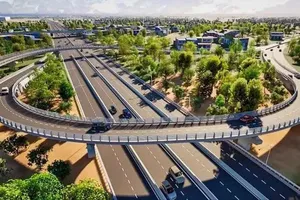
Notably, the city's urban space will be expanded through land reclamation projects totaling approximately 2,050 hectares in the Da Nang Bay area, Lien Chieu Port, and south of Son Tra Peninsula to create new growth poles. At the same time, the plan outlines the development of an International Financial Center (IFC) covering about 300 to 320 hectares, a Free Trade Zone (FTZ) across seven strategic locations, alongside an urban rail system (Metro/LRT) and high-speed railway.