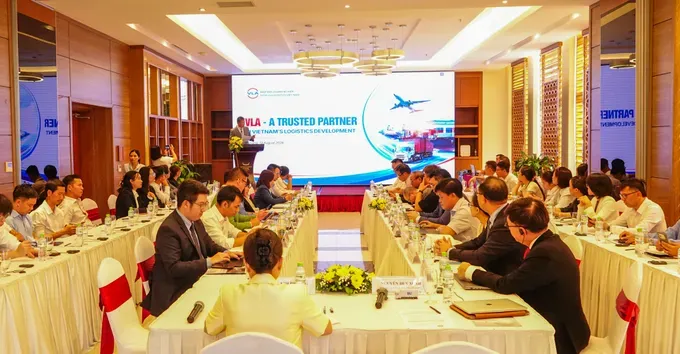
The issue was highlighted at a seminar on August 13, jointly organized by the Da Nang City Department of Industry and Trade, the Vietnam Logistics Association (VLA) and relevant organizations.

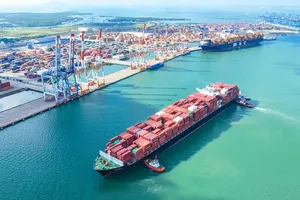
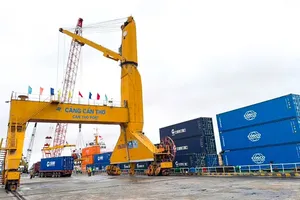
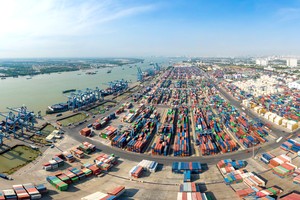
Speaking at the seminar, Le Thi Kim Phuong, Director of the Da Nang City Department of Industry and Trade, said that the city has the potential to become a gateway for goods from Laos, northeastern Thailand and Vietnam’s Central Highlands to reach the sea and connect with international markets.
Da Nang is working toward developing a logistics ecosystem that not only supports transportation but also transit, distribution and value-added logistics services. However, the challenge is not limited to infrastructure connectivity. Seamless coordination of procedures, data and stakeholders throughout the cross-border transport chain is also essential.
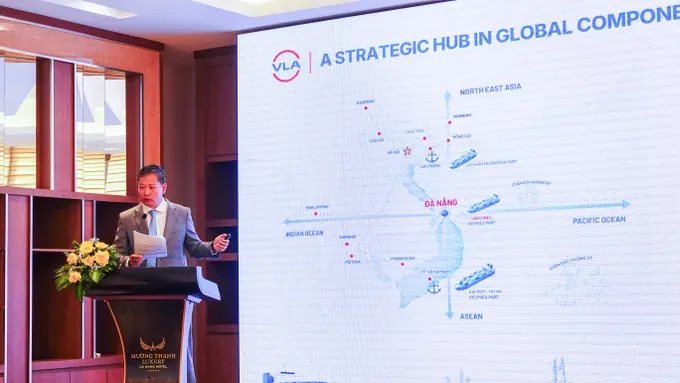
Nguyen Duy Minh, Vice Chairman of the Vietnam Logistics Business Association (VLA), said that Da Nang currently benefits from its position as a gateway to the East-West Economic Corridor, connecting the Pacific and Indian oceans, while also sitting on Vietnam’s north-south transport axis.
The flow of goods and industrial components from North Asia to Southeast Asia presents an opportunity for Da Nang to attract cargo and develop into a logistics hub, Minh said. To achieve this, the city needs to attract cross-border transport companies to use Da Nang as a transit hub while facilitating customs procedures for goods in transit.
However, he noted that trade facilitation mechanisms for transit goods in Southeast Asia and Vietnam remain fragmented.
Ngo Quang My, Vice Chairman of the Da Nang Logistics Association, said that differences in regulations among countries, overlapping border procedures, a lack of interconnected data systems and limitations in intermodal transport force goods to be transferred between vehicles. This increases logistics time, costs and risks.
In some cases, export shipments to China have had to wait two to three days at the border, he said.
To enhance cross-border connectivity, he proposed harmonizing regulations among countries, strengthening one-stop and single-window mechanisms, integrating customs data systems, expanding intermodal transport networks, and upgrading border-gate infrastructure and capacity to improve efficiency and lower logistics costs.