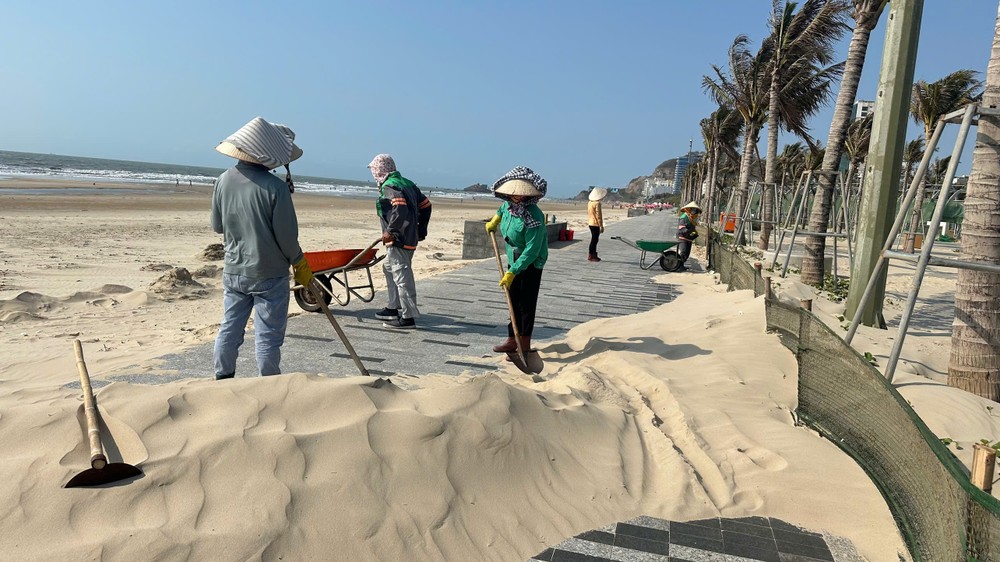
Strong seasonal winds are sweeping around 200 tons of sand from the sea onto the park and coastal roads along Bai Sau Beach in Vung Tau and Tam Thang wards, HCMC, forcing local authorities to deploy dozens of workers and equipment to clear the encroaching sand.
Powerful winds battered Bai Sau, sending sand swirling through the air and forming large dunes stretching nearly 2 kilometers along Thuy Van Park on the morning of March 18. Sand has covered pedestrian walkways along the beach corridor, buried stairways, and blanketed recreational areas, playgrounds, and landscaped zones. In total, about 9,000 square meters of the park area have been affected.
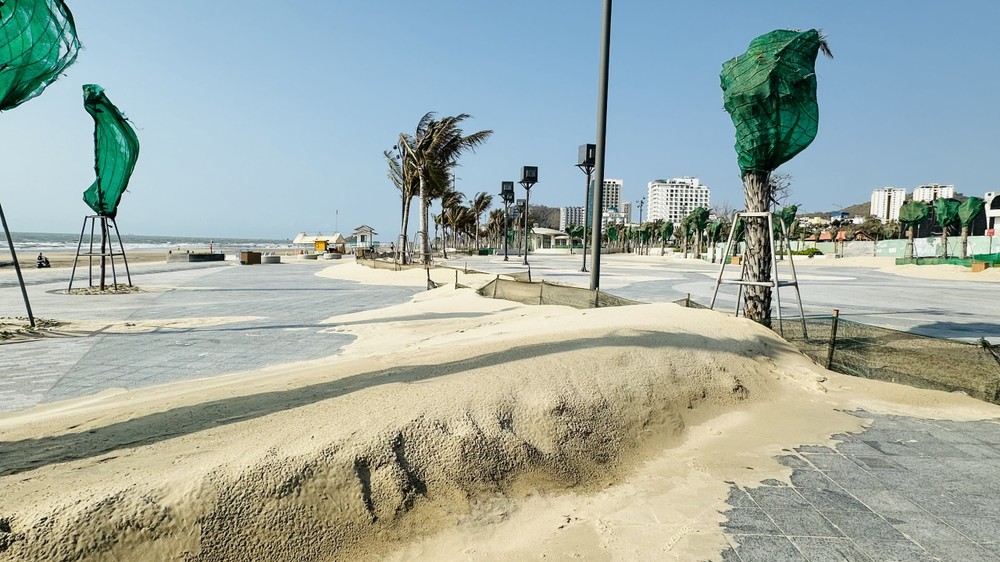
In response, Vung Tau Urban and Parks Development Joint Stock Company (UPC), the unit responsible for maintaining Thuy Van Park, mobilized 40–50 workers to shovel sand from inside the park back onto the beach. The company also deployed an excavator to remove sand accumulating on seaside stairways, restoring safe access for residents and visitors.
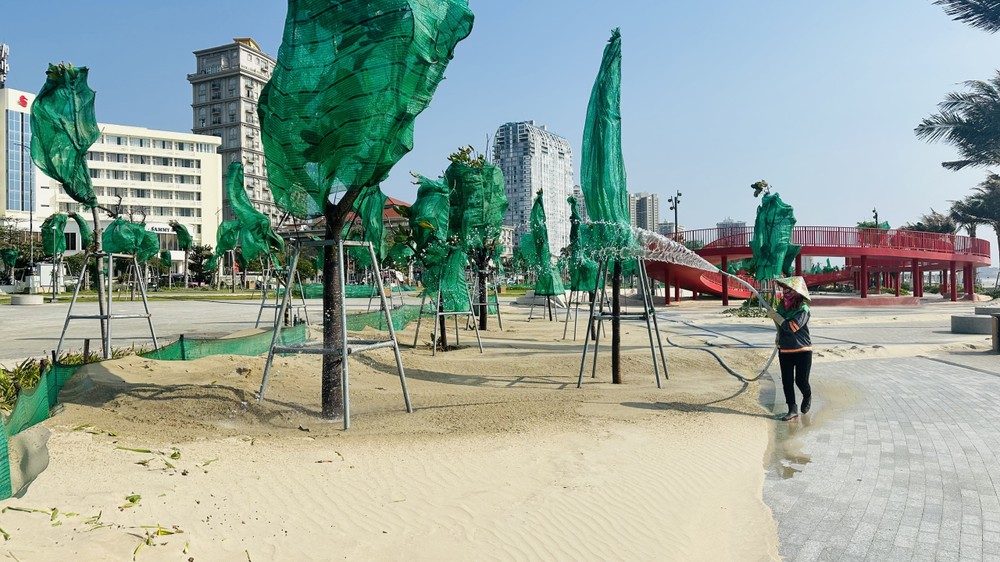
Vo Thi Tuong, a UPC worker, described the situation as a relentless battle against the elements.
“Working at Bai Sau these days feels like fighting a war,” she said. “The sand blows everywhere. We have to shovel it into carts and push it back to the beach. Before we can finish clearing an area, another gust of wind blows more sand deep into the park. It is exhausting work.”

Speaking with SGGP, Mr. Hoang Van Thao, General Director of UPC, said the coastal area of Vung Tau has been entering the annual adverse wind season since December 2025, with Bai Sau experiencing the most severe impact.
Each year during the windy season, strong gusts drive large volumes of sand inland from the beach, sometimes as fiercely as storm conditions. Over the past two weeks, particularly strong winds have blown significant amounts of sand into the park, making cleanup increasingly difficult.
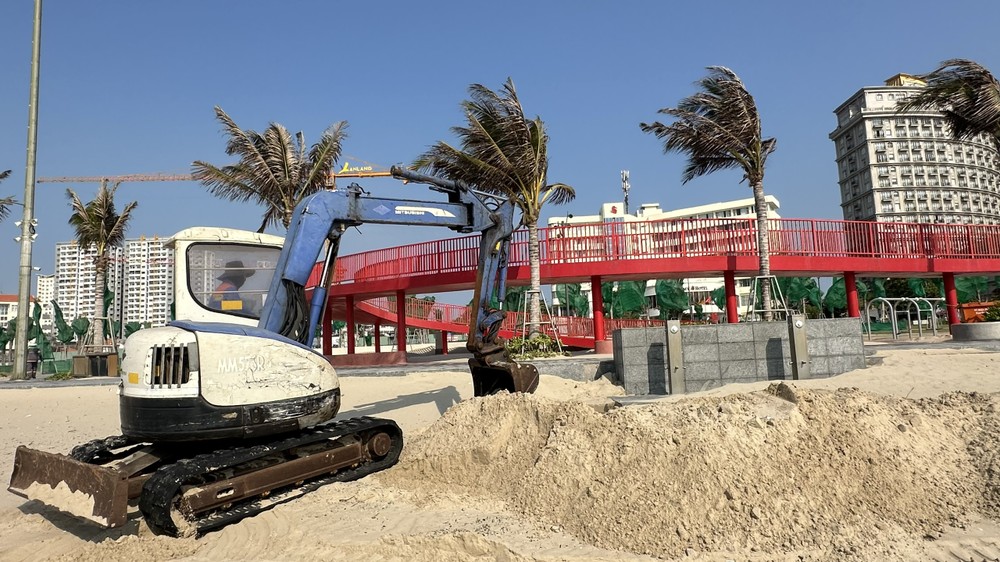
Notably, despite the heavy sand coverage, the situation has not damaged trees or affected the park’s infrastructure, Mr. Hoang Van Thao said.
Alongside clearing sand, UPC workers are also spraying water to reduce dust and have installed more than 1,000 meters of dense netting to limit the spread of blowing sand.
“As in previous years, the windy season typically lasts until mid-May, when sand drift begins to subside, and usually ends by June,” Mr. Hoang Van Thao added.
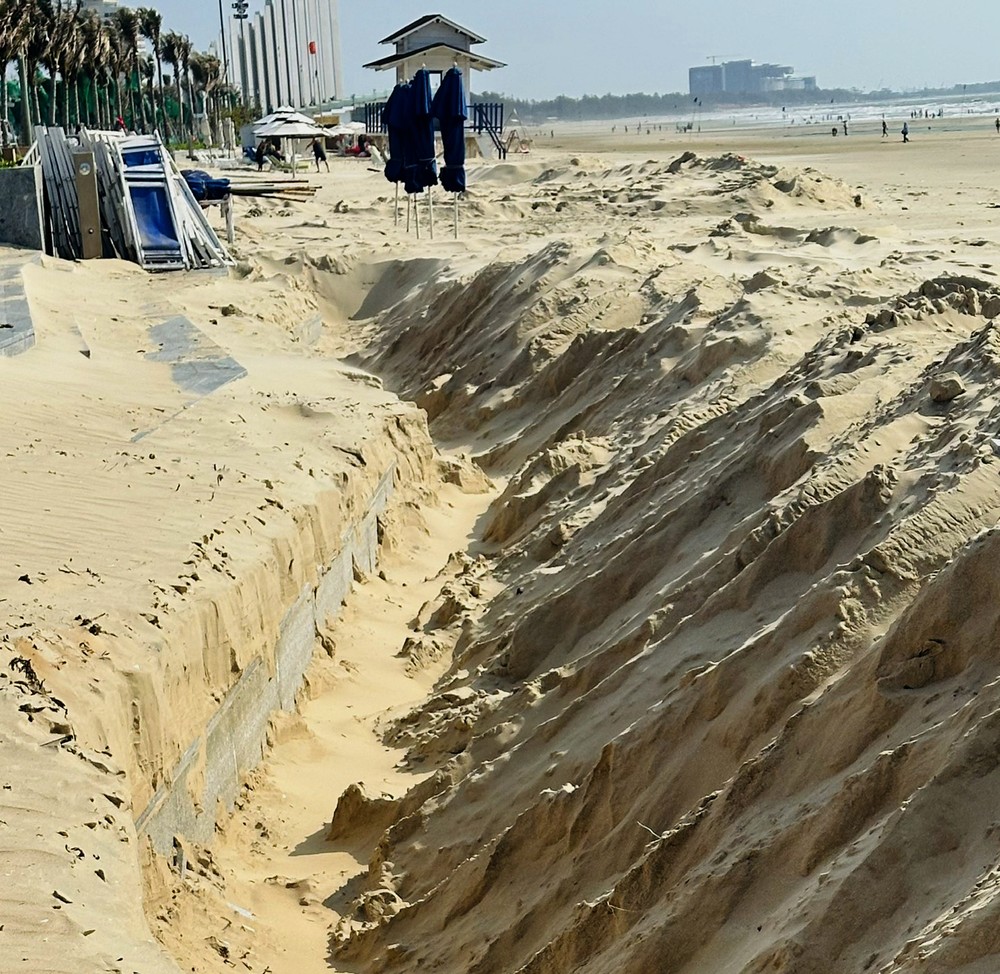
Mr. Doan Hai Linh, Director of the Construction Investment Project Management Board of Tam Thang Ward, which has been temporarily assigned to manage park operations under the 2026 budget allocation, said the problem existed even before the park was built.
“In the past, beachfront resorts and hotels also had to mobilize significant resources to deal with windblown sand,” Mr. Doan Hai Linh said.
The board has worked with UPC to implement immediate solutions, including increasing manpower and considering the rental of sand vacuum equipment. In the longer term, authorities will coordinate with the park’s design unit to develop preventive measures such as planting rows of octopus bush (Heliotropium foertherianum) and installing additional safety railings in hazardous areas to help curb drifting sand.