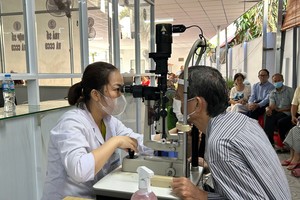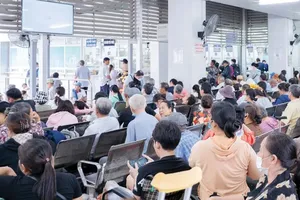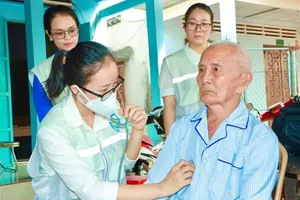
For 81-year-old Nguyen Thi Bay of Vinh Long Province, her monthly routine catching a bus right up to HCMC for cardiovascular check-ups at People’s Hospital 115 has remarkably transformed. Unlike previous arduous journeys, her trip was substantially lighter since she didn’t have to navigate multiple medical facilities just to process transfer paperwork. “Now, whenever my check-up is due, I just head straight to the hospital for the examination,” she excitedly explained.
Similarly, when Vo Thi Le from Dong Nai brought her child to Children’s Hospital 2 for a consultation, she was reimbursed for 50 percent of the costs by the Health Insurance Fund, despite not visiting her registered provider. This brand-new benefit level seemingly helped her slash her treatment expenses significantly.
For Mr. Mai Chi Thanh, a 53-year-old residing in Dong Thap Province, the regulatory shift has brought tremendous relief. Beforehand, lacking a valid transfer document, he had to cover the entire cost out of pocket, making him hesitant to visit major hospitals, he recounted. This time around, after staff thoroughly explained the system, he finally realized he was partially supported by Health Insurance.
“The financial amount might not be overwhelmingly massive, but for elderly folks who must undergo frequent examinations and strictly take continuous medication, it’s incredibly precious,” Mr. Thanh articulated.
Deputy Head Nguyen Lan Huong of the Vietnam Social Security – Health Insurance Policy Implementation Board clarified that the public needs to understand the “50-percent benefit level” doesn’t mean blindly paying half the invoice. Disbursements are meticulously calculated based on specific entitlement ratios and applied exclusively to medications, technical services, and out-of-pocket costs strictly meeting Health Insurance payment criteria.
Specifically, individuals with an 80-percent entitlement rate will have the Fund cover 40 percent of eligible costs; those with 95-percent one receive a 47.5 percent reimbursement; and those in the 100-percent bracket get precisely 50 percent covered. Furthermore, actual benefits fundamentally hinge on the facility’s technical tier, the specific disease, and the overarching scope of Health Insurance privileges.
She emphasized that under the revised Health Insurance Law effective July 1, 2026, participants seeking out-of-network outpatient care will receive a 50-percent reimbursement for diseases previously uncovered.
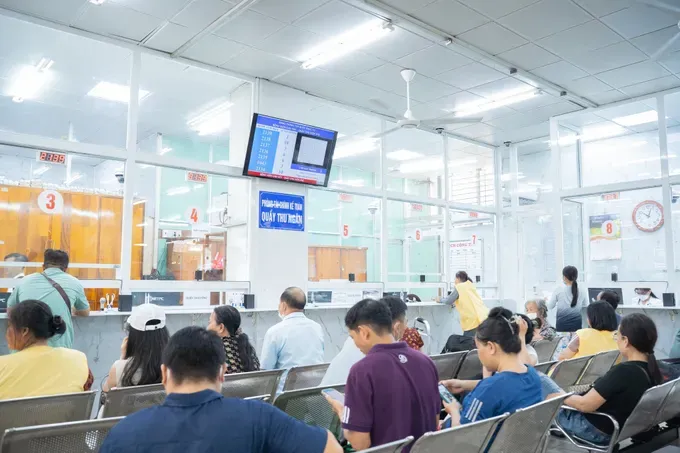
Level-II Specialist Le Anh Tuan, Head of General Planning at People's Hospital 115, commented that the initial implementation phase has been telling. During the very first days of rolling out the new policy, the facility recorded a fluctuation of between 70 to 90 out-of-network health insurance cases. These predominantly involved individuals suffering from cardiovascular conditions, non-communicable chronic diseases, and common geriatric ailments.
The influx of patients seeking examinations could continue multiplying as the policy gains broader public awareness. The hospital, therefore, proactively dedicated an entire five-story building strictly to serve these patients.
Over at Gia Dinh People’s Hospital, its director Assoc Prof Nguyen Hoang Hai, MD PhD, stated the institution has prepared resources while deploying strategic solutions to elevate its reception capacity. Patients can conveniently register for consultations via a mobile app, a dedicated hotline, or self-service kiosks. Meanwhile, those returning for follow-up visits are systematically guided to schedule appointments in advance, effectively mitigating severe overcrowding during peak hours.
The hospital determinedly bolstered its personnel at the reception area, deploying instruction teams to organically channel patient flow and drastically streamline the overarching medical protocols. Consequently, even though patient volume notably swelled, waiting times remain fundamentally well-controlled.
Multiple leaders of top-tier hospitals across HCMC noted that when out-of-network consultations become far more convenient, patients naturally gravitate toward massive facilities boasting diverse specialties and profoundly experienced medical squads. Thus, as patient numbers rapidly escalate, mounting pressure isn’t merely confined to examination zones; it inevitably spills over into laboratory testing, pharmaceutical dispensing, billing procedures, and rigorous medical record management.
Assoc Prof Hoang Thi Diem Tuyet, MD PhD, Director of Hung Vuong Hospital, firmly asserted it’s an undeniably progressive policy. In the end, when patients are empowered with broader choices, every hospital is fundamentally compelled to autonomously elevate its overall service quality.

For HCMC Oncology Hospital Director Diep Bao Tuan, MD PhD, the recent policy shift hasn’t sparked a sudden spike in consultations. “Currently, we accommodate roughly 5,000 daily outpatient visits, and it appears 75 percent hail from outside HCMC,” he explained. Because patients already selected this facility, the pivotal difference now is numerous out-of-network cases reap substantially higher insurance benefits, which consequently drives up administrative workloads. Nevertheless, he noted they’ll resolutely guarantee all privileges.

Meanwhile, for Director of Le Van Thinh Hospital Level-II Specialist Tran Van Khanh, the long-term solution doesn’t lie in perpetually supersizing top-tier hospitals. In the end, land and capital are finite. To offer sustainable care, it’s exponentially more crucial to systematically upgrade the grassroots healthcare ecosystem. Once professional expertise and physical infrastructures are harmoniously elevated across all tiers, citizens will undoubtedly feel secure seeking treatments locally.