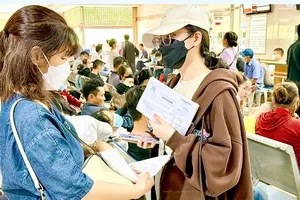
The Ministry of Health has approved new medical service prices for the country's leading tertiary and specialized hospitals. For the first time, management costs have been included in the pricing structure, marking a step toward fully cost-based hospital fees at public healthcare facilities.
Patients hope higher fees will bring better care

On Monday morning, Nguyen Thi Hau, 67, a resident of Bay Hien Ward, Ho Chi Minh City, visited Cho Ray Hospital for a follow-up appointment for cardiovascular disease and diabetes with her daughter.
For patients with chronic illnesses such as Hau, medical treatment is a recurring monthly expense. After learning that some medical service fees at central-level hospitals would increase, her main concern was how much more patients would have to pay and whether healthcare services would become more convenient.
"I don't mind paying my fair share, especially with health insurance covering part of the cost. Patients simply hope they won't have to wait so long, that doctors will explain their conditions carefully, waiting areas will be clean, and staff will provide clear guidance. If prices go up but service quality improves, people will be much more understanding," she said.
Patient Nguyen Thi Hau's concerns reflect those of many patients. Behind every fee adjustment lies not only the financial sustainability of hospitals but also the public's ability to access healthcare services, particularly older adults, people with chronic illnesses, low-income workers, and families whose relatives require long-term treatment.
At K Hospital in Hanoi, Nguyen Thi Luong, 62, from Phu Tho, who is receiving treatment for esophageal cancer, said she understands the need for higher hospital fees to help facilities maintain operations.
"If management costs add only a few percent to hospital fees, the additional amount patients actually pay through health insurance may be only tens or hundreds of thousands of Vietnamese dong for each treatment course. But what we hope most is that if hospital fees increase, service quality will also improve so patients can feel more confident," she said.
Le Minh Duong, 32, who brought a family member to the emergency department at Viet Duc University Hospital, shared a similar view.
If hospital fees now include management costs, we expect administrative procedures to become faster, healthcare services to improve, staff to be more attentive, and unnecessary administrative steps to be reduced, he said.
Hospitals seek resources to improve services
At most public hospitals, medical service fees have traditionally consisted of only two components: direct costs, including medicines, utilities, and medical supplies, and labor costs, covering salaries and allowances for healthcare workers.
Because management costs were not included, many leading hospitals have struggled with patient overcrowding, limited funding for infrastructure upgrades, and insufficient investment in medical equipment.
To address these challenges, the Ministry of Health has approved new medical service prices for leading specialized hospitals, including Viet Duc University Hospital, the 108 Military Central Hospital, and K Hospital.
The decision applies to medical services covered by the Health Insurance Fund, services financed by the state budget, and medical services not covered by the Health Insurance Fund but not classified as on-demand healthcare services.
Under the new pricing structure, medical service fees now include three components: direct costs, labor costs, and management costs. This is the first time management expenses have been incorporated into public hospital pricing as part of efforts to establish fully cost-based medical fees.
Representatives from several hospitals said the inclusion of management costs will provide transparent and legitimate financial resources to reinvest in hospital operations.
A representative of Viet Duc University Hospital said the new pricing mechanism will ease financial pressures and enable the hospital to invest more in medical equipment and infrastructure, ultimately improving the quality of care provided to patients.
Ha Anh Duc, Director General of the Ministry of Health's Department of Medical Services Administration, said the ministry has instructed provincial health departments and hospitals nationwide to continue reviewing and standardizing professional procedures, strictly implement technical protocols, ensure patient safety, and improve healthcare quality, particularly for services covered by health insurance.
Hospitals have also been instructed to comply with regulations on prescribing medicines, ordering medical services, and using medical supplies appropriately, safely, and efficiently, while preventing abuse of the Health Insurance Fund. They are also required to ensure adequate supplies of medicines, medical equipment, and consumables to avoid shortages that could affect patient care.
According to the Ministry of Health, medical service prices at the country's leading specialized hospitals will increase by about 4 percent.
The health insurance consultation fee will rise from VND50,600 to VND52,600. The fee for specialist consultations to assess complex medical cases will increase by nearly VND8,000 to VND208,000 per specialist per case.
Inpatient bed charges and laboratory service fees will also increase. Intensive care, organ transplant, bone marrow transplant, and stem cell transplant beds will cost VND965,200 per day, while emergency intensive care beds will cost VND581,000 per day, increases of VND37,200 and VND23,000, respectively.