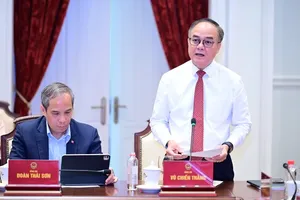
A total of 442 deputies voted in favor, accounting for 93.45 percent of all National Assembly members.
Under the Resolution, the National Assembly agreed to pilot the establishment of the Da Nang Free Trade Zone (FTZ) with the goal of attracting investment, finance, trade and high-quality human resources, and accelerating exports and industrial development.
The resolution notes that the Prime Minister has the authority to decide on the establishment of the Da Nang FTZ. However, the Da Nang City People’s Committee is authorized to adjust that decision, including expansion and boundary changes, following procedures set by the Da Nang City People’s Council. The decision serves as an approval or partial revision of the overall urban and rural plan.
New investment projects in high technology, R&D, supporting industries, clean-energy vehicles, aviation and railway equipment, and logistics centers in the Da Nang FTZ will enjoy a 10-percent corporate income tax rate for 30 years, a four-year tax holiday, and a 50-percent reduction for the next nine years. This represents a significant incentive relative to the current general corporate income tax rate of 20 percent.
Other new investments in the Da Nang FTZ will receive similar incentives, including a 10-percent corporate income tax rate for 15 years, a four-year exemption, and a 50-percent cut for the subsequent nine years.
To enhance the FTZ’s talent base, the resolution stipulates a 10-year, 50-percent personal income tax incentive for experts, scientists, exceptional talents, managerial staff and highly skilled workers.
Significantly, all Da Nang FTZ projects, excluding commercial housing, will receive full land and water surface rent exemptions throughout their lease period.

The Da Nang City People’s Council is authorized to allocate the city budget for independent public investment projects covering compensation, support, and resettlement for TOD projects, including metro stations and surrounding areas along the Da Nang – Hoi An – Chu Lai transportation corridor.
Da Nang City will be allowed to retain all revenue from TOD land-use rights to channel into metro development and other priority projects. This is significantly more favourable than the existing State Budget Law, which requires 20 percent to be transferred to the central government.
Additionally, the Da Nang City People’s Committee is permitted to set economic–technical indicators and land-use criteria outside national planning standards, enabling the city to tap into land resources and the value generated from land.