The Ministry of Education and Training is working with local authorities to complete the reorganization of public educational institutions before August 30, 2026, ensuring smooth operations for the 2026-2027 school year.
Government directs comprehensive restructuring of public schools
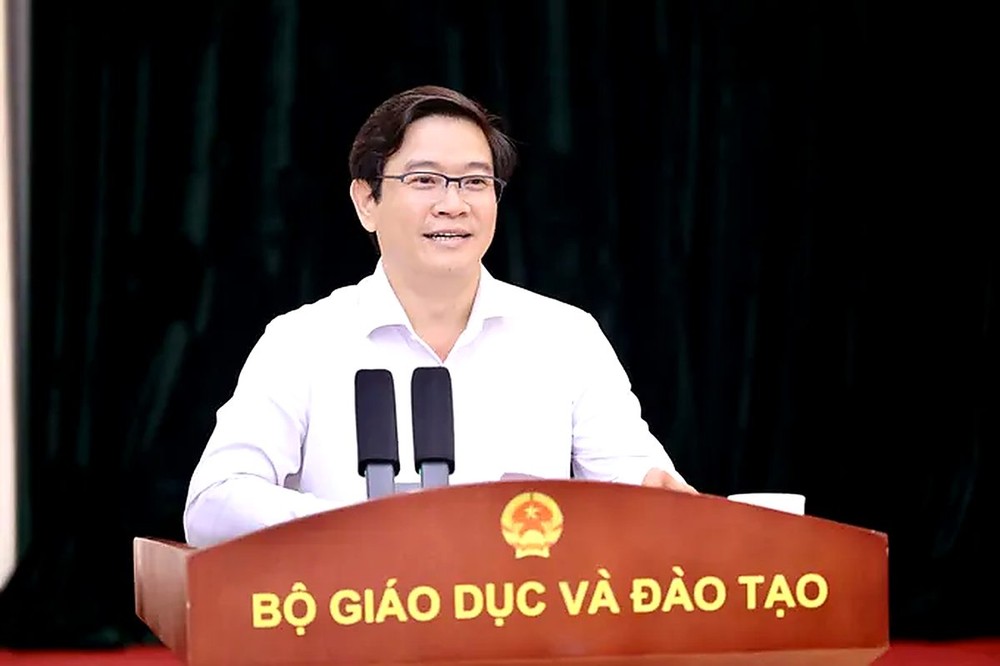
Following directives from the Government, provinces and cities nationwide have established plans to streamline educational facilities. Speaking on August 17, 2026, Mr. Thai Van Tai, Director of the Primary Education Department under the Ministry of Education and Training, outlined the measures taken to support local authorities.
The Director of the Primary Education Department revealed that the Ministry held a national conference with directors of provincial departments of Education and Training, deployed working groups to collaborate directly with local authorities, and established feedback channels to resolve implementation challenges promptly.
Practical issues regarding job positions, organizational structures, deputy positions, staffing quotas, and educational support staff were gathered and reported to competent authorities. Resolution 37/2026/NQ-CP, issued by the Government on August 5, 2026, provided a clear framework for local authorities to handle personnel adjustments following the reorganization.
Nationwide statistics indicate significant reduction in school units
Assessments show that the nation expects an average reduction of 46.73 percent in educational units, equivalent to 17,353 facilities compared to July 1, 2025. Ten localities anticipate reductions exceeding 50 percent, while remaining regions project cuts between 35 percent and 50 percent.
However, officials emphasize that success should not be evaluated solely by numerical reductions. Localities have actively designed reorganization plans tailored to population distribution and learning demands, forming multi-level schools, central schools, and branch campuses. Reports from 28 out of 34 provinces and cities indicate that 2,254 multi-level general schools will be established following the restructuring.
Localities are shifting from a simple school merger mindset to reorganizing school networks and governance models. This shift ensures that administrative streamlining translates into enhanced operational efficiency and higher educational quality. Reorganization fails if students face longer travel distances, teachers are assigned inefficiently, or instructional quality drops.
Resource optimization addresses regional staffing imbalances
Under the revised model, main campuses will operate alongside branch locations, allowing flexible teacher deployment across locations and grade levels. Specialized subjects such as English, Information Technology, Arts, and Physical Education will benefit from more efficient staff utilization. Additionally, physical facilities including computer labs, science laboratories, libraries, and sports fields will be shared more effectively.
School consolidation also reduces administrative burdens on teaching staff, allowing them to focus on professional instruction and student development. The Ministry of Education and Training estimates that over 32,000 management staff members can transition to teaching roles, helping alleviate current teacher shortages.
Furthermore, more than 11,000 surplus administrative staff members will be reassigned across localities. Officials emphasize that the initiative is an effort to restructure and optimize human resources rather than cut staff.
The Ministry will monitor local progress, conduct inspections, and guide emerging issues. In coordination with relevant ministries, authorities will address localized surpluses and shortages while prioritizing resources for frontline teaching personnel.
Authorities emphasize that August 30 does not mark the conclusion of the effort. Following implementation, officials will continuously evaluate real-world impacts, including educational quality, commute distances, facility utilization, and administrative efficiency. The ultimate goal remains improving student learning conditions, enhancing teaching environments, and operating an effective educational system.