The dispatch was sent to Party secretaries and chairpersons of People’s Committees of provinces and centrally governed cities.
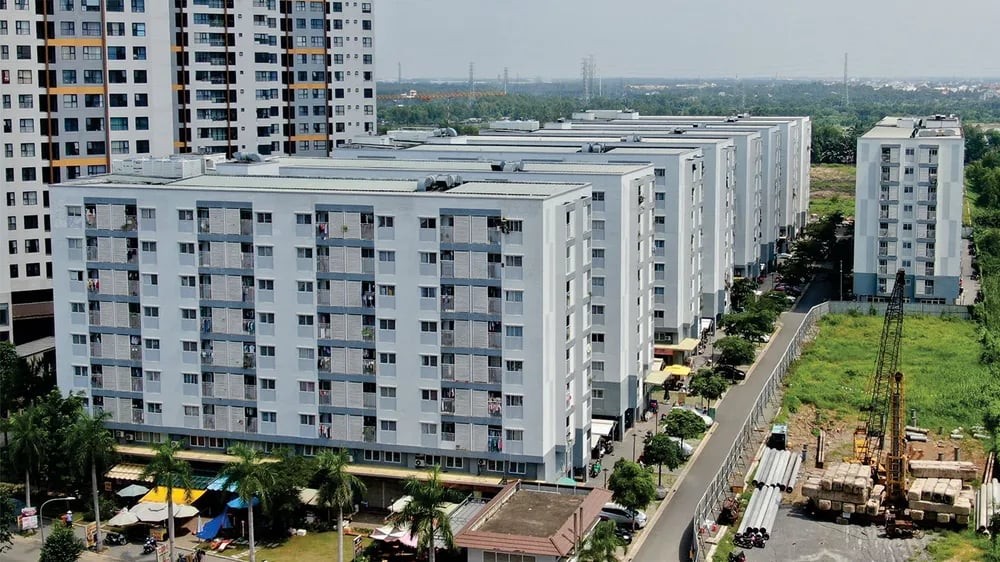
According to the Ministry of Construction, following the conclusions of Party General Secretary and State President To Lam, as well as directives from Prime Minister Le Minh Hung on the future orientation of housing development, rental housing has been identified as a strategic, long-term segment serving broad segments of the population.
To promote rental housing development starting in 2026, the Minister urged chairpersons of provincial and municipal People’s Committees to focus on key tasks and implementation measures.
First, localities are required to assess demand and develop rental housing development plans. Authorities must conduct surveys and provide a realistic evaluation of rental housing needs among different population groups in their respective areas. Based on these findings, provinces should formulate appropriate investment plans to avoid supply-demand imbalances and inefficient resource allocation.
Local governments are also instructed to prepare rental housing development plans for 2026 and the 2026–2030 period, including annual targets, project lists, implementation roadmaps, and mobilized resources. These plans must be submitted to the Ministry of Construction for consolidation and reporting to the Prime Minister, with completion required by June 2026.
Notably, the ministry called on localities to urgently invest in rental housing using State budget funds, aiming for each province to break ground on at least one rental housing project in June 2026, while also rolling out large-scale projects in the third and fourth quarters of 2026.
The ministry further requested localities to promptly establish, consolidate, and effectively operate local housing development funds sourced from lawful revenue streams, including the 20 percent land allocation for social housing in commercial projects. These funds are to be used for constructing or acquiring housing units for rental purposes, with completion targeted for the third quarter of 2026.
In parallel, localities are expected to promote worker accommodation development, regularly review planning schemes, and allocate land funds for rental and social housing. Priority is given to apartment rental models in major urban centers, growth poles, industrial parks, economic zones, transit-oriented development (TOD) areas, and urban renewal zones.
Authorities are also required to allocate adequate resources for compensation, site clearance, resettlement support, and technical infrastructure investment to ensure the creation of clean land funds for rental and social housing projects. These land parcels must be fully equipped with essential infrastructure to enable immediate operation upon project completion.
In addition, the ministry emphasized administrative reform, calling for streamlined procedures under a “one-stop, one-focal-point, standardized process” mechanism. Priority processing lanes, including “green channels” and “priority tracks,” should be applied to rental housing projects to accelerate implementation and remove procedural bottlenecks.