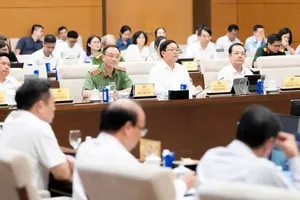
Young people are a driving force and a vital resource for the country’s development. However, to encourage them to commit and contribute over the long term, Vietnam needs to build a comprehensive development ecosystem covering employment, housing, social welfare, and opportunities in science, technology, innovation and entrepreneurship.
Young workers call for deeper support in housing and social welfare
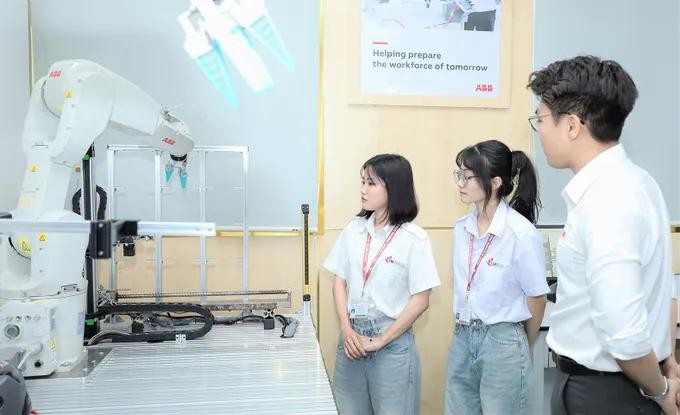
Affordable housing, stable employment, opportunities to improve professional skills and suitable social welfare policies remain practical needs for many young workers seeking to establish their careers and families.
Although both he and his wife have stable jobs and incomes, Nguyen Van Trung, 26, a worker at PouYuen Vietnam Company in Tan Tao Ward, Ho Chi Minh City, said that most of their monthly income is spent on rent, utilities, food and caring for their young child. In addition to stable employment, he hopes to benefit from social services tailored to workers’ needs, such as affordable childcare centers and kindergartens that would allow young parents to work with peace of mind.
Housing remains a major concern for many young workers. Nguyen Nhat Truong, 28, who works at Makita Vietnam Company in VSIP 2 Industrial Park, Binh Duong Ward, Ho Chi Minh City, said he and his wife earn a combined income of about VND30 million (US$1,138) per month, yet home ownership remains out of reach.
According to worker Nguyen Nhat Truong, more social housing and worker housing projects for rent or lease-purchase arrangements are needed to help young workers stabilize their lives and remain committed to their workplaces.
These concerns highlight that, beyond employment and income, young workers need accompanying policies on housing, childcare, vocational training, skills development and cultural and spiritual well-being. Such issues have become priorities for youth organizations in recent years.
Alongside skills training and professional development programs, many initiatives aimed at improving the material and spiritual lives of young workers have been maintained and expanded. The 2026 Young Workers Festival, featuring free health checkups, medical consultations, sports activities and cultural performances, is one example.
In Ho Chi Minh City, worker accommodation facilities have also been developed to provide living spaces, social connections and support networks for young workers in industrial and export processing zones.
Young scientists seek opportunities to contribute
Many young people pursuing careers in scientific research are also concerned about their working environment and long-term development prospects.
One of them is lecturer Nguyen Viet Huong, deputy dean of the Faculty of Materials Science and Engineering at Phenikaa University.
A valedictorian at both admission and graduation from the University of Engineering and Technology under Vietnam National University, Hanoi, lecturer Nguyen Viet Huong had opportunities to work abroad but chose to return to Vietnam to conduct research and teach.
He said the domestic scientific research environment has improved significantly in recent years, with numerous support programs for doctoral researchers receiving substantial funding, in some cases up to VND1 billion annually. These initiatives have created additional motivation for young people to pursue scientific careers.
When deciding to return to Vietnam, lecturer Nguyen Viet Huong said he placed high expectations on Resolution 57-NQ/TW on breakthroughs in science and technology development, innovation and national digital transformation.
According to him, the new mechanisms not only enable scientists to undertake breakthrough research projects but also create opportunities to attract highly qualified talent back from overseas while encouraging students to pursue scientific research and technology transfer.
However, to ensure that young people remain committed to science and technology over the long term, he said the innovation ecosystem must continue to be strengthened. In addition to talent incentive policies, financial support mechanisms for research activities are needed, along with innovation centers that connect universities, research institutes, businesses and government agencies.
Beyond seeking favorable research conditions, many young people also hope to participate directly in addressing major challenges facing their localities and the country.
In recent years, numerous dialogue and policy consultation forums have been organized to gather input from youth on socioeconomic development issues. At a program marking the 95th anniversary of the Ho Chi Minh Communist Youth Union, where Ho Chi Minh City leaders met with outstanding Youth Union, Youth Association and Young Pioneer representatives, many young delegates proposed initiatives and solutions for the development of both the younger generation and the city.
Nguyen Thanh Binh, Vice President of the Vietnam Youth Federation in Ho Chi Minh City and head of the Ho Chi Minh City Young Scientists Club, proposed creating opportunities for young people to participate directly in the city’s key programs and projects.
According to Ngo Minh Hai, Secretary of the Ho Chi Minh City Youth Union, such dialogue programs not only provide opportunities to listen to the aspirations of young people but also help inspire their desire to contribute, encourage innovation and mobilize youth initiatives in support of the city’s socioeconomic development and national defense and security objectives in the new era.