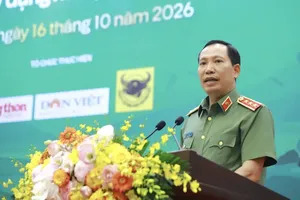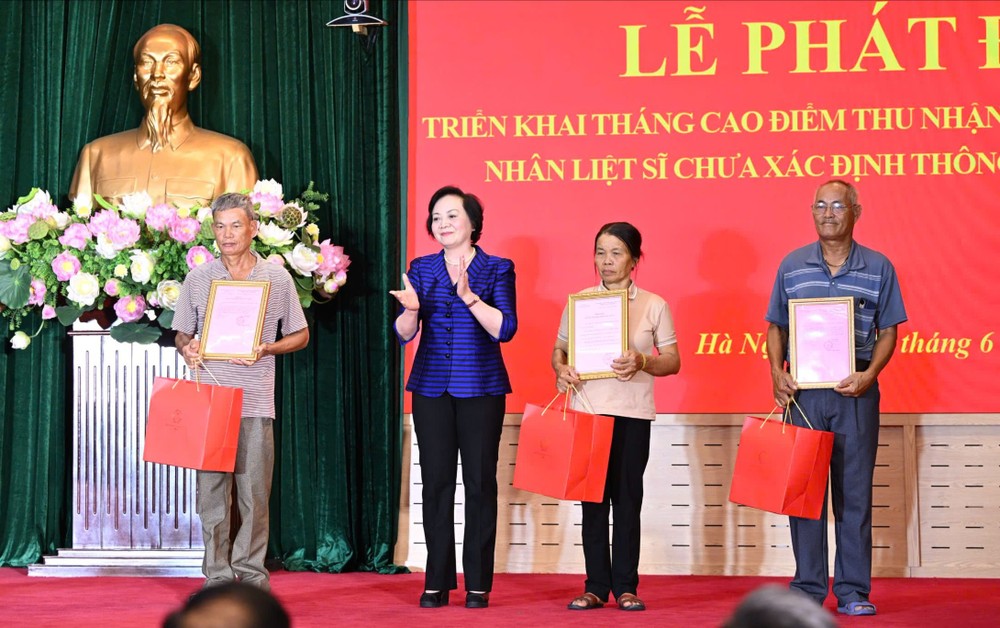
The event, organized by the National Steering Committee for the Search, Recovery, and Identification of Martyrs’ Remains in coordination with the Ministry of Public Security, was held both in person and online, connecting police units across provinces and 3,321 commune-level police stations nationwide.
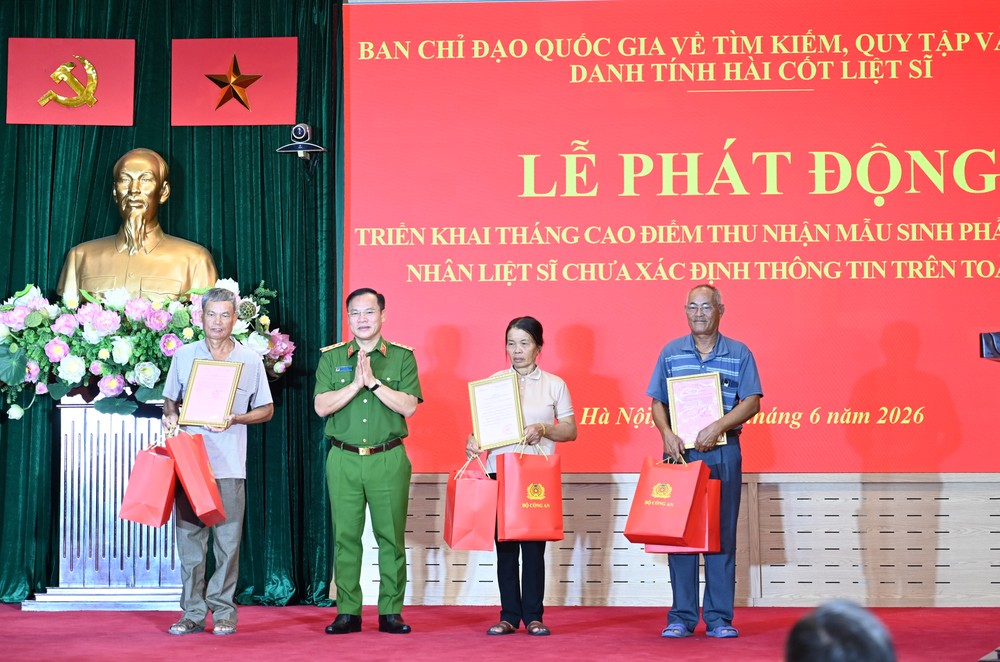
At the ceremony, Deputy Prime Minister Pham Thi Thanh Tra and Deputy Minister of Public Security Nguyen Van Long presented martyr identification certificates to the families of three fallen soldiers whose identities were recently confirmed through DNA analysis.
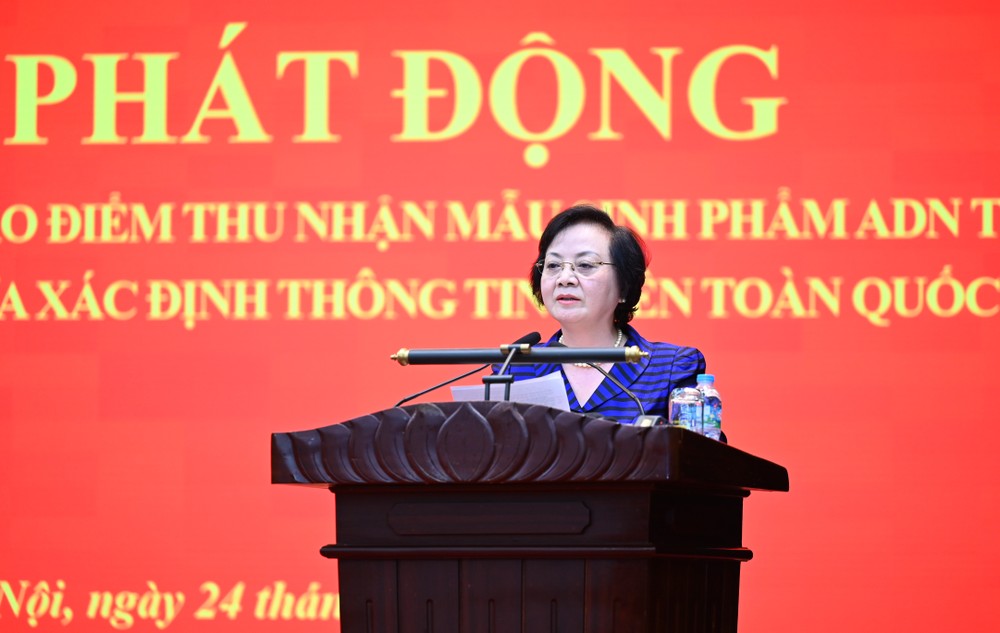
Addressing the event, the Deputy Prime Minister described the return of martyrs’ remains to their families as a source of immense joy not only for the affected families but also for the entire nation and those dedicated to the search and identification mission. She said the achievement demonstrated Vietnam’s enduring commitment to honoring those who sacrificed their lives in wartime and bringing them back to their families, hometowns, and the nation’s historical memory.
She praised the Ministry of Public Security for pioneering the application of advanced technology in the effort. Through the collection, analysis, and development of a national DNA database, authorities have gathered approximately 53,000 DNA samples to date, leading to the successful identification of 25 martyrs.
The "500 Days and Nights to Accelerate the Search, Collection, and Identification of Martyrs’ Remains" campaign is entering a decisive phase. Despite ongoing efforts, more than 175,000 martyrs have yet to be located, while over 300,000 graves remain unidentified or lack sufficient information.
Officials warned that the task has become increasingly urgent as many direct relatives of fallen soldiers are now elderly.
“Every day that passes is another opportunity that may be lost and another historical gap that remains unfilled,” Deputy Prime Minister Pham Thi Thanh Tra said.
She stressed that collecting DNA samples from martyrs’ relatives is essential to building a comprehensive and scientifically robust identification system. Ministries, agencies, and local authorities were urged to treat the initiative as a priority political task, mobilize all available resources, and accelerate implementation.
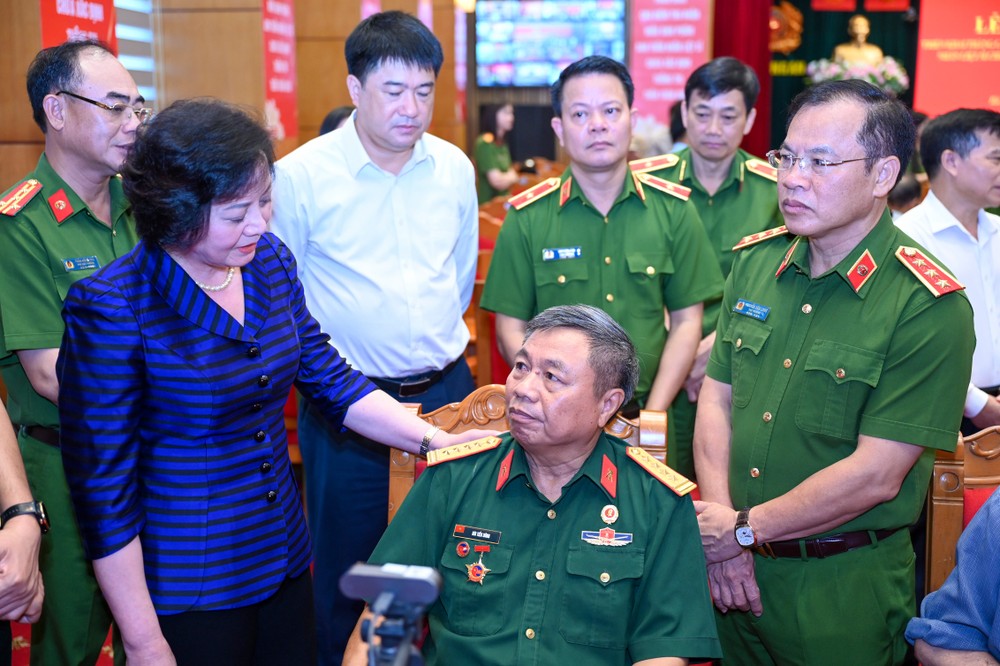

Deputy Prime Minister Pham Thi Thanh Tra also called for stronger public awareness campaigns to highlight the historical, political, and humanitarian significance of the mission and to uphold the national tradition of honoring those who sacrificed for the country’s independence and freedom.
Under the campaign, the Ministry of Public Security will continue leading the collection, analysis, and management of DNA data, while the Ministry of National Defense, the Ministry of Home Affairs, the Vietnam Academy of Science and Technology, and local governments will intensify forensic examinations of unidentified remains.
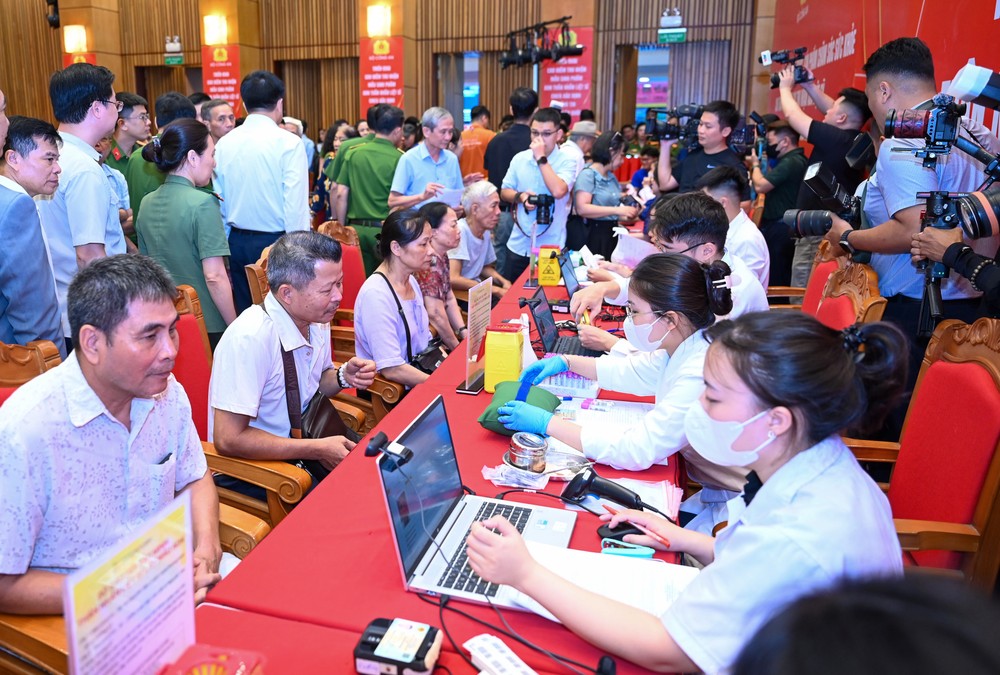
At the conclusion of the ceremony, Deputy Prime Minister Pham Thi Thanh Tra officially launched a nationwide peak campaign and a synchronized day of DNA sample collection, calling on government agencies, businesses, organizations, and citizens to support what she described as a sacred national mission.