This figure accounts for more than 81.4 percent of the total value across all signed contracts, keeping the mega-project on track for its target commercial operational launch by late December 2026.
The achievement highlights the massive volume of work completed thus far, laying a solid foundation for contractors to focus on remaining packages during the final months of 2026.
Synchronized solutions deployed to accelerate construction progress
According to ACV, foundational technical infrastructure for several critical packages has been completed, paving the way for synchronized operational integration. Notably, the 110kV substation was successfully energized into the PWR station on June 9, 2026. By mid-July 2026, the 22kV power supply line was fully routed along the technical tunnel system (Tunnel Lines 3 and 4) to regional substations and the Energy Center (ECS).
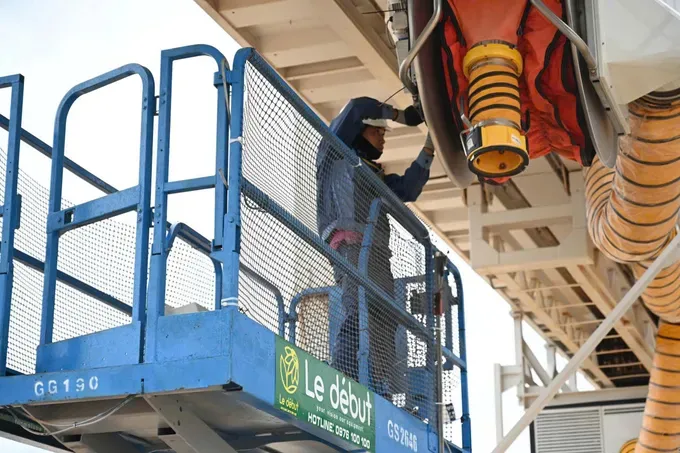
At the passenger terminal, low-voltage electrical system commissioning and power-on tests have reached 85 percent completion, setting the stage for single-equipment and integrated testing of MEPF (Mechanical – Electrical – Plumbing – Firefighting) systems and core technology.
Alongside the newly accepted connecting transport infrastructure (Routes 1 and 2), telecommunications and command-and-control infrastructure have completed cable tray installations in technical tunnels. This paves the way to deploy the structured cabling system (SCS) and terminal devices for the airport network.
For critical-path packages, such as internal airport roadways, ground infrastructure, and the main passenger terminal, the investor and relevant agencies are actively pushing progress and reallocating resources, instructing contractors to expedite construction for completion by late November 2026.
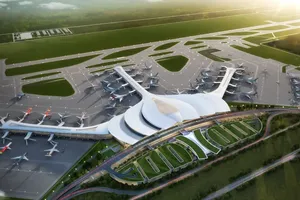
Beyond primary airport structures, high priority is being given to finishing the project's runways. Runway No. 1 is now complete and fully operational, while Runway No. 2 is slated for baseline completion by late September 2026, with calibration flights scheduled for October 2026.
The early completion of Runway No. 2 and the initiation of calibration flights mark crucial milestones in driving the overall project forward.
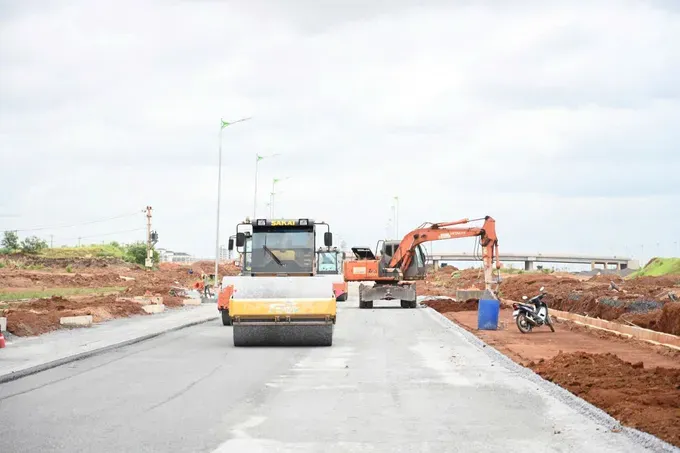
Regarding internal road networks, streetlights, sidewalks, and greenery have already been installed along the main arterial route. The line is now fundamentally open from Route T1 across the viaduct directly to the passenger terminal, enabling site traffic management, system trial runs, and continuous operational fine-tuning during initial commercial operations.
On track for commercial operation by late 2026
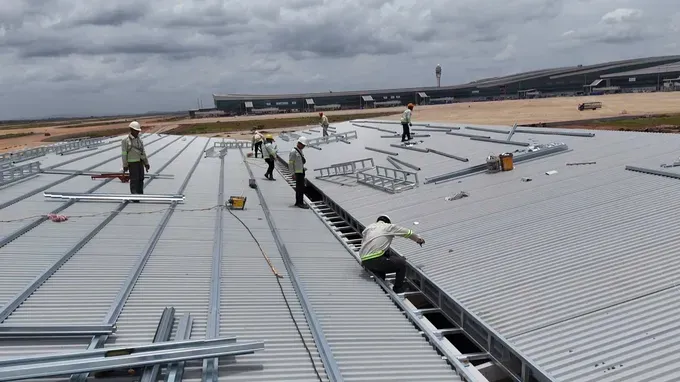
Alongside the completed workload, the project is systematically resolving final-stretch bottlenecks to keep construction on schedule while strictly maintaining technical, safety, and quality standards.
Key obstacles include a shortage of specialized technical labor for finishing work and prolonged heavy rainfall, which has disrupted asphalt paving on internal roadway networks.
Leadership from ACV and the Long Thanh Airport Project Management Board are currently focusing on coordinating manpower and equipment while boosting contractor capacity. Priority is being given to inter-agency coordination to prevent site overlaps and mutual interference during construction.
According to ACV leadership, daily and weekly progress tracking will be implemented moving forward, concentrating resources on critical-path and high-priority packages. Concurrently, the developer will coordinate closely with relevant agencies to conclusively resolve resource, site clearance, and technical bottlenecks, ensuring key milestones are met for the airport's commercial launch by late 2026.
At the project site, many key components and construction areas are operating around the clock in three shifts and four crews, with nearly 7,400 personnel working on the project. The night shift alone maintains over 3,000 workers, accelerating tasks such as ceiling installation, machinery setup, and processing line integration within the terminal.