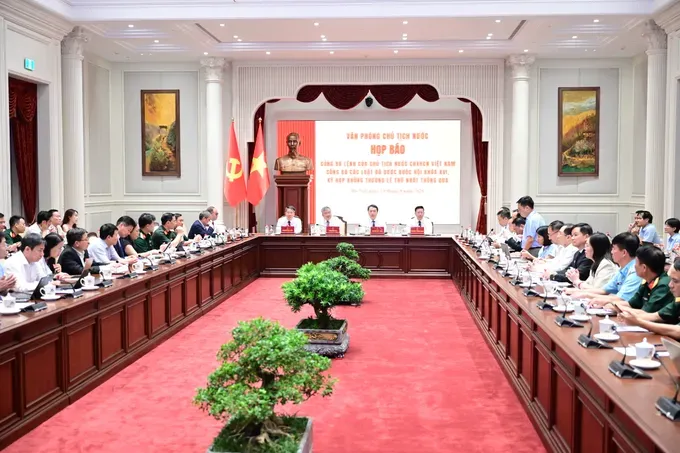
The laws cover a wide range of areas, including petroleum, customs, investment, prevention of the proliferation of weapons of mass destruction, military and national defense, legal education, grassroots mediation, State compensation, banking, urban development, agriculture and environment, telecommunications, electronic transactions, technology transfer, overseas employment, publishing and architecture.
The 2026 Petroleum Law comprises 12 chapters and 62 articles and introduces stronger decentralization for the State Petroleum Management Agency, clearer responsibilities for the Vietnam National Industry-Energy Group (Petrovietnam), and simplified procedures. It also provides new policies on investment incentives, carbon capture and storage, offshore energy facilities and high-tech petroleum services.
The Law amending and supplementing several articles of the Customs Law comprises four articles, providing a legal basis for redesigning customs management procedures and restructuring information technology systems, while strengthening data connectivity among ministries, sectors and local authorities. It also cuts administrative procedures and promotes decentralization to local customs authorities. The Law on amendments and supplements to certain articles of the Investment Law has three articles and one appendix. It removes 62 conditional business sectors and revises 14 others, creating a more open and transparent investment environment and improving State management efficiency by shifting from pre-license inspection to post-license inspection.
The three above-mentioned laws will take effect on March 1, 2027.
The Law on Prevention and Control of the Proliferation of Weapons of Mass Destruction, which consists of four chapters and 36 articles, establishes a legal framework for preventing, detecting, and handling proliferation and proliferation financing, while ensuring Vietnam’s compliance with relevant international obligations. It will become effective on July 1, 2027.
Meanwhile, the Law amending and supplementing several articles of nine laws on military and national defense aims to adapt the legal framework to the two-tier local administration model and promote decentralization. It comprises 10 articles and will take effect from September 1, 2027. With five chapters and 39 articles, the Law on Legal Education promotes the use of digital technology, artificial intelligence, social media and digital platforms to improve public access to legal information.
The Law on Grassroots Mediation, which has five chapters and 35 articles, strengthens information confidentiality and, for the first time, requires mediators and grassroots authorities to coordinate in identifying and preventing conflicts that could lead to violence or violations that harm people’s lives and health. The Law amending and supplementing several articles of the Law on State Compensation Liability has three articles, adding provisions allowing anti-corruption, wastefulness, and misconduct fighters and their relatives to receive State compensation when competent authorities fail to provide timely or proper protection, causing damage.
The three above-mentioned laws will become effective on March 1, 2027.
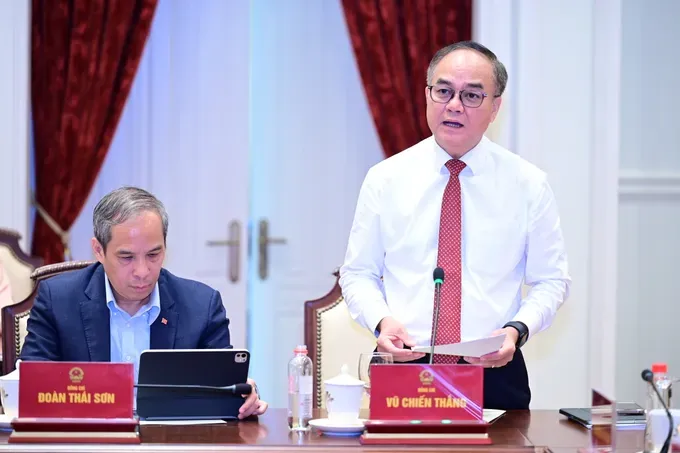
The four-article Law amending and supplementing several articles of the Law on the State Bank of Vietnam, the Law on Anti-Money Laundering and the Law on Credit Institutions addresses issues arising from administrative restructuring, gaps identified under FATF/APG/OECD recommendations, and financial mechanisms affecting the State Bank. It will take effect on December 1, 2026. With five chapters and 66 articles, the Law on Urban Development, effective on October 1, 2026, creates a legal framework for the development of Ho Chi Minh City, other special municipalities and special economic zones, aiming to mobilize high-quality investment resources and generate new growth drivers.
Meanwhile, the Law on amendments and supplements to several articles of 10 laws in the agriculture and environment sector cuts 40 administrative procedures and 40 business conditions while decentralizing 24 administrative procedures to provincial-level authorities. This 12-article law will come into force on January 1, 2027.
The Law on amendments and supplements to certain articles of four laws on radio frequencies, telecommunications, electronic transactions and technology transfer further reduces administrative barriers and supports science, technology, innovation and digital transformation. It will become effective on March 1, 2027.
The Law amending and supplementing several articles of the Law on Vietnamese Guest Workers, also effective on March 1, 2027, prioritizes the development of high-quality human resources through overseas employment, while strengthening links between returning workers and the domestic labor market.
Meanwhile, the Law on amendments and supplements to certain articles of the Publishing Law defines publishing as both a cultural and ideological field and an economic-technological sector and reinforces publishers’ autonomy and responsibility. The law will take effect on March 1, 2027, except for provisions on export printing of publications, on January 1, 2029.
The Law amending and supplementing several articles of the Architecture Law, also effective March 1, 2027, introduces provisions on architectural competitions and selection to ensure architectural solutions meet requirements related to planning, culture, socio-economic efficiency, national defense and security, and environmental protection.