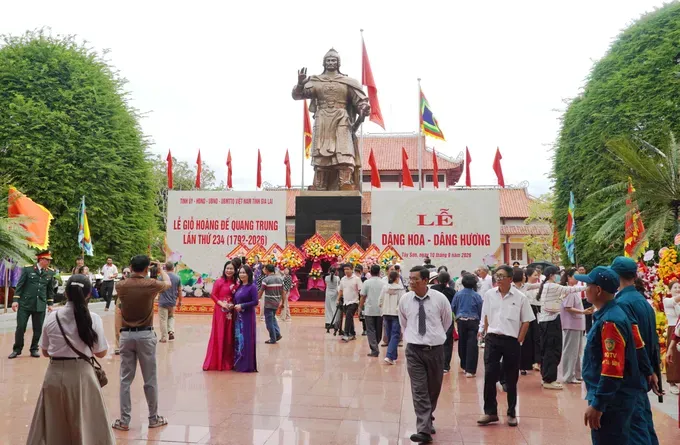
Earlier that morning, generations of Gia Lai provincial leaders, alongside officials, soldiers, and residents, held a floral tribute ceremony before the monument of Emperor Quang Trung. Delegates then burned incense at the Tay Son-Tam Kiet (Three Great Heroes in Tay Son) Temple to pay their respects.
A day earlier, on September 9, Gia Lai Province held a solemn invocation ceremony at the An Khe Truong-Tay Son Thuong Dao Historical Relic Complex, the Kinh Thien Altar (Heaven and Earth Altar), and the shrine dedicated to the parents of the Three Great Heroes in Tay Son. The main commemoration service took place on the morning of September 10 at the Upper Sanctuary of the Tay Son Tam Kiet Temple Relic Site.
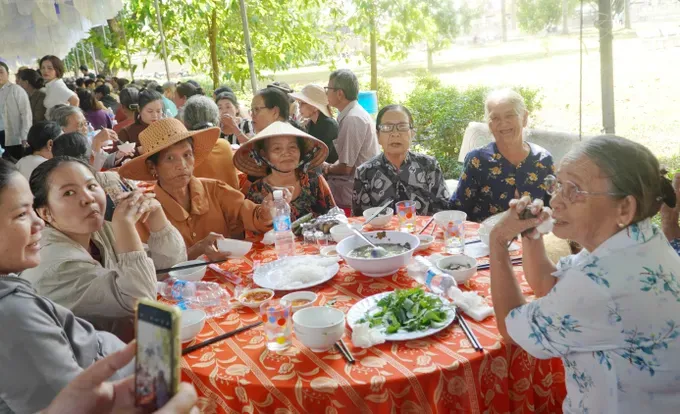
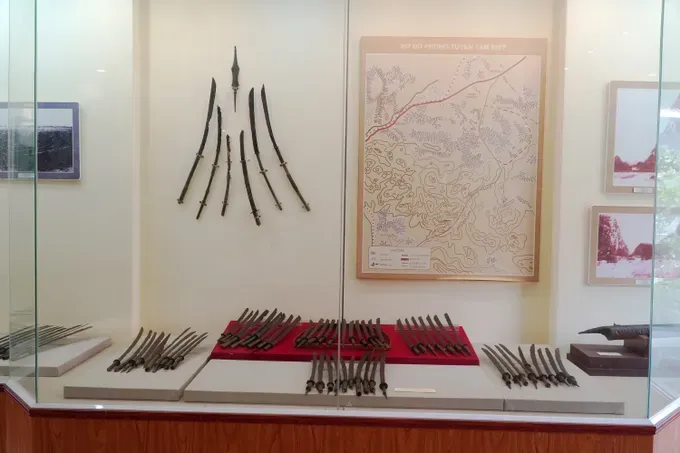
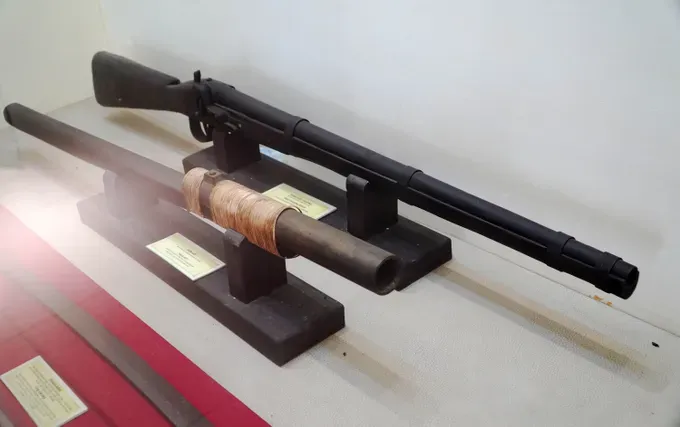
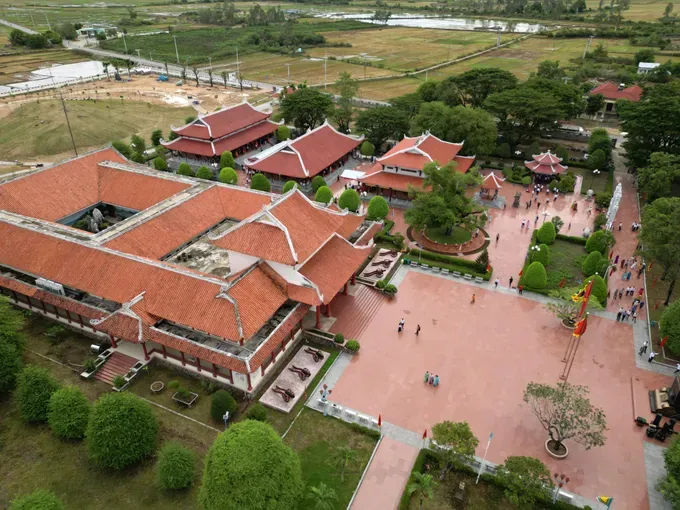
Following the incense-burning ritual, locals and visitors gathered at the ancient laterite well within the Quang Trung Museum grounds to draw water, a traditional custom symbolizing the receipt of royal blessings. Visitors also snapped commemorative photos beneath the heritage tamarind tree and toured the museum. Organizers set up dining areas and blessing-distribution stations to accommodate the influx of attendees.
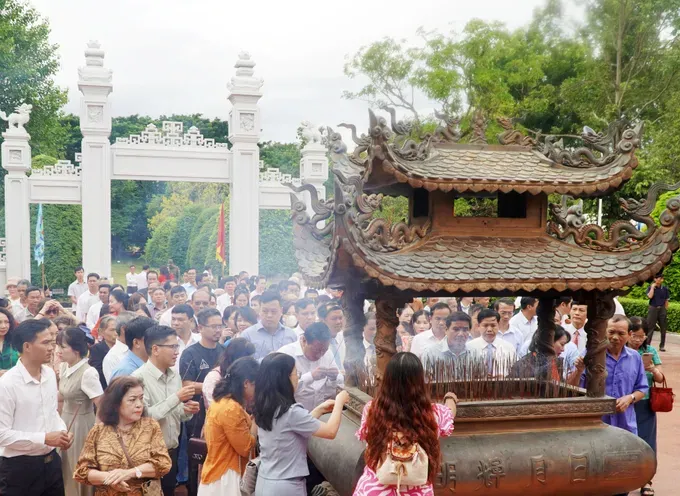
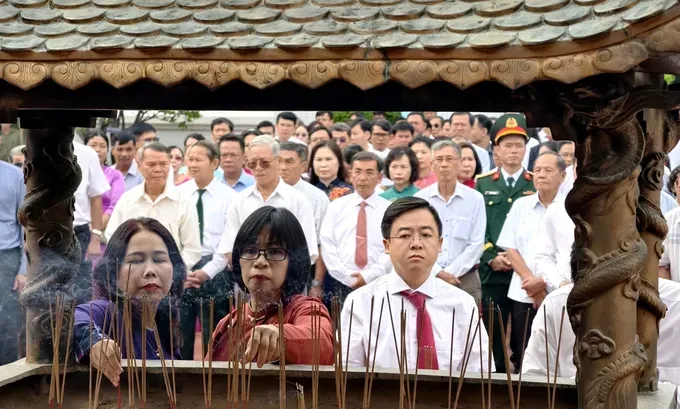
Emperor Quang Trung (Nguyen Hue, 1753–1792) was the outstanding leader of the Tay Son movement, a military genius, and a national hero.
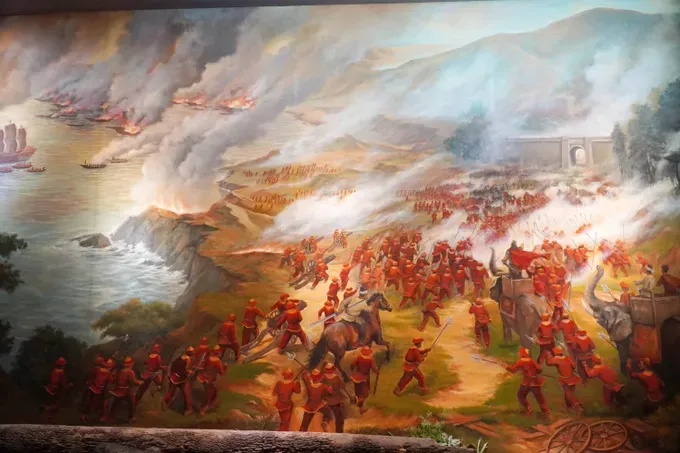
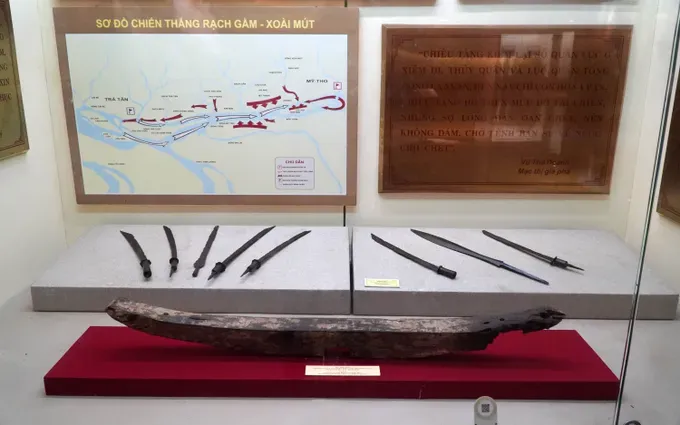
His name is associated with resounding victories, such as the Battle of Rach Gam–Xoai Mut, which wiped out 50,000 Siamese invaders, and most notably the Ngoc Hoi–Dong Da Victory in the spring of 1789, which defeated 290,000 Qing troops and safeguarded national independence.
Beyond his military genius, Quang Trung–Nguyen Hue instituted numerous progressive policies to rebuild the country, recruit talented figures, and cultivate foreign relations with neighboring states. He passed away on the 29th day of the seventh lunar month in 1792 (Year of the Rat) at the age of 39, leaving behind many unfinished ambitions.