Prolonged price decline
According to reports, in late October 2026, live pig prices in several localities dropped to just VND43,000 (US$1.67) per kilogram, a decrease of nearly VND40,000 per kilogram compared to the beginning of the year.
Tran Van Quang, owner of a pig farm in Xuan Loc Ward, Dong Nai City, stated that he decided against overlapping breeding cycles after selling off his previous batch last month. He said that African swine fever is worsening while pig feed costs remain high, yet live pig prices have plunged deeply, so he has temporarily halted herd restocking. This means losing his family's primary source of income for the upcoming Lunar New Year.
According to Pham Truong Giang, Director of Trang Linh Co., Ltd. in Xuyen Moc Ward, Ho Chi Minh City, animal feed prices have surged by approximately 20 percent since early 2026. With a total herd of 3,600 sows and 46,000 slaughter pigs, the company needs to import more than 2,400 tons of feed per month. To relieve financial pressure, the company has had to recalculate its herd size, reduce the proportion of slaughter pigs, and sell off a portion of its weanling pigs.
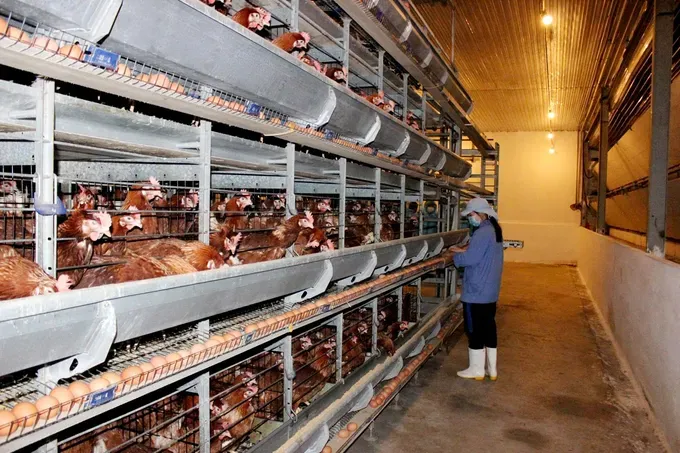
Beyond live pigs, poultry prices have also dropped sharply. According to the Vietnam Poultry Association, in late October 2026, white-feather broiler chicken prices in the Southeast region fell to just VND26,000 to VND30,000 per kilogram, while colored-feather chickens dropped to VND46,000 to VND52,000 per kilogram—representing a decline of over 20 percent since the start of the year. In Ho Chi Minh City and neighboring provinces and cities, selling prices hover near production costs, leaving many farms with zero profit or incurring losses. After 10 months of enduring adverse market trends, if this situation persists through the end of the year, enterprises will find it difficult to stay afloat.
Building production linkages, aiming for exports
Speaking at a recent press conference for the third quarter of 2026 held by the Ministry of Industry and Trade, Nguyen Thuy Hien, Deputy Director of the Domestic Market Management and Development Agency, stated that current food supplies are sufficient to meet year-end consumer demand. However, functional authorities still need solutions to assist livestock farmers in maintaining production while curbing herd liquidations or distress sales when prices fall. If livestock farmers lack the means to restock their herds in time, food supply in the subsequent months could be affected.
Tran Phu Cuong, Head of the Animal Husbandry and Veterinary Department under the Ho Chi Minh City Department of Agriculture and Environment, suggested that enterprises and livestock farmers adopt a production strategy oriented toward exports rather than relying solely on the domestic market. He pointed out that the livestock industry has yet to establish effective supply chain linkages, remaining burdened by excessive intermediaries. Cutting intermediary steps is essential to enhancing the competitive edge of domestic farms.
According to Nguyen Quy Khiem, Vice President and General Secretary of the Vietnam Poultry Association, abundant yet erratic supply is one key factor exerting pressure on the market. Mr. Khiem recommended implementing measures to step up communications, encouraging citizens to prioritize domestic products, alongside tackling cross-border smuggling. Enterprises should also enhance information sharing to prevent localized overproduction and destructive price competition.
Pham Kim Dang, Deputy Director of the Department of Livestock Production and Veterinary Medicine under the Ministry of Agriculture and Environment, said Vietnam's livestock sector needs to strengthen its competitiveness by developing large-scale, concentrated farming operations, applying technology, reducing production costs and becoming more self-reliant in domestic animal feed ingredient supplies.