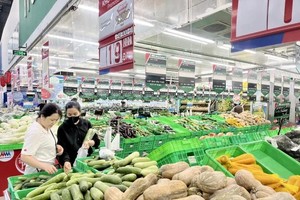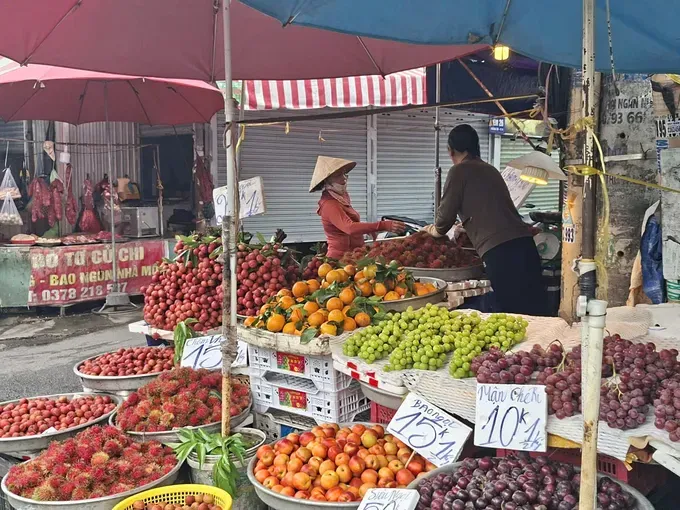
Observations at several markets in Ho Chi Minh City, including Pham Van Hai Market in Tan Son Hoa Ward, An Nhon Market in An Nhon Ward, Hoang Mai Market in An Hoi Dong Ward, and Thach Da Market in An Hoi Tay Ward, show that consumers can easily find imported fruits such as peaches, brown pears, apples, kiwis, and grapes.
Nguyen Thi Hai, a trader at Thach Da Market, noted that despite low domestic fruit prices, consumer demand remains steady for items that Vietnam does not produce or cannot supply in sufficient quantities, such as kiwis, grapes, apples, and sweet oranges.
According to Ms. Hai, the supply volume and variety of imported produce arriving at the market are currently more abundant than before. Ruby grapes are priced at VND64,000 (US$2.48) per kilogram, while black grapes and candy grapes hover around VND85,000 per kilogram. Shine Muscat grapes range from VND55,000 to VND80,000 per kilogram depending on freshness.
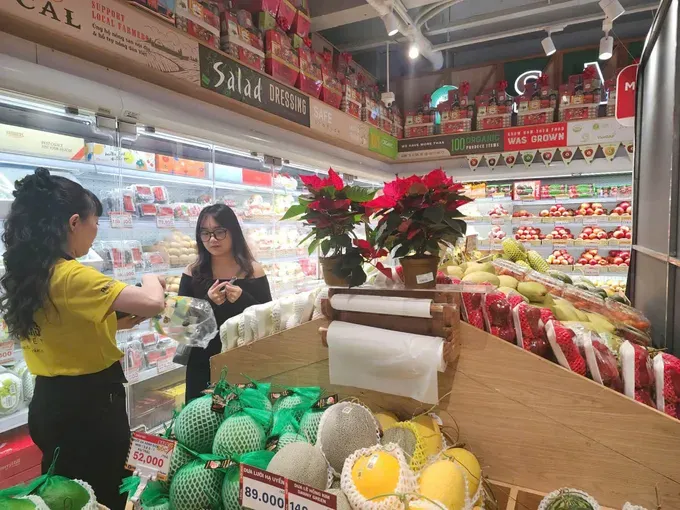
Several items previously categorized in the high-end segment have seen substantial price drops. Kiwi has dropped to around VND135,000 per kilogram, down 15 percent compared to earlier periods. Small-size New Zealand Envy apples (around 170–180 grams per fruit) are priced at VND139,000 per kilogram, down from previous rates that typically exceeded VND200,000 per kilogram.
Surveys across supermarket chains in Ho Chi Minh City indicate similar steep reductions in premium fruit categories. For instance, Envy apples weighing 250 grams or more are priced at just VND178,000–VND190,000 per kilogram, representing a decrease of over VND80,000 per kilogram compared to normal rates. New Zealand blueberries are selling for VND100,000–VND135,000 per 125-gram box, down VND15,000–VND20,000 per box.
Average prices for imported fruits, including apples, grapes, and kiwis, have fallen 5 to 15 percent compared to the same period last year due to abundant global supply, according to Phan Bao Thy, Communications Director of the Kingfoodmart supermarket chain.
In addition to traditional sourcing markets such as the United States, Australia, New Zealand, and Chile, the retail chain expanded its supply chain this year by importing blueberries from Canada and directly procuring Envy apples to secure lower pricing.
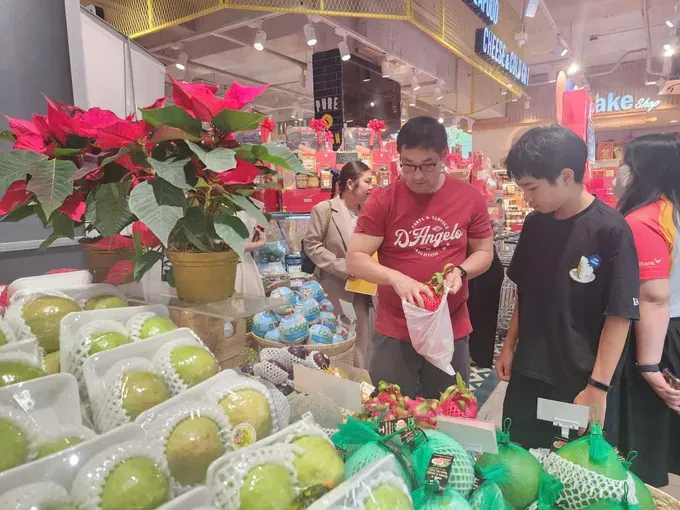
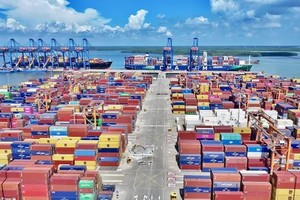
Nguyen Van Muoi, Chairman of the Tropical Agriculture Enterprises Club, attributed the declining prices of imported fruits entering Vietnam to shifts in international trade flows. According to data from the Customs Department under the Ministry of Finance, Vietnam’s fruit and vegetable imports rose 28 percent in the first 10 months of 2026, while exports grew 17 percent year-on-year, reflecting sustained strong domestic demand.
Consequently, enterprise leaders, distributors, farmers, and cooperatives must prioritize elevating the output quality of domestic agricultural products and accelerating marketing efforts, including refined branding and packaging for high-quality Vietnamese produce.
According to Mr. Muoi, multiple factors are driving down the cost of foreign fruits. Primarily, reduced purchasing power in major global markets—caused by economic headwinds and regional conflicts—has slowed consumption in traditional export destinations, forcing international growers to cut prices and reroute excess inventory to alternative markets like Vietnam.
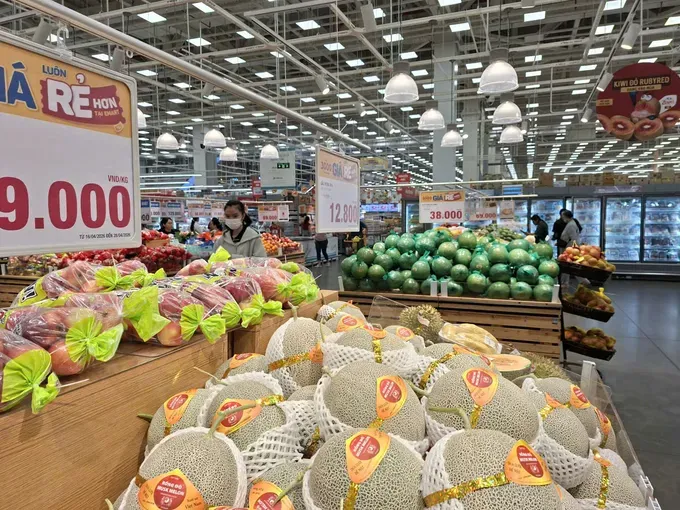
Furthermore, the progressive elimination of tariff barriers under free trade agreements (FTAs) has facilitated the influx of official fruit imports into Vietnam at increasingly competitive price points.
However, from a commercial perspective, Mr. Muoi noted that the rapid increase in fruit imports is placing significant competitive pressure on domestic produce. Many local fruit varieties struggle to compete in terms of visual appeal, shelf life, and supply stability.