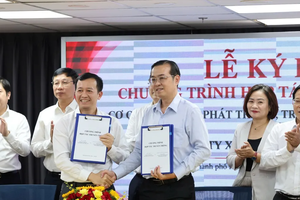
Ho Chi Minh City Finance and Investment State-Owned Company (HFIC) launched an interest rate support policy for investment loans in the logistics sector on April 15 in Ho Chi Minh City. The initiative is designed to remove capital bottlenecks and accelerate the development of supply chain infrastructure.
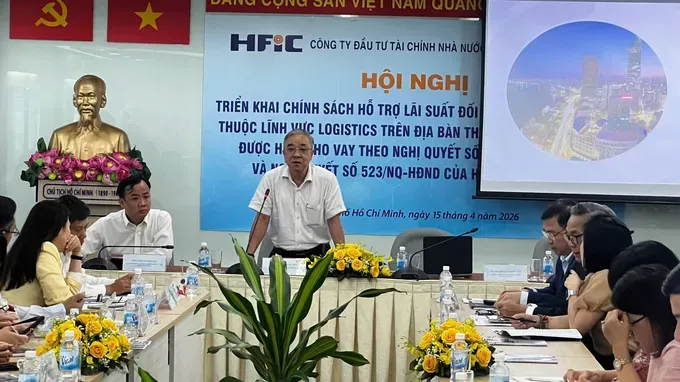
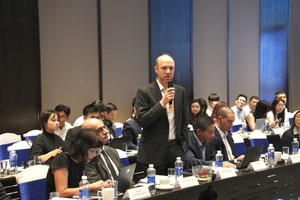
Speaking at the conference, Chairman of the Members’ Council of HFIC Nguyen Ngoc Hoa said that as outlined in Resolution 98, logistics is a priority area for investment. Companies can receive partial interest subsidies from the city budget for loans of up to VND200 billion (US$7.6 million) per project, with any additional loan amount not subsidized.
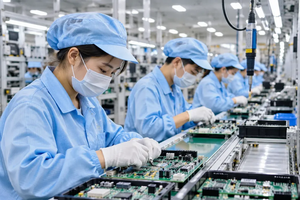
The policy not only encourages investment in expanding warehouses and transit hubs but also promotes in-depth development. Projects involving warehouse automation, digital technology adoption, energy efficiency, or the transition to clean-energy transport may receive higher levels of interest support, depending on specific policy categories.
This mechanism is considered “seed capital,” as a relatively small subsidy from the state budget can mobilize significantly larger private investment.
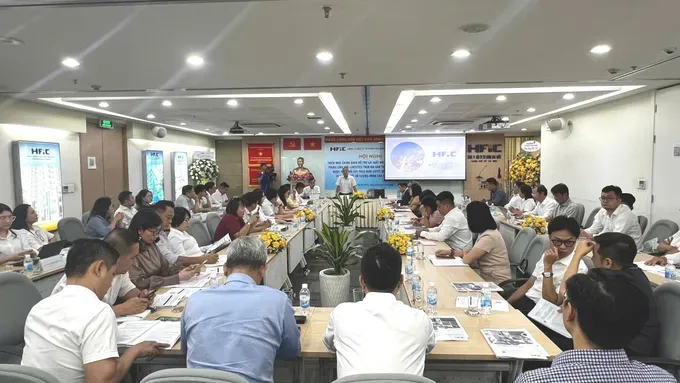
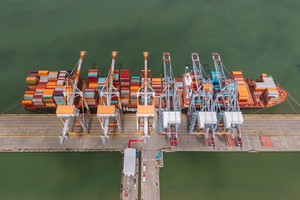
At the conference, logistics enterprises highlighted strong demand for investment in warehousing, transport technology upgrades, vehicles, port development and cold storage systems. However, the biggest challenge remains land acquisition for infrastructure development. In addition, foreign-invested enterprises, joint ventures, and small- and medium-sized firms expressed concerns about their ability to access loans and qualify for interest subsidies.
Addressing these concerns, Mr. Nguyen Quang Thanh, Deputy General Director of HFIC, emphasized the distinction between lending mechanisms and interest rate support policies.
HFIC provides medium- and long-term investment loans, while the city budget subsidizes part of the interest on these loans. The subsidy policy applies only to projects implemented within the city and excludes real estate investments. However, projects involving factories, equipment and technology, especially those supporting green and digital transformation, remain eligible for loans and may receive interest support if they meet the required criteria.
According to him, lending rates are based on a floating mechanism, calculated from the average 12-month deposit rates of the four major state-owned commercial banks, plus a margin depending on project risk. On top of this, the city budget provides an interest subsidy of around 2 percent per year, helping to reduce actual financing costs for businesses.
At the same time, HFIC has coordinated with commercial banks to establish a synchronized financial mechanism. Under this model, HFIC focuses on medium- and long-term capital, while banks provide working capital. This approach enables businesses not only to access funding but also to implement projects more comprehensively, contributing to the modernization of logistics infrastructure and strengthening the city’s economic competitiveness.