Following the merger, the Ho Chi Minh City Labor Union has emerged as a stronger advocate for workers. It now oversees a vast network of members and grassroots labor unions, accounting for one-fourth of the total nationwide.
Labor unions are called upon to strengthen their role, ensuring that workers can clearly recognize they are protected and their voices are heard. At the grassroots level, a union gains true significance only when it becomes a practical source of support, addressing the issues that matter most to its members.
At the grassroots level, unions are striving to become tangible sources of support for members. Tran Quang Loi, Chairman of the Labor Union at Sanofi Aventis Company in Ho Chi Minh City’s Saigon Ward, emphasized that safeguarding workers’ rights begins with everyday issues. He recalled resolving a case where an employee had been assigned excessive workloads, leaving little time for family life. By reviewing labor regulations and collective agreements, the union successfully petitioned management to address the matter.
At Quang Viet Garment Company in Tan An Hoi Commune, despite challenging business conditions, the grassroots union successfully negotiated with management to provide Tet bonuses equivalent to one month’s salary for 4,500 workers. The company’s union also proposed that the Ho Chi Minh City Labor Federation support nearly 700 workers facing hardship and planned Tet gifts of VND600,000 per union member.
Tran Van Hen, Chairman of the Quang Viet Garment Company Labor Union, shared that by closely monitoring labor conditions and workers’ lives, the union has been able to negotiate fair agreements with employers, creating policies that retain workers and maintain workplace stability.
When severe floods struck provinces in the Central region, the Labor Union of Nidec Vietnam Company at Saigon Hi-Tech Park called on employees and company leaders to contribute aid to workers whose families were affected by the disaster. Donations were quickly collected and distributed.
Luu Kim Hong, Chairman of the company’s labor union, noted that many of the activities initiated by the grassroots union have received strong support from both workers and employers. The union also serves as a channel for workers to express their concerns, presenting fair and well-reasoned proposals to management, thereby enhancing the union’s credibility.
The Civil Judgment Enforcement Department of Ho Chi Minh City’s area No. 9 recently issued a decision to temporarily suspend the overseas travel of the Chairman of the Board of Members of Vinh Thong Production–Trading–Service Company, bringing relief to hundreds of former employees awaiting justice.
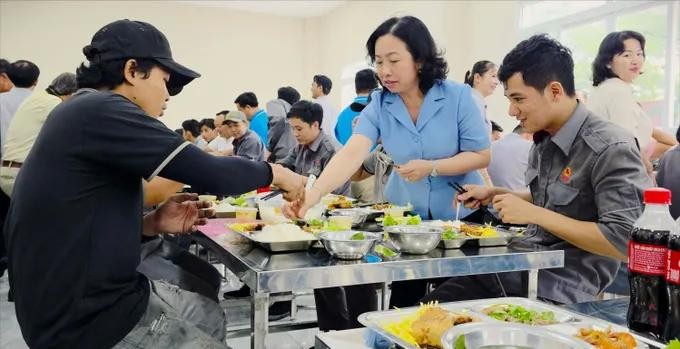
Earlier, the Ho Chi Minh City Labor Union, acting as the authorized representative of the workers, filed a lawsuit against the company. Following the case, the People’s Court ordered Vinh Thong to pay all outstanding wages and make back payments to social, health, and unemployment insurance funds, thereby safeguarding the rights and entitlements of its workforce.
“When we were anxious about our unpaid wages, the labor union stepped in to represent us, offer support, and help resolve the case fairly. That made us truly appreciate the union’s role in protecting workers’ rights,” said worker Pham Van Minh.
After the merger, Ho Chi Minh City became the nation’s largest economic center, home to millions of workers contributing to its growth. This reality demands that the labor union renew its operational methods to better represent, care for, and protect the legal and legitimate rights and interests of its members and workers.
Despite notable achievements, challenges persist. Some unions have been slow to respond to workers’ concerns, faced difficulties in monitoring and understanding labor conditions, and encountered delays in negotiation, dialogue, and dispute resolution. In certain cases, they have not promptly captured or addressed the thoughts and needs of their members.