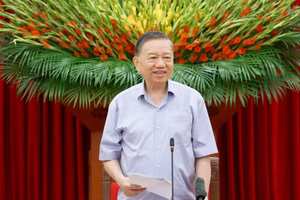
According to the notice, the Prime Minister requested that Ho Chi Minh City thoroughly understand, implement in a synchronized, resolute, and effective manner, and translate into specific action programs the resolutions of the 14th National Party Congress, as well as the resolutions and conclusions of the Central Committee, the Politburo, the Secretariat, the National Assembly, and the Government. Particular emphasis was placed on Resolution No. 09-NQ/TW of the Politburo regarding the construction and development of Ho Chi Minh City in the new era.
Submission of the draft Law on Special Urban Areas at the upcoming session of the National Assembly
In this regard, the city was instructed to focus on directing the implementation of key assigned tasks, including the thorough handling of surplus public assets such as unused houses and land plots within the second quarter; completing the reduction of 50 percent in administrative procedure processing time and 50 percent in compliance costs within the same period; and achieving a 10 percent reduction in recurrent state budget expenditure in 2026, while striving for an additional saving of more than 5 percent.
According to the Prime Minister, achieving the national double-digit growth target depends significantly on growth poles, among which Ho Chi Minh City plays a particularly important role. Therefore, the city must renew its mindset, thinking, and working methods and remain steadfast and determined in fulfilling and exceeding the set objectives.
He also noted that the city should conduct a comprehensive review and update its growth scenarios in line with practical conditions and requirements; clearly identify growth potential across sectors and industries, particularly in manufacturing and processing, pharmaceuticals, logistics, and banking and financial services; and concentrate on addressing difficulties in production and business activities while ensuring a stable supply of goods and raw materials.
The Prime Minister emphasized that Ho Chi Minh City must intensify its leadership and direction to ensure more decisive and effective disbursement of public investment capital. Clear and specific responsibilities should be assigned to relevant agencies, units, and individuals to achieve 100 percent of the assigned plan. Cases of delays caused by subjective reasons must be strictly handled, while capital should be flexibly reallocated among projects in accordance with regulations.
Alongside these efforts, the city was urged to effectively leverage special policy mechanisms and translate them into concrete programs, projects, and resource allocations, with clearly quantifiable output indicators. It should also urgently coordinate with the Ministry of Justice and other relevant ministries and agencies to develop a draft law on Special Urban Areas, to be submitted to the National Assembly at an extraordinary session expected to be held in late July or early August.
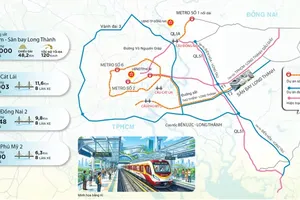
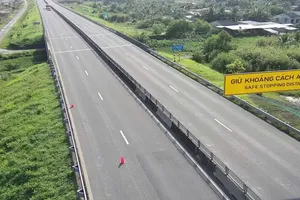
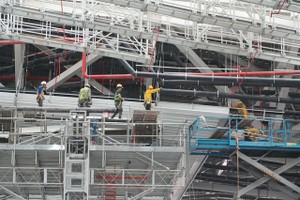
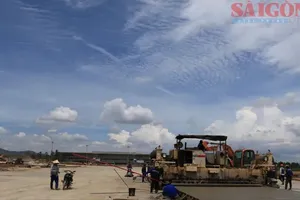
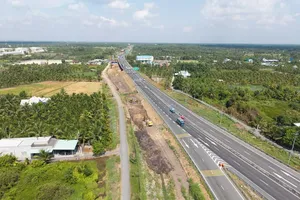
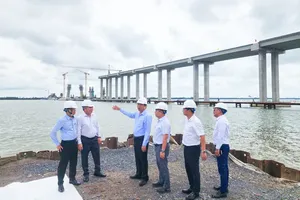
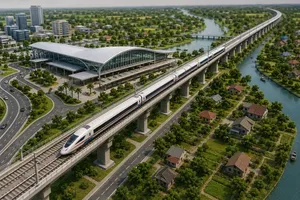
In addition, Ho Chi Minh City was urged to accelerate the implementation of key transport infrastructure projects, including Ring Road 3, the An Phu intersection, the My Thuy intersection, and National Highway 50. It was also directed to commence construction within the final six months of the year on major projects such as Metro Line No. 2 (Ben Thanh–Thu Thiem), the Can Gio–Ba Ria Vung Tau sea-crossing bridge, Cai Mep Ha Port, the Thu Thiem–Long Thanh railway, Thu Thiem 4 Bridge, and Binh Tien Road, among others.
The Prime Minister also called on the city to further promote its role and position as the country’s leading locality in trade and services, with priority given to investment in logistics development linked to the seaport system and international transshipment hubs, such as Can Gio and Cai Mep–Thi Vai. He further emphasized the need to establish and operate an effective International Financial Center in Ho Chi Minh City while attracting financial institutions and international investors to participate.
Rental housing development in urban areas
The Prime Minister also urged Ho Chi Minh City to expedite the completion of its overall master planning. The planning must be aligned with a long-term vision of international stature, with due attention to the exploitation of underground space, the planning of industrial zones and clusters, and the restriction of low-rise, individual housing development, while prioritizing high-rise residential buildings and rental housing in urban areas. The development of public spaces, green areas, and buffer zones between urban zones should also be promoted.
He further requested that the city thoroughly internalize and implement in a synchronized manner the directives of the General Secretary, the State President, and the Prime Minister on the development of rental housing, emphasizing that this must be regarded as a strategic priority in housing development. A strong shift in mindset is required, from focusing on supporting home ownership to ensuring the right to adequate housing for all citizens in accordance with the Constitution. Those who do not yet have sufficient conditions to own homes should have access to affordable rental housing.
The city is tasked with striving to commence at least one large-scale rental housing project in the third quarter and to urgently consolidate or establish a local housing fund, allocating resources for its operation within June.
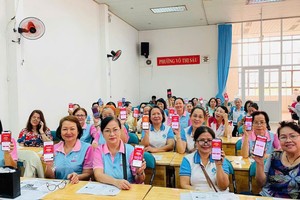
In addition, the city was requested to ensure the smooth and effective operation of the two-tier local government system; to conduct a comprehensive review of the cadre and civil servant workforce, particularly at the commune level, to serve as a basis for proper evaluation, assignment, and arrangement; and to accelerate the progress of restructuring, management, and utilization of public assets, including surplus office buildings and headquarters.
)