Building the foundation for growth
Sports are emerging as a new engine of development in 2026 from infrastructure expansion and the sports economy to community fitness spaces that energize a youthful city. As Ho Chi Minh City accelerates its urban transformation toward the eastern corridor, a new sports landscape is steadily taking shape.
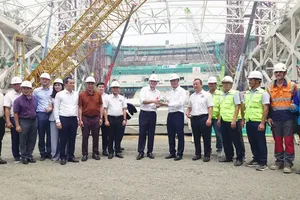
The mid-January 2026 groundbreaking of the 186-hectare Rach Chiec National Sports Complex signals the long-awaited revival of one of the nation’s most ambitious sports projects. Anchored by a 50,000–70,000-seat stadium, the complex is envisioned not only as a venue for premier international events such as the Asian Games and SEA Games, but also as a strategic nucleus in the city’s post-merger sports development plan.
Under the new orientation, the area could integrate national sports facilities, youth athlete training centers and commercial-service complexes connected to the metro system and the Long Thanh–Dau Giay Expressway. If developed to its full potential, the Rach Chiec National Sports Complex could become “Vietnam’s Kallang,” similar to how Singapore has transformed sports into economic infrastructure and a national brand.
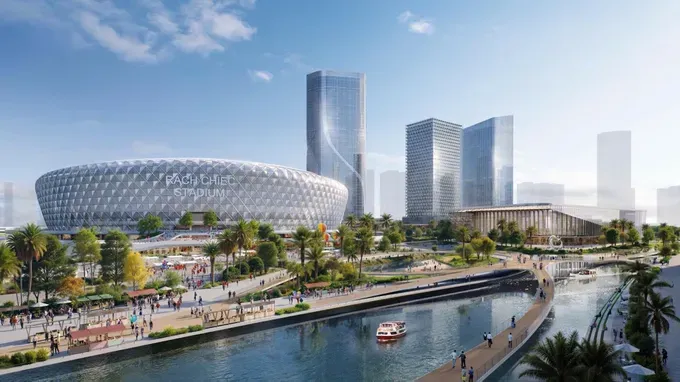
Beyond Rach Chiec National Sports Complex, expectations are high for the modernization of Phan Dinh Phung Indoor Stadium and the establishment of elite training hubs and professional academies. At the same time, historic venues such as Thong Nhat Stadium and Phu Tho Stadium are poised for significant upgrades, reinforcing the city’s ambition to reclaim its position at the forefront of Vietnam’s sports development.
A future urban sports destination
For the first time in two decades, Ho Chi Minh City will host the 2026 National Sports Games, a landmark event seen as a springboard for the city’s “one destination – multiple events” strategy. The occasion comes especially significant after the recent administrative expansion, which has opened up greater space and opportunities for professional and recreational sports development.
The 2026 National Sports Games is regarded as a crucial boost for Ho Chi Minh City to reassess and modernize its infrastructure while enhancing its event management and operational standards. Beyond competition, the Games will function as a pilot model for a sports-oriented urban framework, where every venue is designed with long-term use in mind, balancing commercial viability with community benefit.
Importantly, the city is shifting toward social investment in sports rather than relying solely on the state budget. Public-private partnership (PPP) models are encouraged to create “open sports centers” that serve both professional competition and mass participation. This signals a new mindset sports as investment, not expenditure.
Since hosting the multi-sport SEA Games 22 in 2003, the city has not staged a comparable event. Therefore, the 2026 National Sports Games will act as a “stress test” for infrastructure connected to metro lines, expressways and ring roads and a stepping stone toward hosting larger events such as the Asian Games or regional and continental beach sports competitions.
Leading the next chapter
As one of the three largest contributors to Vietnam’s international sporting achievements, Ho Chi Minh City’s strength lies not only in podium finishes but in its culture of innovation from training systems and athlete development to investment strategies and professional league models.
The city’s sports landscape spans traditional disciplines such as football, volleyball, table tennis, tennis, basketball, badminton, and cycling, alongside emerging trends like dance sports, e-sports, Teqball, and pickleball. This diversity has enabled the city to cultivate sustainable revenue models and vibrant fan communities, setting a standard for sports market development nationwide.
In 2026, attention will center on advancing the “sports economy,” a strategic priority within Vietnam’s Sports Development Strategy for 2025–2030 and its vision toward 2045. With its demographic advantages, economic scale, and expanding urban infrastructure, Ho Chi Minh City is well-positioned to drive this transformation.
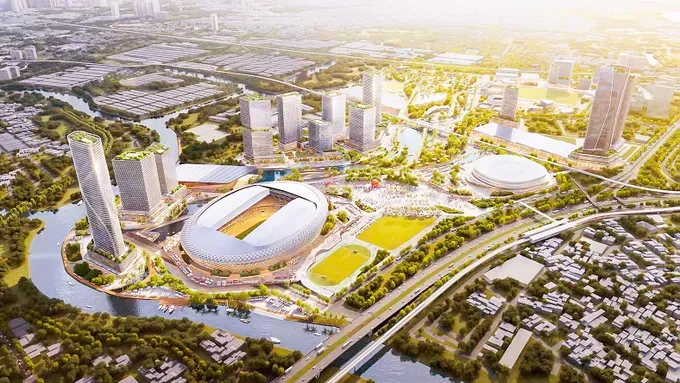
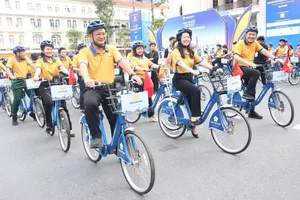
Today’s sports ecosystem extends beyond competition venues, intersecting with tourism, retail, digital innovation, entertainment, and sports medicine. Major events from citywide marathons and futsal leagues to e-sports championships and fitness festivals reflect rising public engagement and consumer demand. Together, they are shaping a modern sports industry in which public institutions, businesses, and communities share both responsibility and opportunity.
Supported by a youthful population and the country’s most comprehensive network of clubs and elite training centers, the city continues to produce athletes who form the backbone of national teams.
With this foundation, Ho Chi Minh City is poised not only to maintain its athletic excellence but also to position sports as a strategic pillar of sustainable urban and economic growth.






)