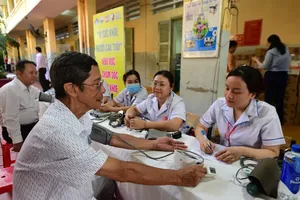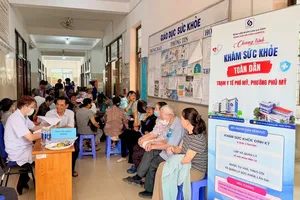
Yesterday, Chairman Nguyen Phuoc Loc of the Vietnam Fatherland Front Committee of Ho Chi Minh City held a working session with the Ho Chi Minh City Department of Health on the work of caring for the health of the elderly.
Improving the Geriatric Care System
At the working session, Dr. Nguyen Van Vinh Chau, Deputy Director of the Ho Chi Minh City Department of Health, said that in recent years, the city has implemented many programs and plans for the healthcare of the elderly in accordance with the directives of the Central Government and the city. By 2025, the average life expectancy of the people will reach 76.7 years.
The work of caring for the elderly continues to expand with 102 "Elderly Helping the Elderly" clubs and 102 volunteer groups, attracting thousands of members and supporting more than 4,000 elderly people in difficult circumstances. In addition, the capacity for geriatric treatment is gradually being improved at all levels.
The Ho Chi Minh City health sector aims to increase average life expectancy to 77 years by 2030. It also seeks to ensure that 100 percent of older adults receive regular health check-ups, along with comprehensive management and treatment for non-communicable diseases. In addition, the sector plans to establish more than 30 elderly care facilities through a combination of public, private, and public–private partnership models, while simultaneously developing a network of 168 community-based care points across wards and communes.
In terms of human resources, the sector targets the training of approximately 2,500 personnel equipped with specialized skills in geriatric care and nursing.
Improving life expectancy and quality of life
In concluding the meeting, Chairman Nguyen Phuoc Loc of the Vietnam Fatherland Front Committee of Ho Chi Minh City commended the health sector’s proactive efforts in advancing elderly healthcare initiatives. While the city has established a solid political, practical, and scientific foundation, further improvements are needed in the legal framework and operational mechanisms to ensure elderly healthcare models can effectively meet growing demands.
He emphasized the need to clearly define priorities, including a strong focus on preventive care, a people-centered approach, and the overarching goal of enhancing both life expectancy and overall quality of life for the population.
Providing quality care for the elderly enhances public health outcomes and helps reduce the burden of treatment costs. It also requires strengthening primary healthcare capacity and accelerating digital transformation. The implementation process must ensure five areas of consistency, including political alignment, legal compliance, data integration, resource allocation, and communication, said Nguyen Phuoc Loc, Chairman of the Vietnam Fatherland Front Committee of Ho Chi Minh City.
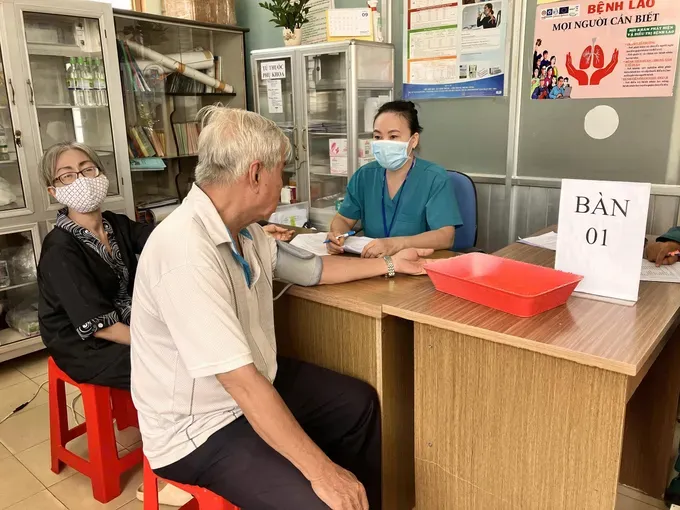
According to the chairman, the health sector needs to prioritize the development of home-based, community-based, and primary healthcare models; improve and expand existing models such as senior citizen clubs and volunteer groups. At the same time, it should encourage the development of care models in residential areas, linked to people's lives.
"Caring for the health of the elderly is an interdisciplinary task, requiring the synchronized coordination of the entire political system and society to build a comprehensive, modern, and sustainable healthcare system for the elderly," Mr. Nguyen Phuoc Loc emphasized.
He further emphasized the need to accelerate the implementation of key projects and ensure timely resource allocation based on the principle of clearly defined tasks, assigned personnel, responsibilities, timelines, and expected outcomes. The overarching goal is to manage the health of all elderly individuals through electronic health records.

He also called for research into and development of specialized geriatric hospitals, as well as the upgrading of existing geriatric departments, alongside the consideration of appropriate mechanisms to support medical examination and treatment costs.
According to Pham Binh An, Deputy Director of the Ho Chi Minh City Institute for Development Studies, one of the primary challenges at present is the absence of detailed planning for the system of nursing homes and elderly healthcare facilities.
The lack of clear specifications regarding land allocation, location, and functional zoning has made it difficult for private enterprises to secure investment permits, thereby diminishing the sector’s overall attractiveness. In addition, limited access to land remains a significant bottleneck, as businesses struggle to obtain suitable sites while existing mechanisms for utilizing public land in cooperative arrangements remain insufficiently open.
To develop an effective elderly care system, a comprehensive and coordinated approach is required, encompassing planning, land policy, financing, and human resource development. Addressing these constraints will create more favorable conditions for private sector participation and, in turn, improve public access to essential services.








)