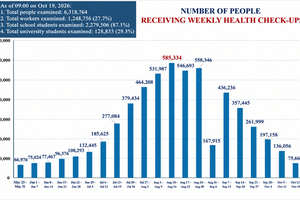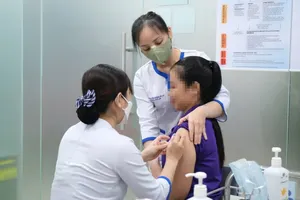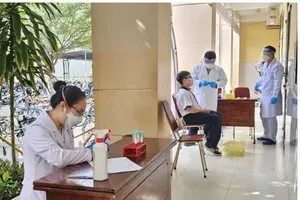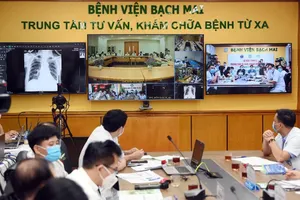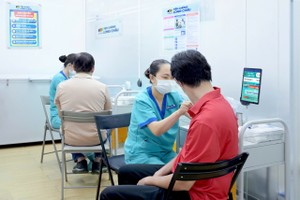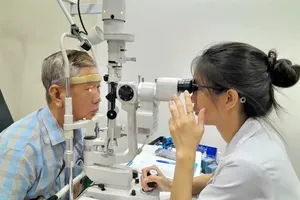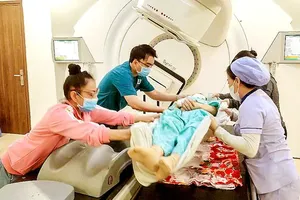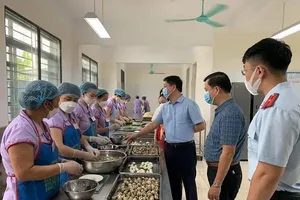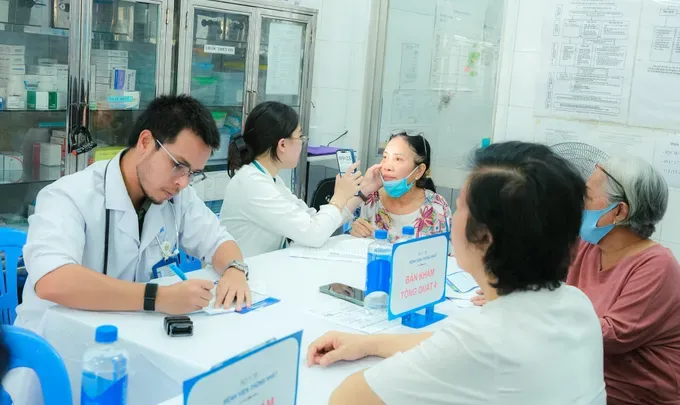
Deputy Director of the HCMC Department of Health Assoc Prof Nguyen Anh Dung, MD PhD, stated that as of July 9, the entire city had successfully conducted health examinations for 408,473 people. It appears that across the city, only five localities have achieved a health examination rate of 10 percent or higher for their residents.
Currently, the Department of Health is closely coordinating with localities and units to fully mobilize the extensive medical system, heartily push propaganda, and actively encourage citizens to participate in periodic health screenings, while simultaneously perfecting the financial settlement mechanism to ensure smooth implementation.
The comprehensive program primarily focuses on specific target groups of the elderly, school students, university students, workers, informal laborers, out-of-school children, and individuals currently being nurtured at social protection facilities.
Through periodic health check-ups, the city is gradually building an interconnected health database to comprehensively serve residents’ health management throughout their lifecycles, thereby significantly contributing to shifting the primary focus from disease treatment to active prevention, facilitating the early detection of underlying risks, and remarkably enhancing overall healthcare efficiency.
For Director of the HCMC Department of Health Assoc Prof Tang Chi Thuong, MD PhD, the 150-day peak emulation drive has heavily accelerated the universal health check-up program. He explained that the health sector is actively calling upon 12 ministry and sector hospitals situated in the city to enthusiastically participate and help the city achieve its ambitious goal:
- Cho Ray Hospital,
- Thong Nhat Hospital,
- HCMC University Medical Center,
- National Hospital of Odonto-Stomatology in HCMC,
- Military Hospital 175,
- 30-4 (April 30) Hospital,
- 7A Hospital,
- Eastern Region Military-Civilian Hospital,
- Military Hospital 4,
- HCMC Orthopedic and Rehabilitation Hospital,
- HCMC Police Hospital,
- Post Office General Hospital.
“Hospitals should register to faithfully accompany one or several wards, communes, or special zones that perfectly align with their unit’s capacity and conditions. They must closely coordinate with local authorities, regional medical centers, and grassroots clinics to carefully build plans as well as dynamically organize health check-ups for residents in the area according to the city’s general plan,” he proposed.
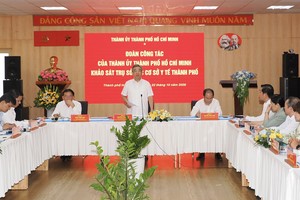
Delivering his concluding remarks at the meeting, HCMC People’s Committee Vice Chairman Nguyen Manh Cuong formally acknowledged the tremendous efforts of the Department of Health, relevant departments, interconnected sectors, participating hospitals, and various localities in aggressively rolling out the periodic health examination and screening program for residents over the past period.
Numerous localities have beautifully demonstrated a high sense of responsibility by proactively drafting plans, mobilizing the entire political system to get involved, and closely coordinating with the health sector as well as hospitals to smoothly organize medical check-ups for the public.
However, there’re still a few localities rolling things out rather sluggishly and lacking absolute decisiveness; some units haven’t finalized their funding estimates and haven’t proactively resolved underlying difficulties or glaring obstacles during the implementation process.
The periodic health examination program for residents is, as stated by the Vice Chairman, undeniably an exceptionally crucial mission for the city. Serving as the intensive medical hub for the entire country, HCMC must undoubtedly take the lead in strategically building a universal health management model. In the end, taking care of citizens’ health isn’t solely the private duty of the medical sector but rather the collective responsibility of the entire political system, extending all the way from the municipal level down to the grassroots.
To ensure the program yields remarkably high efficiency, the Department of Health needs to continually promote its vital role as an advisory body, frequently review the ongoing implementation status, and promptly propose viable solutions to decisively remove any arising difficulties or stubborn bottlenecks. The ultimate objective is to successfully construct a highly unified and smoothly synchronized health database to effectively serve the robust management of residents’ health across the city.
Besides that, the Department of Health must continuously provide specialized and technical guidance for localities, rigorously review and substantially elevate the core capacity of the grassroots medical system, properly perfect the standardized process for updating electronic health records, all of which to ensure that data is securely updated with remarkable speed and absolute accuracy.
Vice Chairman Nguyen Manh Cuong requested the Department of Finance to urge localities to complete their financial estimates while guiding the unified management and optimal usage of funds allocated for the program, rigorously ensuring that annoying financial procedural hurdles don’t negatively impact the overall implementation progress.
“Departments, agencies, and localities must highly concentrate and fully promote their inherent sense of responsibility in order to achieve the fundamental targets of this sweeping program in the upcoming period. The goal isn’t merely hitting the planned health check-up rate. More importantly, it’s about steadily forming a modern, thoroughly synchronized universal health management system that genuinely puts the people at the center, ultimately aiming to sustainably elevate the quality of community healthcare.”
HCMC People’s Committee Vice Chairman Nguyen Manh Cuong


)