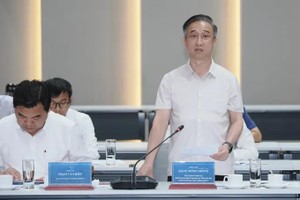
On behalf of the Politburo, Standing Member of the Secretariat Tran Cam Tu signed Conclusion No. 83-KL/TW on August 8, 2026, regarding the development of Vietnam's materials industry.
To foster rapid and sustainable growth within the sector while successfully implementing resolutions from the 14th National Party Congress and other central directives concerning science, technology, innovation, digital transformation, energy, education, training, and national defense, the Politburo has instructed party committees, government bodies, state management agencies, the Vietnam Fatherland Front, and socio-political organizations at all levels to concentrate leadership on several key tasks.
A core requirement is establishing a unified awareness that the materials industry serves as a foundational sector. It holds a decisive role in national strategic autonomy, national competitiveness, and the mastery of core technologies, acting as a crucial prerequisite for developing essential fields and strategic technology products. Developing the materials industry is designated as a national strategic mission, making a vital contribution to fast and sustainable national development and the construction of an independent, self-reliant economy.
Additionally, the directive mandates the strict, unified management of strategic minerals across the entire value chain spanning exploration, basic surveying, planning, extraction, refining, applied material production, recycling, and strategic reserves. Exporting raw minerals will be minimized, while national resources must be extracted and utilized sparingly, efficiently, and sustainably.
Under the timeline outlined in the conclusion, relevant agencies must draft and promulgate the national strategy for materials industry development through 2030, with a vision toward 2045, within 2026.
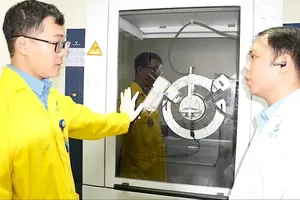
By 2027, a national database for the materials industry will be established, alongside completed and interconnected data on geology and minerals. By 2028, the country aims to establish at least three to five national materials research centers. By 2030, Vietnam seeks to master several core technologies for the deep processing of rare earths, semiconductor materials, and battery materials, while striving for a localization rate of 50 percent for certain strategic materials.