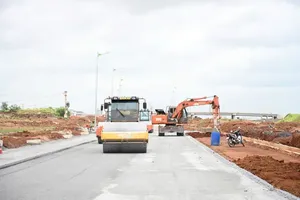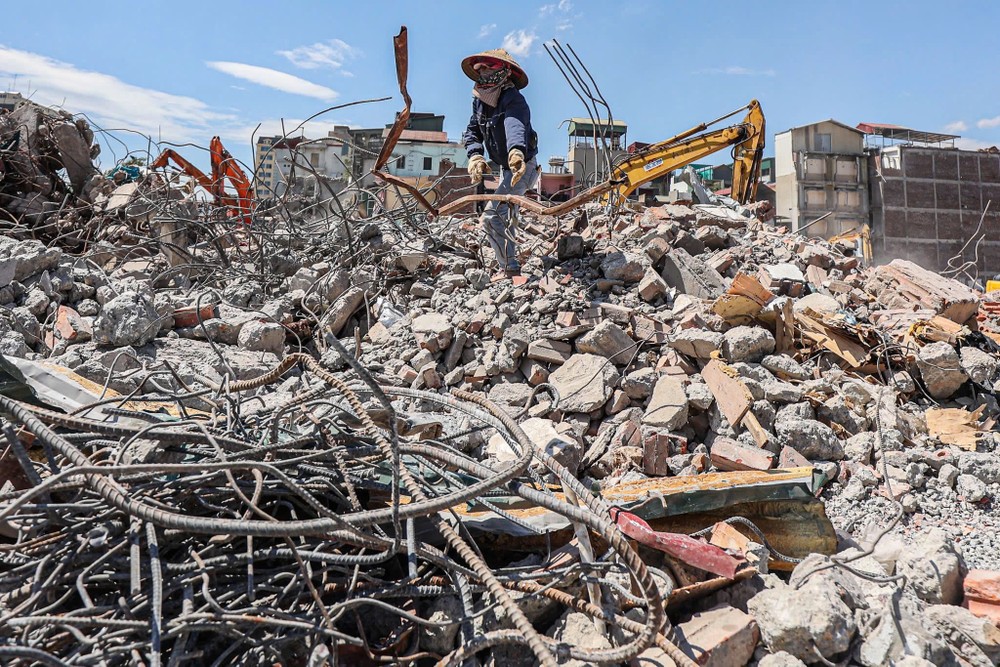
Across areas such as Nhan Hoa, Chinh Kinh, and Thuong Dinh wards, where site clearance is underway for the Ring Road 2.5 project, residential buildings and other structures are being rapidly demolished to make way for construction. The process has generated vast quantities of debris, including bricks, concrete, sand, gravel, and other building materials, much of which is piled up awaiting transportation and treatment.
According to the Hanoi Department of Agriculture and Environment, the capital currently generates around 10,000 tons of construction waste each day. The figure has risen sharply as the city intensifies the implementation of major transport infrastructure projects.
The surge has exposed significant shortcomings in Hanoi’s waste treatment capacity. Existing facilities can process only about 1,670 tons of construction waste per day, far below current demand.
Most construction waste is crushed and recycled into fill material for infrastructure projects. However, the rapid increase in waste generation has overwhelmed existing treatment sites. Large volumes of debris are being temporarily stored at transfer stations while awaiting sorting, crushing, or transportation to neighboring provinces for processing.
According to data from Global Production Services JSC, which operates two construction waste transfer and recycling facilities in Yen So and Phuc Loi wards, the pressure on the city's waste management system is growing increasingly severe.
In 2025, the facilities handled more than 5,000 tons of construction waste daily, double the previous year's level. During the first months of 2026, however, incoming waste exceeded 10,000 tons per day.
The company currently operates two crushing machines with a combined capacity of 80 tons per hour. Previously, the facilities processed around 480 tons daily. To cope with rising volumes, operations have been expanded to four shifts, raising processing capacity to between 800 and 1,000 tons per day and helping relieve pressure on storage sites.
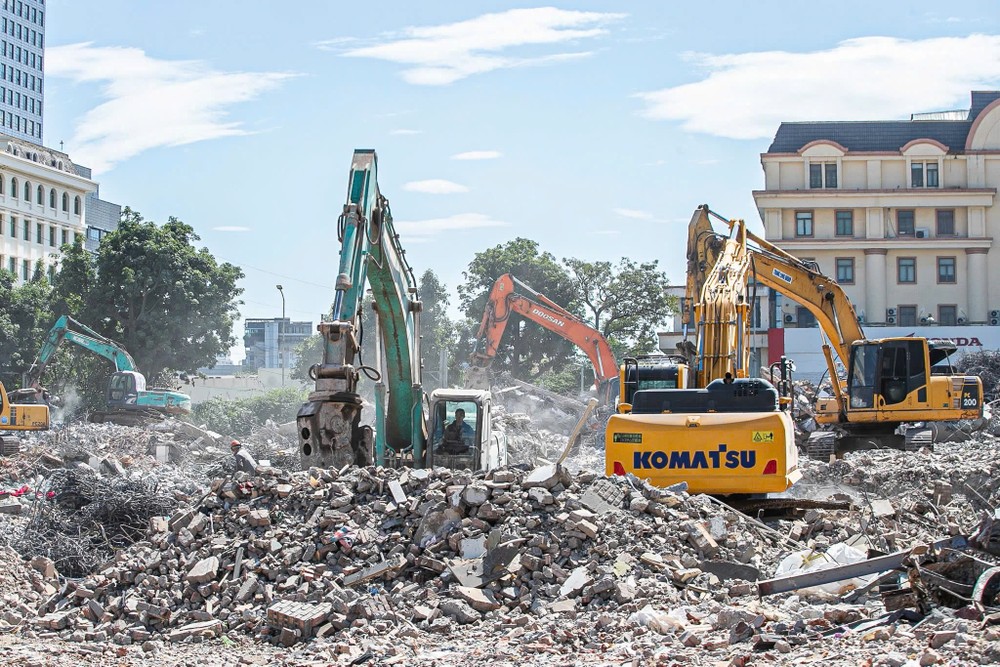
Despite regulations requiring project developers to secure contracts for construction waste treatment, Hanoi continues to face a shortage of specialized disposal and recycling facilities. Existing plants are unable to meet actual demand.
As a result, while some waste is transported to more distant treatment sites, a portion—particularly debris generated from private residential construction and demolition—continues to be illegally dumped on vacant land, green belts, rivers, lakes, canals, and drainage channels across the city, creating environmental and urban management challenges.
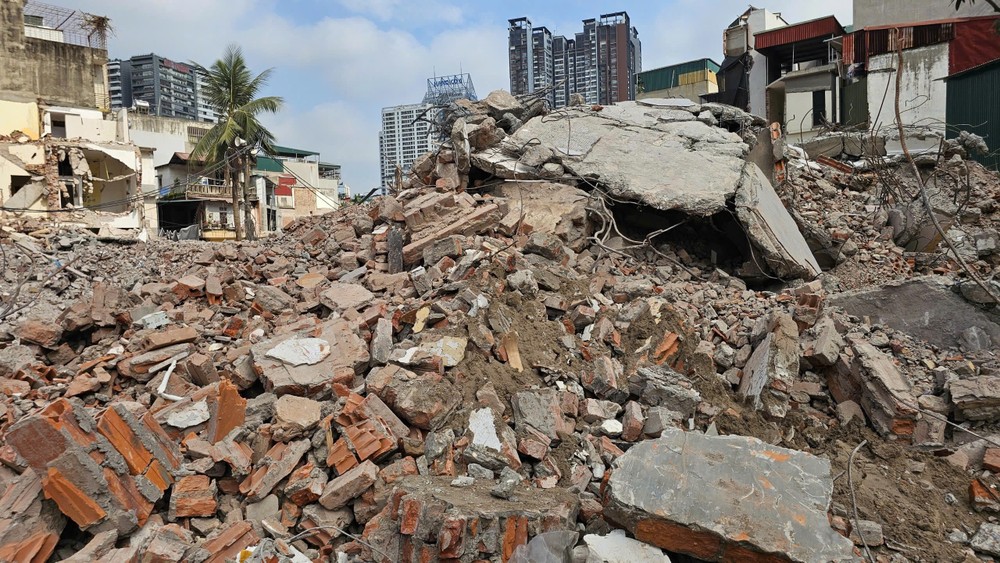
To address the problem, Hanoi is preparing several large-scale waste treatment and recycling projects. These include a temporary transfer station and crushing-based recycling facility in Chuong Duong Commune with a capacity of 700 tons per day; a construction waste treatment and recycling plant in Duc Tu and Dong Anh communes, capable of processing 1,000 tons of construction waste and 1,000 tons of sludge daily; and Me Linh recycling center in Tien Thang Commune with a capacity of 480 tons per day.
However, until these projects become operational, existing transfer stations will continue to bear the burden of handling enormous volumes of construction waste generated by Hanoi’s ambitious land clearance and infrastructure development program.