According to the Gia Lai Provincial People's Committee, the Quy Nhon - Pleiku Expressway spans approximately 125 km, starting at National Highway 19B and ending at its intersection with Ho Chi Minh Road. Designed for a speed of 100 km/h, the four-lane expressway features a roadbed width of 24.75 meters, with a total preliminary investment of over VND43.7 trillion (US$1.7 billion). The project consists of three component projects implemented from 2025 to 2029, requiring the acquisition of 1,100 hectares of land and affecting more than 5,300 households.
To date, construction has commenced on all three component projects. Component projects 1 and 3 have basically completed compensation, support, and resettlement work, handing over 100 percent of their site area to contractors. Component project 2 has handed over approximately 95 percent of its clear land, with the remaining portion expected to be completed prior to November 15, 2026. Overall, roughly 97 percent of the total project site has been handed over. The local authority has built 13 resettlement areas to serve affected residents.
Currently, total construction output value across the project has reached approximately VND2,014 billion, equivalent to 6.5 percent. Contractors are concurrently constructing roadbeds, bridges, drainage systems, and underpasses in handed-over sections. The project requires an estimated 7 million cubic meters of fill soil, 2.4 million cubic meters of sand, and 3.8 million cubic meters of construction stone.
Mr. Pham Anh Tuan, Chairman of the Gia Lai Provincial People's Committee, noted that under the package contracts and commitments, contractors are required to provide a five-year warranty for the construction work.
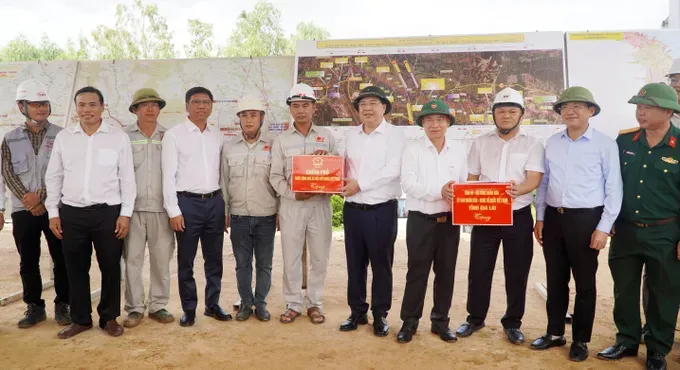
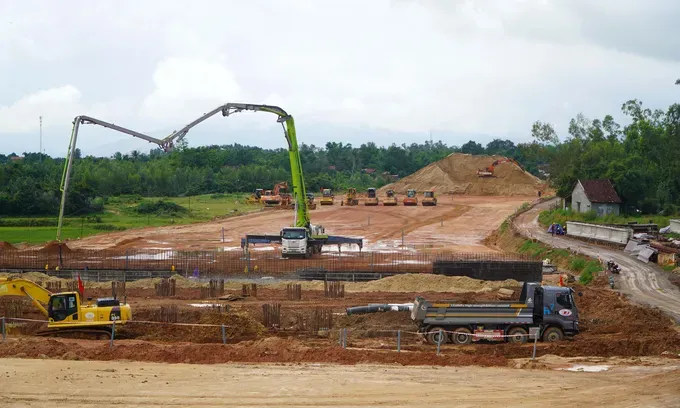
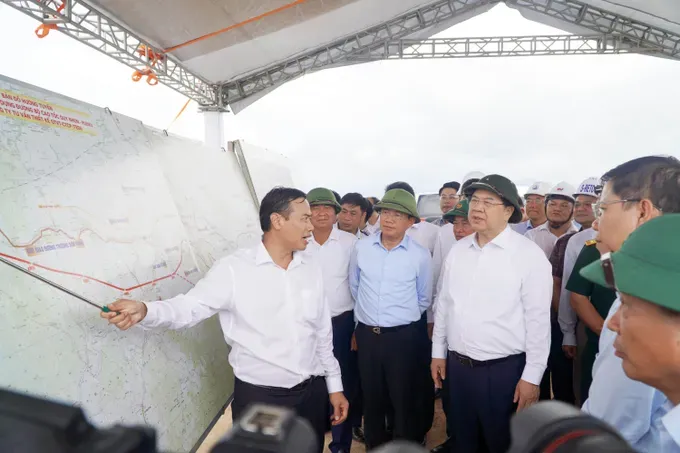
After hearing reports from local authorities, the project developer, and contractors, Permanent Deputy Prime Minister Pham Gia Tuc emphasized that the expressway passes through complex terrain, notably featuring two mountain tunnels through steep passes that demand specialized technical standards and technologies. He urged the project developer and contractors to mobilize adequate human and material resources to maintain progress while prioritizing quality and technical safety above all.