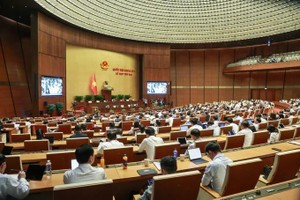
On November 7, the 13th meeting of the World Network of Island and Coastal Biosphere Reserves (WNICBR) entered its second day in Ho Chi Minh City. The event is organized by the Ho Chi Minh City People’s Committee in collaboration with the Vietnam National Commission for UNESCO.
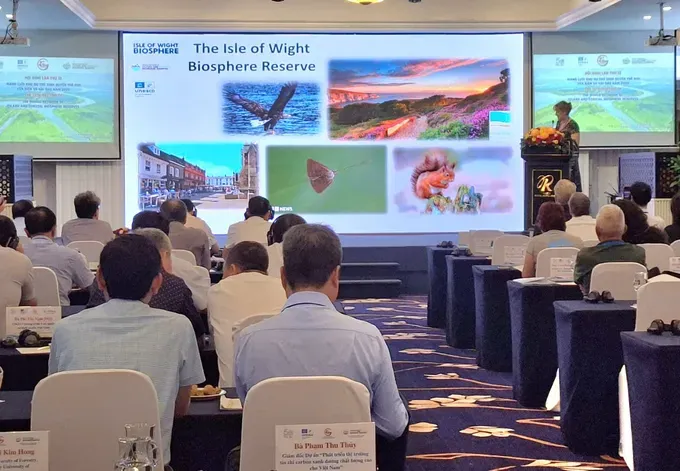
Speaking at the conference, Jonathan Wallace Baker, UNESCO Representative to Vietnam, noted that beginning in the late 1970s, volunteers replanted the mangrove forests of Can Gio using seedlings brought from Ca Mau.
In 2000, Can Gio became Vietnam’s first UNESCO-recognized world biosphere reserve. Vietnam is now home to 12 such reserves—the second-highest number in Southeast Asia—seven of which are located in coastal and island areas.
Established in 2012, the World Network of Island and Coastal Biosphere Reserves (WNICBR) contributes to addressing issues related to the oceans, coastal management, urbanization, and climate change.
Commending Vietnam’s goal of expanding its protected areas, Jonathan Wallace Baker expressed his hope that the conference would define concrete actions and a practical roadmap for cooperation among the biosphere reserves. In Vietnam, UNESCO has implemented projects focused on marine debris and ocean education in Cu Lao Cham, Cat Ba, and Can Gio.
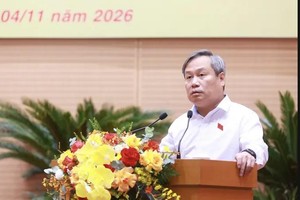
Head Nguyen Van Thiu of the Management Board for the Cat Ba Archipelago World Biosphere Reserve stated that the site, which was recognized by UNESCO in 2004, spans over 26,400 hectares within Cat Hai Special Zone (Hai Phong City), with Cat Ba National Park serving as its core area. The Cat Ba Biosphere Reserve prioritizes the development of sustainable livelihoods through tourism services, agriculture, and aquaculture—utilizing eco-friendly HDPE plastic floating structures—while simultaneously protecting mangrove forests.
Dae-shin Kim, Director of the Hallasan Research Institute in Jeju Province (South Korea) and representative of the WNICBR Secretariat, stated that the WNICBR has been recognized by the International Coordinating Council of UNESCO’s Man and the Biosphere (MAB) Program as a model for thematic networks.
Island and coastal regions across the globe are increasingly collaborating to address shared challenges, particularly in mitigating the impacts of climate change and restoring ecosystems.
Jeju Province will continue to work with UNESCO and member biosphere reserves to further the development of this network.