Deputy Prime Minister Tran Hong Ha has signed Decision No. 628/QD-TTg dated April 6, 2026, approving the task for the master plan of Da Nang City through 2050, with a long-term vision to 2075.
The planning scope covers the entire administrative boundary of the city along with its eastern marine space, totaling approximately 11,859.59 square kilometers.

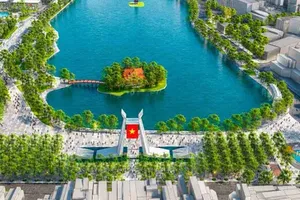
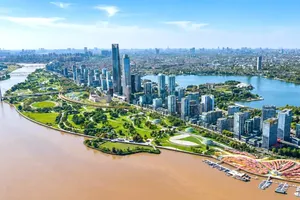
By 2050, Da Nang City is expected to develop into a modern, smart, livable city rich in cultural identity. It is envisioned as a key national growth pole and a regional hub for logistics, marine economy, finance, free trade and innovation.
Looking ahead to 2075, the city aims to become an internationally attractive, safe and ecological urban center.
In terms of population, Da Nang City is projected to reach around 6 million residents by 2050, including about 4 million urban dwellers. Urban residential land is expected to range from 28,000 to 44,000 hectares, while rural residential land will total around 30,000 hectares.
The development strategy shifts away from a single-core model toward a multi-center, multi-polar structure, strengthening linkages between coastal, plain, and mountainous areas, as well as between urban, industrial, service and ecological zones.
A notable highlight is the plan to form a continuous coastal urban chain linking Da Nang, Hoi An and Dien Ban, expected to become a distinctive tourism, cultural, and economic growth corridor in central Vietnam.
To the south, Tam Ky and Nui Thanh are set to develop into industrial, logistics, urban and service centers, driven by Chu Lai Airport and seaport systems.
The western region will prioritize the development of medicinal industries, with Ngọc Linh ginseng as a flagship product, combined with community-based tourism and the preservation of indigenous culture.
The plan also reinforces Da Nang City’s role as a strategic national and international transport hub, connecting the East–West Economic Corridor, seaports, airports and interregional transport networks.
The planning process is expected to be completed within 15 months, with a target deadline of June 2026.