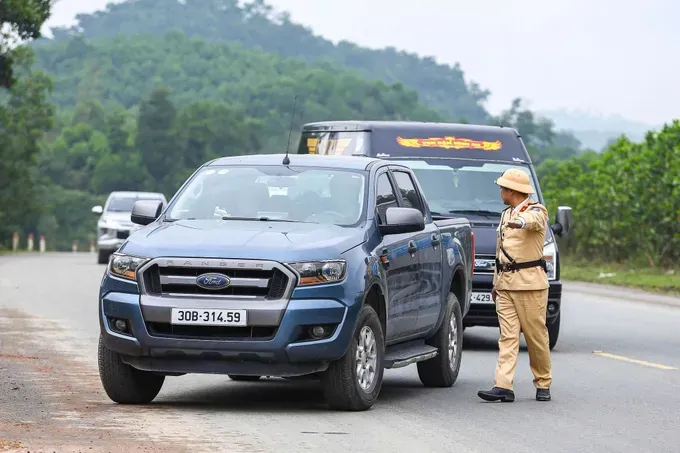
Nguyen Hoang Nam, a Hanoi furniture store owner, sighed heavily beside his Ford Ranger, his family’s primary livelihood. “I utilize a pickup truck for its versatility to deliver goods and commute my children,” he lamented. Under new regulations, his vehicle is rigidly categorized alongside heavy trucks exceeding two tonnes. Consequently, he can only enter the inner city between 9:00 p.m. and 6:00 a.m. Nam questioned if he must wait until nightfall just to commute.
His intense grievance accurately mirrors the collective frustration of numerous pickup truck owners across the city. Many vehemently argue that equating standard pickups with specialized heavy transport is fundamentally unjustified. This abrupt regulatory shift creates a highly frustrating dilemma that keeping the vehicle renders it completely useless during the day, while selling it incurs substantial financial losses.
Le Minh Ha, a carpentry workshop owner, detailed her situation. Her facility operates two Toyota Hilux trucks to transport samples to downtown clients. Now, they must wait until after nine at night to enter the area. However, clients demand daytime inspections, and laborers can’t endure exhausting night shifts.
“This rigid administrative decision effectively forces small enterprises like ours to absorb catastrophic operational cost increases of at least 20-30 percent, as we’re immediately forced to either rent supplementary buffer warehouses or transition entirely to alternative transport vehicles,” she expressed.
Conversely, a substantial proportion of daily commuters utilizing motorcycles and compact cars strongly endorse this new regulation. “The historic streets in Hoan Kiem Ward are exceedingly narrow,” shared 60-year-old Nguyen Cong Tuan, who resides on Hang Ngang Street. “When massive, six meter long pickup trucks attempt to squeeze through, severe traffic congestion is an absolute inevitability. And many vehicles are heavily modified with blinding LED lighting and robust iron bumpers, making them terrifying to ride alongside on motorbikes. I support banishing this vehicle group from the congested inner city to prioritize space for buses and compact cars.”
Addressing controversial regulations, Colonel Nguyen Quang Nhat of the Traffic Police Department under the Ministry of Public Security informed on March 23 that recent rumors are factually inaccurate. Specifically, claims that traffic police randomly differentiate between passenger and cargo pickups to intentionally ban the latter are entirely false.
He clarified that prohibition protocols are strictly executed according to Decision 01/2026/QD-UBND issued by the Hanoi People’s Committee. The municipal police merely function as the enforcing entity. Meanwhile, the Traffic Police Team 1, managing Hoan Kiem Ward, surprisingly reported that no pickup trucks have been penalized since the decision took effect three months ago.
This decision, regulating capital traffic operations, stems from explicit guidelines within Circular 53/2024/TT-BGTVT, issued by the Ministry of Transport, now under the Ministry of Construction. This comprehensive circular technically classifies road vehicles and establishes green energy markers.
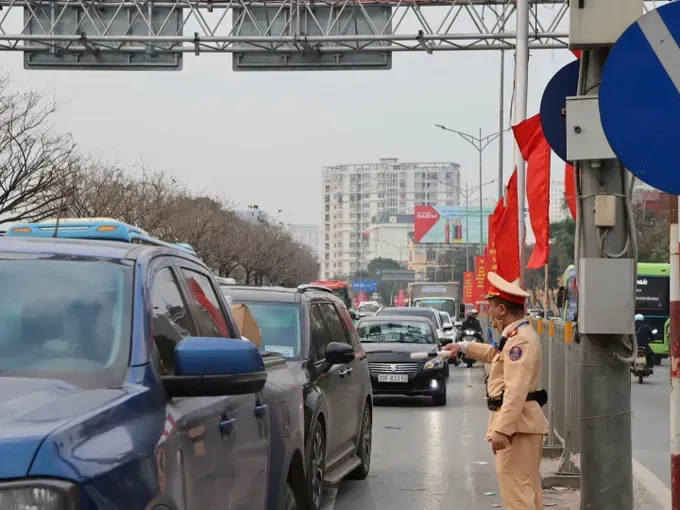
According to Deputy Head Pham Huy Khang of the Transport Infrastructure Management Department, passenger pickup cars are officially categorized strictly within the passenger demographic, entirely exempting them from truck circulation restrictions. Conversely, single-cabin and double-cabin cargo pickups are classified as conventional trucks, mandating their subjection to strict operational constraints outlined in Decision 01/2026/QD-UBND.
Addressing the contentious debate regarding why two fundamentally similar vehicle types are subjected to divergent classifications, the Road Motor Vehicle Division under the Vietnam Register emphasized that vehicle classification based on intended utility is rigorously mandated by Circular 53/2024/TT-BGTVT.
Under this legislative circular, colloquial concepts of “passenger pickup” or “cargo pickup” are technically non-existent; instead, there are merely two distinct technical classifications. Specifically, passenger pickup cars strictly fall under the category of vehicles carrying up to eight people, excluding the driver, detailed in Appendix I.
Meanwhile, cargo pickup trucks belong to the conventional truck category delineated in Appendix IV, possessing highly specific technical criteria. A passenger pickup must feature at least one defining structural characteristic structurally differentiating it from others.
Determining precise vehicle classification is the legally mandated responsibility of functional agencies. This is executed strictly based on the circular’s appendices when issuing certificates of technical safety and environmental protection. During mandatory inspections, registration centers rely exclusively on these officially recorded certificates.
The Vietnam Register firmly maintains that the stipulations within Circular 53/2024/TT-BGTVT remain unequivocally clear, ensuring owners are fully aware of their legal vehicle classification. However, from a jurisprudential perspective, robust regulations must be not only technically sound but also inherently comprehensible and effortlessly applicable for the general public, allowing them to accurately anticipate systemic consequences.
Presently, regulations governing pickup trucks fall significantly short of this essential benchmark. Also, when regulations become profoundly detached from practical reality, citizens inevitably seek evasion tactics. This predictably spawns supplementary administrative costs while overarching traffic management objectives ultimately fail.
Representing transport enterprises, Vice Chairman Nguyen Cong Hung of the Vietnam Automobile Transportation Association admitted the policy partially alleviates peak traffic pressure and mitigates vehicular conflicts. Nevertheless, severely restricting operational timeframes forces businesses to drastically overhaul logistical operations, inevitably incurring supplementary labor and warehousing expenses while disrupting essential supply chains.
For genuine long term efficacy, this regulation urgently requires flexible evaluations based on commodity groups, alongside prioritizing vehicles transporting essential goods. Simultaneously, numerous automotive forums have witnessed impassioned pleas demanding a flexible conversion mechanism.
Proponents suggest permitting specific pickup trucks to operate under conventional passenger car regulations when exclusively utilized for personal transit. They adamantly advocate synchronizing technical classifications with urban traffic policies to prevent disastrous, unforeseen, massive social ramifications.
In HCMC, the municipal Department of Construction officially reported that pursuant to Decision No.23/2018/QD-UBND issued by the HCMC People’s Committee, pickup automobiles are entirely exempt from circulation time restrictions. Despite possessing inherent cargo-carrying capabilities, their unique hybrid nature of seamlessly combining freight transport with passenger transit logically warrants their placement in a distinct, separate category, successfully bypassing the stringent prohibition time frames imposed on conventional trucks.
Exempting pickup trucks from these rigid restrictions substantially facilitates favorable, highly practical conditions for citizens and enterprises regarding their manufacturing processes, commercial endeavors, and daily routines. Regarding registration protocols, vehicle registration centers across HCMC explicitly confirm that the rigorous inspection process for pickup trucks proceeds entirely normally, with absolutely no deviations from previously established standard operating procedures.