Picture books are increasingly defining the cultural and intellectual lives of young readers, with local works gaining a stronger foothold and recognition on the global stage after two decades of growth. As highlighted at the 2026 festival in Ho Chi Minh City, industry experts emphasize that the sector has flourished since 2022, though further development requires targeted support and international promotion.
Vietnam’s picture books seek stronger cultural footing
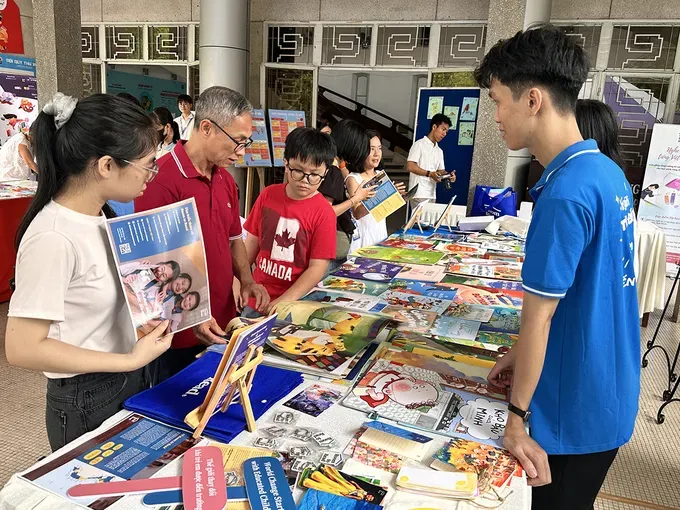
In addition to author talks, book introductions, and seminars, the festival features the exhibition 100 cuon sach tranh Viet Nam de yeu va nho (100 Vietnamese Picture Books to Love and Remember) held at both the Ho Chi Minh City General Sciences Library and Ho Chi Minh City Book Street. The books on display were published between 2006 and 2026, offering a partial retrospective of the steady 20-year journey of Vietnam's domestic picture book industry.
Nguyen Huu Quynh Huong, Head of the Festival Organizing Committee and Director of Slowbooks, a publisher specializing in picture books, said that Vietnamese picture books emerged much later than their international counterparts and were initially often mistaken for a branch of comic books. She said that it was not until 2022 that Vietnamese picture books truly began to flourish, with more organizations investing in their production and a growing number of illustrators and authors becoming involved.
An important milestone in the development of the genre was the presence of Room to Read (RtR) Vietnam. During its 25 years in Vietnam, in addition to building school libraries and supporting girls' education, RtR has consistently pursued the publication and promotion of picture books for Vietnamese readers. Many prominent picture book creators today, including Huynh Kim Lien, Pham Quang Phuc, Thai My Phuong, and Vu Thi Thuy Dung, began their careers by participating in picture book workshops organized by RtR.
Director Le Thien Tri of RtR's Literacy Program in Vietnam believes that picture books have a significant advantage in connecting generations of readers. They serve as an effective tool for helping children build relationships with parents and other adults.
According to estimates, there are currently 14 organizations in Vietnam involved in producing picture books, and annual publishing industry statistics indicate that the genre has been growing steadily. Notably, while picture books in Vietnam were once dominated by translated works, recent years have seen increasing recognition for books created by Vietnamese authors. Drawing on local culture, everyday life, and familiar experiences, these works are steadily gaining a stronger foothold in the market.
Vietnamese picture books aim for global stage
In 2015, the picture book Hanh Trinh Dau Tien (The First Journey) by Huynh Kim Lien and Phung Nguyen Quang won first prize at the Scholastic Picture Book Award, a major Asian picture book competition. It was the first time a Vietnamese picture book received international recognition, paving the way for many other titles to gain global attention, including Duong Ve Nha (The way home), Nhung Nang Cong Chua Bi An (The mysterious princesses), Nang Lo Lem (Cinderella), Chang Hoang Da – Gau (Wild Chang – Bear), Ba To La Runner (My Dad is a runner), and Con An Het Roi (I've finished eating).
Discussing the challenges faced by picture book creators, Nguyen Huu Quynh Huong said that most picture book authors belong to the younger generation, primarily Gen Z and younger. According to her, the greatest challenge is not their talent or opportunities for self-expression, but rather the resources needed to bring their works to wider audiences.
“For Vietnamese picture books to develop further and gain better access to international markets, practical support is needed from translation funds and national-level promotion programs. The reality is that in Vietnam, picture books still have not received the recognition they deserve, despite producing many remarkable achievements,” Nguyen Huu Quynh Huong added.
Meanwhile, Director Le Thien Tri believes that for Vietnamese picture books to secure a rightful place on the global picture book map, domestic creators need to develop three capabilities simultaneously: telling stories that are distinctly Vietnamese while addressing universal themes that resonate with young readers; mastering the unique language of picture books, where illustrations, text, and design work together to tell a story; and participating in more professional mechanisms such as creative workshops, mentorship programs, rights exchanges, festivals, awards, and international publishing networks.
The director said that the publishing sector should create more opportunities for Vietnamese works to appear at international picture book festivals and book fairs so that they can become better known to readers around the world.
A picture book is a genre primarily aimed at children, featuring large illustrations combined with short text for artistic and educational purposes. This is completely different from comic books, which use panel layouts, speech bubbles, and dynamic imagery to tell long, complex storylines.











)