Amid a series of recent drowning accidents at beaches across the Central region, experts and local authorities urged better-equipped rescue services, stricter management and greater public awareness to protect beachgoers.
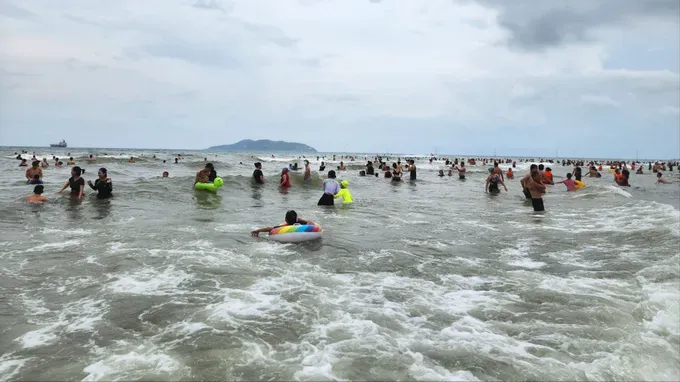
At Cua Lo Beach in Nghe An Province, thousands of residents and tourists flock to the shore each afternoon. However, some areas still lack floating barriers marking designated swimming zones, while many swimmers venture far offshore without life jackets despite warning signs.
Tran Chuong, a fisherman in Cua Lo Ward, said many visitors unfamiliar with local waters underestimate the dangers.
The waters near Lan Chau Island have submerged rocks, deep channels, strong currents and large waves. More permanent floating barriers should be installed to prevent people from entering hazardous areas, he said.
About 15 kilometers away, Xuan Thanh Beach in Ha Tinh Province also attracts large numbers of visitors. On June 22, a father and his 13-year-old son drowned after being caught by strong waves while swimming.
The tragedy exposed shortcomings in beach safety infrastructure. Local residents said the beach lacked rescue boats and floating barriers separating safe swimming areas. Marker buoys that had previously identified safe zones had been washed away by waves.
Similar incidents have occurred in Quang Tri Province and Hue City.
On May 1, a man from Hanoi died after rescuing his two children from rough seas at a beach in Vinh Hoang Commune, Quang Tri Province. On June 21, two children visiting Da Nhay Beach in Quang Tri were swept away by waves but were rescued by local residents.
Local officials acknowledge that improving public awareness alone is not enough and that stronger supervision and investment in safety infrastructure are also needed.
Persistent shortages of rescue personnel and equipment
Hoang Duc Anh, an official at the Cua Lo Ward Public Service Center, said the beach deploys 20 lifeguards across its five-kilometer coastline, supported by four supervisors, four jet skis, warning flags and a public-address system.
Despite these measures, many visitors ignore safety regulations. Some even argue with or threaten rescue personnel when warned not to swim in dangerous areas, he said.
Since the beginning of 2026, lifeguards at Cua Lo Beach have rescued between 30 and 40 people, around 70 percent of them children. Nevertheless, three drowning deaths have still been recorded.
He said limited personnel and equipment remain the biggest challenges. Rescue jet skis are frequently damaged by constant operation in harsh marine conditions, while at least two additional watercraft are needed to improve emergency response.
Recruiting qualified lifeguards with sufficient experience, physical fitness and commitment has also proven difficult.
At Xuan Thanh Beach, only four lifeguards are assigned to monitor a two-kilometer coastline. Without rescue boats, they must swim to victims during emergencies, delaying response times.
In Hue City, authorities have installed boundary markers and floating ropes to designate safe swimming areas, increased lighting for nighttime surveillance and banned night swimming. Patrol boats also monitor the coastline during peak periods.
Professional rescue services reduce risks
Da Nang has emerged as a model for beach safety management. Along the beaches near East Sea Park, lifeguards and security personnel conduct continuous patrols throughout the tourism season. Safe swimming zones are clearly marked with flags, signs and floating barriers that are adjusted according to sea conditions.
Each rescue team consists of four to six members working from 4:30 a.m. to 7 p.m., equipped with jet skis, basket boats and specialized rescue equipment.
Amit Poddar, a tourist from India visiting Vietnam for the first time, said that Da Nang's beaches felt safe because of their clean environment and the visible presence of lifeguards who actively guided visitors.
According to Le Huu Huy, deputy head of the rescue team under the Son Tra Peninsula and Da Nang Tourist Beaches Management Board, lifeguards regularly warn swimmers to stay away from dangerous rip currents, while those who ignore safety instructions may face penalties.
Nguyen Duc Vu, head of the management board, said safety is regarded as the foundation of Da Nang's beach tourism brand.
Nearly 100 lifeguards are stationed along the city's main beaches, supported by jet ski patrols and specialized rescue vehicles. Since 2019, Da Nang has hosted an annual international beach rescue competition to improve rescue skills in line with international standards.
During the first half of 2026, rescue teams safely assisted 25 swimmers, with no drowning deaths recorded at beaches under the board's management. Patrol teams also apprehended three theft suspects, returned lost property to 53 visitors and helped reunite 123 missing people with their families.
Officials say drowning cannot be eliminated entirely. However, clearly marked swimming zones, consistent safety warnings, adequate rescue personnel and equipment, and strict enforcement of regulations can significantly reduce risks and improve emergency response.
As beach tourism continues to drive economic growth across central Vietnam, authorities say investing in professional rescue systems and stronger safety management is essential to building a sustainable tourism industry.