The National Civil Defense Steering Committee has called on localities from Hue City to Khanh Hoa Province to proactively evacuate residents from areas at risk of deep flooding, flash floods, and landslides while ensuring the safety of reservoirs and transport infrastructure.
At noon on November 28, the National Civil Defense Steering Committee issued an official dispatch on response measures for heavy rain, flooding, inundation, flash floods, and landslides. The dispatch was sent to the People's Committees of provinces and cities from Hue City to Khanh Hoa, as well as relevant ministries and agencies.
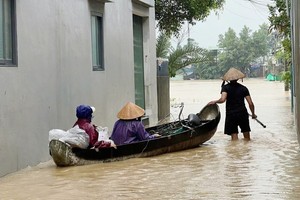
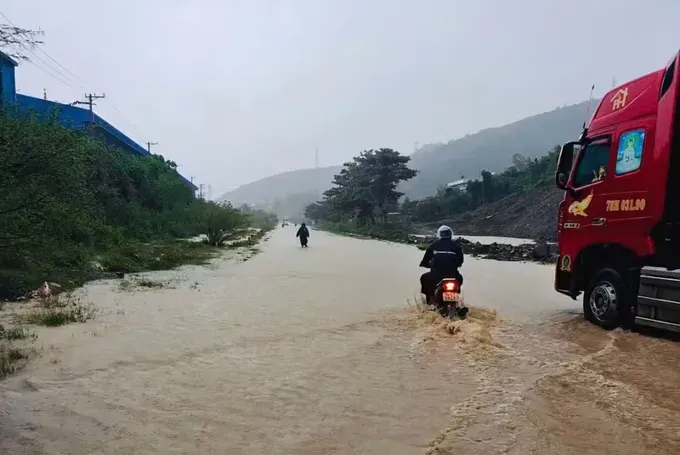
According to the dispatch, heavy rainfall occurred across areas from Hue City to Dak Lak Province from the evening of November 27 through the morning of November 28, with accumulated rainfall generally ranging from 80 to 150 millimeters. In Quang Ngai Province, rainfall commonly reached 200–400 millimeters, with some locations recording more than 500 millimeters. At Ba Cung station in Quang Ngai, rainfall reached 509 millimeters, while water levels on the Ve River rose above the level 3 flood alert.
Meteorological and hydrological authorities forecast further heavy rain from November 28 through the morning of November 30. Da Nang City and eastern areas of Quang Ngai and Gia Lai provinces are expected to receive 200–400 millimeters of rainfall, with localized totals exceeding 500 millimeters. Hue City, eastern Dak Lak Province, and Khanh Hoa Province are forecast to receive 100–250 millimeters, with some areas recording more than 350 millimeters.
In response, the National Civil Defense Steering Committee urged local authorities to closely monitor developments in rainfall and flooding and promptly issue warnings to grassroots authorities and residents. They were also instructed to mobilize forces to inspect and assess vulnerable areas and proactively relocate and evacuate residents living along rivers and streams, in low-lying areas, and in locations at risk of flash floods and landslides to safer places.
Local authorities were also asked to deploy personnel to guard and control access to low-water crossings, overflow bridges, deeply flooded areas, locations with fast-flowing water, and sites at risk of landslides. People and vehicles must be strictly prohibited from crossing whenever safety cannot be assured.
Authorities were further instructed to inspect reservoirs and implement measures to ensure the safety of reservoir facilities and downstream areas, particularly small hydropower and irrigation reservoirs that have reached full capacity, as well as vulnerable reservoirs. Reservoir operations and water regulation must comply with regulations to ensure the safety of infrastructure and downstream communities.
The National Civil Defense Steering Committee also called on ministries and relevant agencies to coordinate with local authorities in implementing response plans, maintain strict round-the-clock duty arrangements, and report implementation results to the committee by 4 p.m. each day.