River levels in Quang Ngai Province are forecast to reach alert level 2 or 3, with some locations potentially exceeding level 3. In Hue and eastern Gia Lai Province, flood peaks could reach or surpass level 2. Rivers in Da Nang, Dak Lak, and Khanh Hoa are expected to rise to alert level 1 or 2, with some exceeding level 2.
The agency warned of widespread flooding across low-lying coastal plains from Hue to Khanh Hoa.
The threat stems from an extensive spell of heavy rain expected from the afternoon of November 27 through the morning of November 30. Rainfall totals are forecast to range from 200 to 400 millimeters, with some areas receiving more than 600 millimeters. Some locations could see rainfall exceeding 100 millimeters within three hours.
Quang Ngai has already experienced particularly heavy rainfall. Between the afternoon of November 25 and the morning of November 26, precipitation generally ranged from 100 to 250 millimeters. Ly Son Island recorded 404 millimeters, while the Tra Khuc area and central Quang Ngai received between 380 and 400 millimeters.
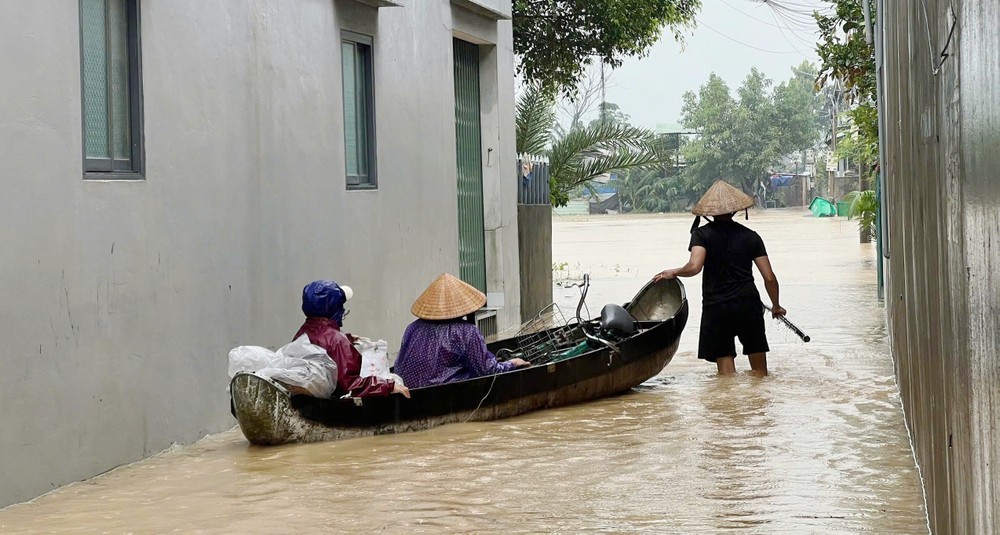
By noon Thursday, heavy rain had caused localized flooding in low-lying areas across central Quang Ngai, Ly Son Special Zone, and several other lowland communities. Some schools were inundated by 30 to 50 centimeters of water, forcing officials to suspend classes Thursday morning.
In response to the worsening flood situation in parts of central Vietnam, the National Civil Defense Steering Committee issued an urgent directive urging local authorities from Hue to Khanh Hoa to activate emergency response plans.
Authorities were instructed to review evacuation plans for residents in areas vulnerable to deep flooding, flash floods, and landslides, restrict traffic in inundated areas and locations with strong currents, and ensure the safety of hydropower and irrigation reservoirs.