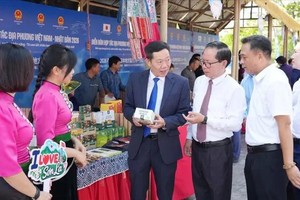
On the afternoon of July 23 in Hanoi, the Vietnam Chamber of Commerce and Industry (VCCI), in coordination with Business Forum Magazine, held a forum titled "Removing Bottlenecks and Promoting Sustainable Raw Materials for the Deep Wood Processing Industry" amid rising trade barriers and logistics costs.
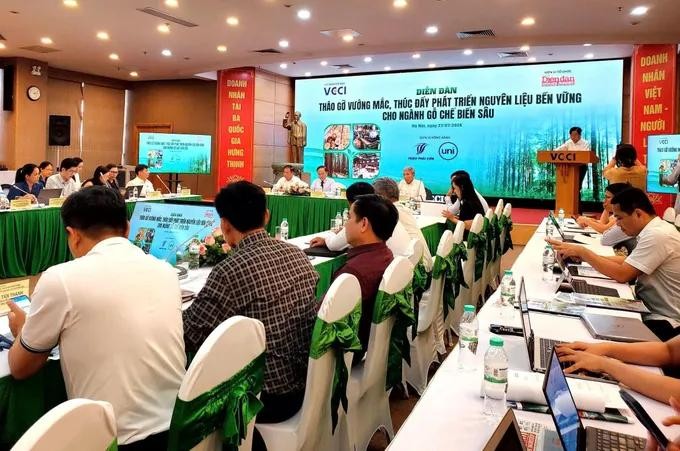
Vietnam's wood industry has become a regional leader, with exports exceeding US$17 billion in 2025, the highest in ASEAN. Products made by domestic enterprises accounted for 54 percent of export turnover, although most remain contract-manufactured goods.
Ngo Sy Hoai, Secretary General of the Vietnam Timber and Forest Products Association, said the industry's traditional advantages—low-cost raw materials and inexpensive labor—are diminishing. Global markets are increasingly enforcing strict green standards, requiring product traceability, lower carbon emissions, and compliance with sustainable consumption trends.
He noted that Vietnam's plantation forests mainly produce small-diameter timber, while the proportion of forests certified under sustainable standards remains low. Data on timber-growing areas has yet to be fully digitized, and links between forest growers and businesses remain weak. Meanwhile, Vietnam continues to export large volumes of low-value raw materials despite growing global demand for furniture, green building materials, and high-tech wood products.
Bui Trung Nghia, Vice Chairman of VCCI, said the wood processing industry can't continue expanding through short-rotation timber production and imported raw materials if it hopes to achieve the Government's target of US$25 billion in exports by 2030. Instead, the industry must shift from cultivating small-diameter timber to producing high-quality large-diameter timber suitable for deep processing.
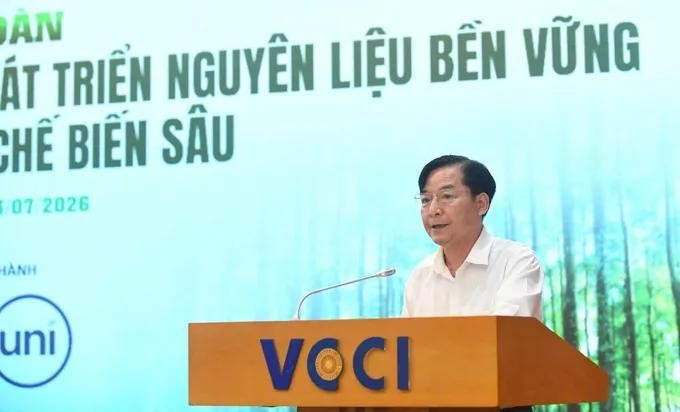
Nguyen Van Dien, Deputy Director General of the Vietnam Forestry and Ranger Administration under the Ministry of Agriculture and Environment, said Vietnam's wood industry must move beyond simply securing enough raw materials for production.
He said the industry should focus on legal, transparent, responsible, and sustainable sources of timber; shift from prioritizing export volume to creating higher-value exports; and evolve from exporting timber to exporting furniture ecosystems and Vietnamese brands.
At the forum, experts recommended transforming short-rotation forestry into smart forestry through stronger coordination among the Government, businesses, and forest growers. They called for long-term credit, forest insurance, investment in raw material production areas, guaranteed purchasing agreements, and longer forest growing cycles to support sustainable development.