The 33rd Diplomatic Conference and the 22nd National Conference on Local Foreign Affairs, held from August 1 to 7, took place against a backdrop of profound global uncertainty and rapid changes in the regional and international landscape. Domestically, Vietnam is facing both major challenges and new opportunities as it accelerates institutional reform, transforms its growth model and pursues the ambitious goal of double-digit economic growth.
FROM EXPANDING RELATIONS TO CREATING DEVELOPMENT VALUE
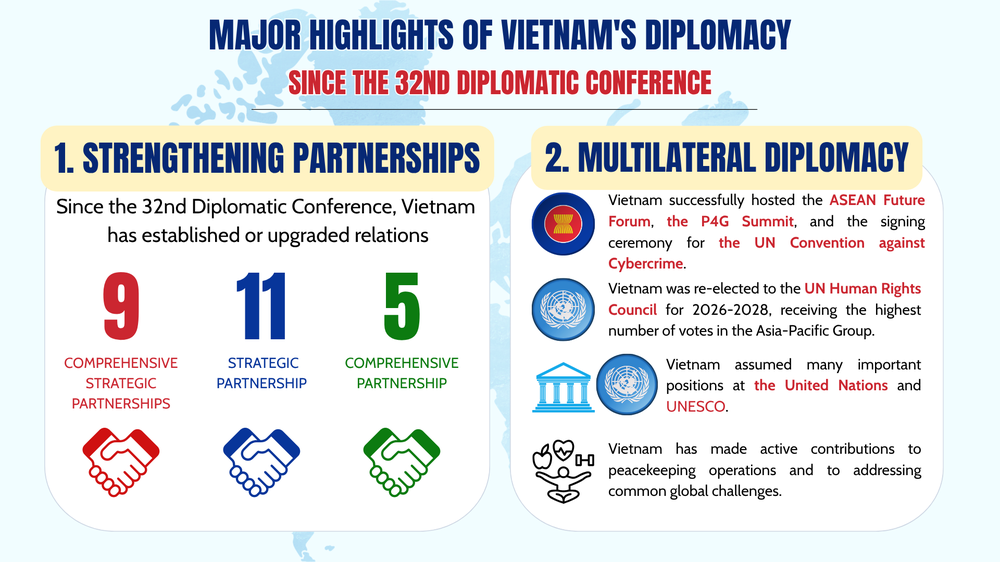
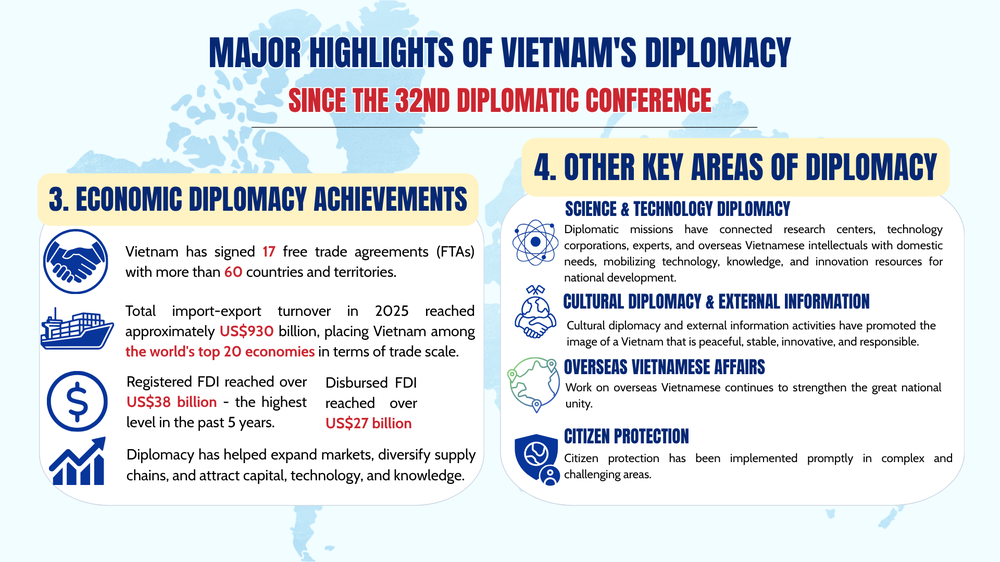
Since the 32nd Diplomatic Conference, Vietnam has continued to expand and deepen its network of external relations.
DEVELOPMENT-ORIENTED DIPLOMACY AT THE CENTER
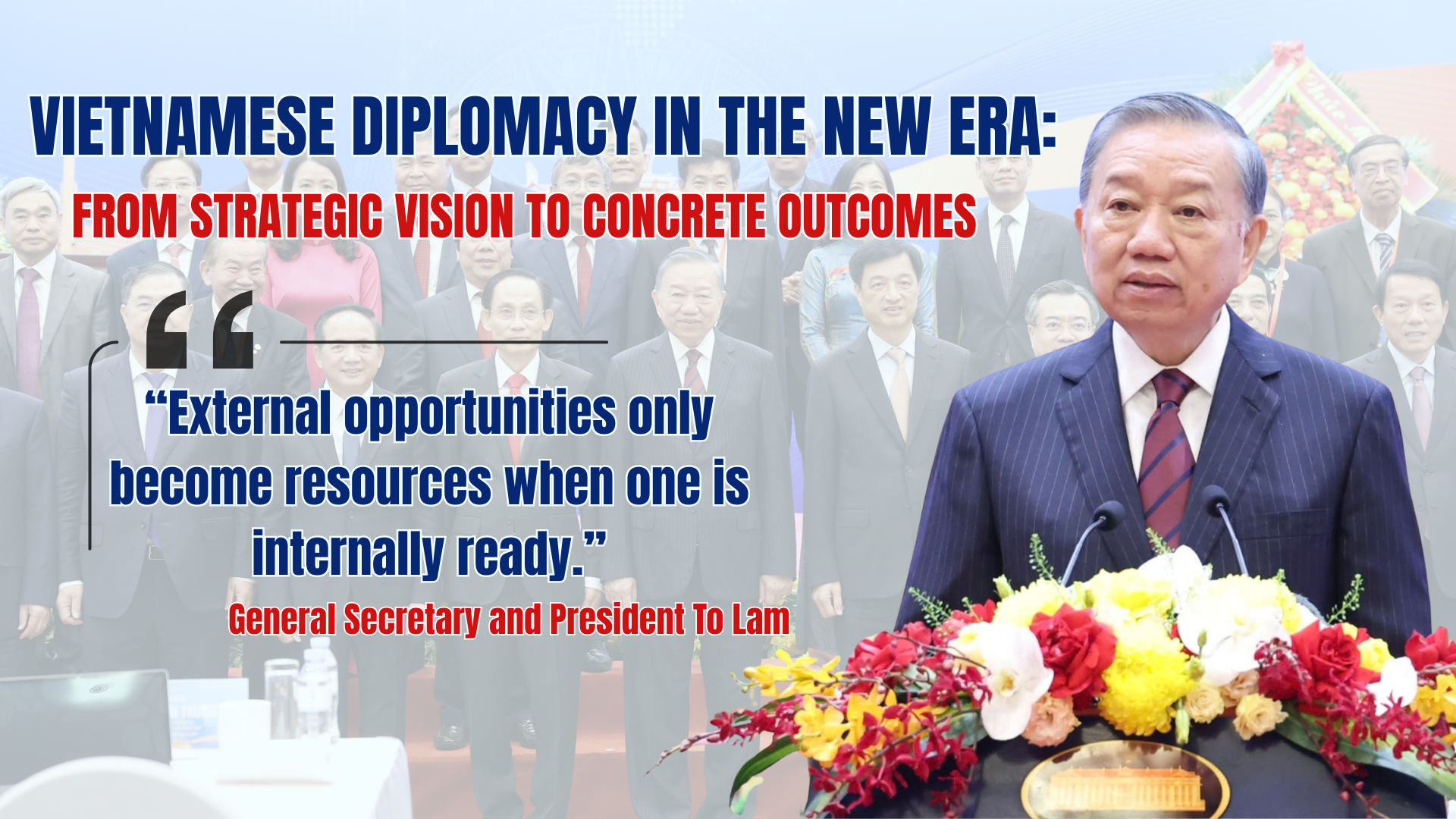
Speaking with Ministry of Foreign Affairs leaders, ambassadors and heads of Vietnamese representative missions abroad on July 31, General Secretary and President To Lam described the 33rd Diplomatic Conference as taking place at a particularly important moment, the first year of implementing the Resolution of the 14th National Party Congress, as Vietnam accelerates institutional reform and transforms its growth model.
He emphasized that development-oriented diplomacy must become the center of foreign affairs.
Vietnam’s representative missions abroad, he said, should not merely represent the diplomatic sector but serve as comprehensive representatives of the country, understanding domestic needs, identifying opportunities and connecting Vietnam with the right partners.
The country now boasts its broadest-ever network of strategic partnerships. The question now is how to turn these ties into tangible development resources.
FROM VISION TO MEASURABLE RESULTS
The message became more specific on August 1, when General Secretary and President To Lam addressed the 33rd Diplomatic Conference.
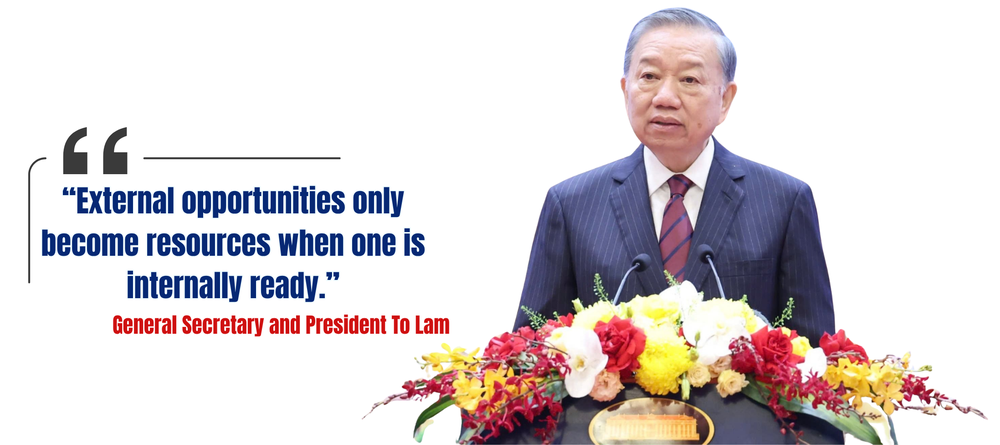
He called for the conference to produce concrete and measurable results. After every high-level visit, there should be an implementation plan. Every agreement should clearly identify the lead agency, responsibilities, timeline and monitoring mechanism.
The goal is to measure diplomacy not simply by the number of agreements signed, but by what they actually deliver - investment, projects, technology, markets and other development outcomes.
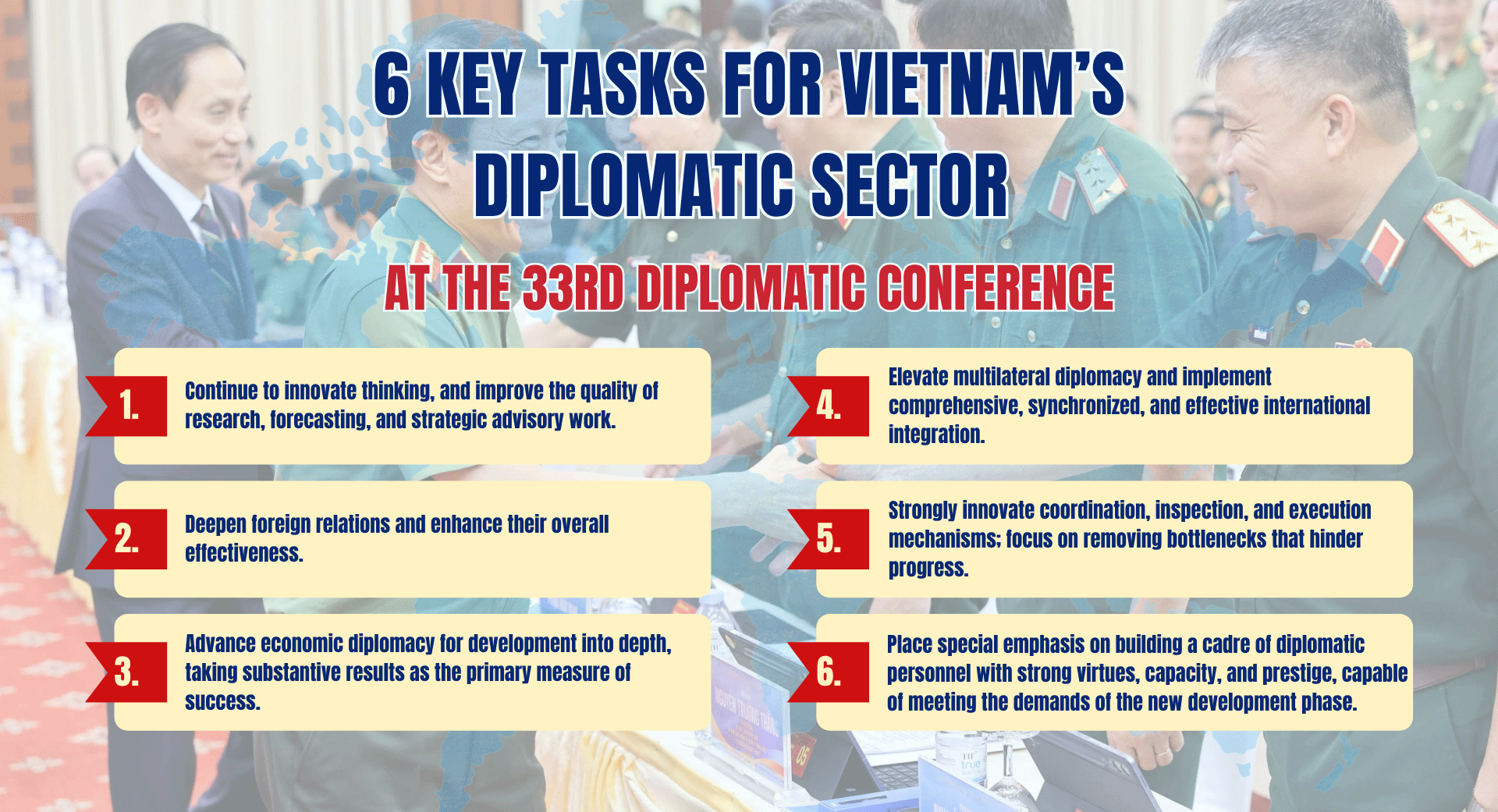
To achieve this, General Secretary and President To Lam outlined six priorities:
LOCAL DIPLOMACY: TURNING CONNECTIONS INTO GROWTH
The same focus on turning diplomatic ties into concrete outcomes was brought to the local level at the 22nd National Conference on Local Foreign Affairs on August 2.
Ho Chi Minh City provides a concrete example.
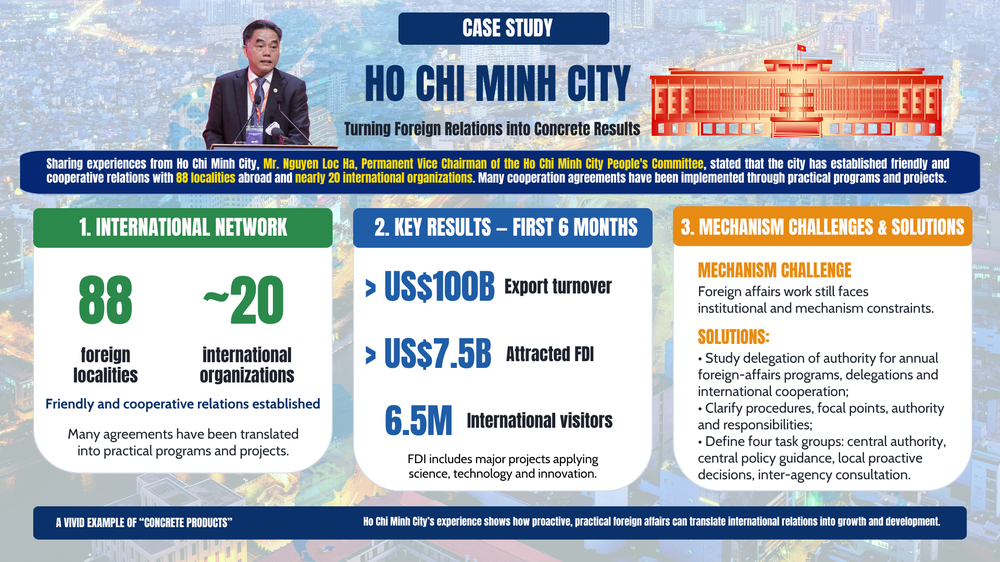
This illustrates the broader shift: diplomatic relations must ultimately generate projects, investment, markets and other measurable benefits for local development.
NEW REQUIREMENTS FOR THE NEW ERA
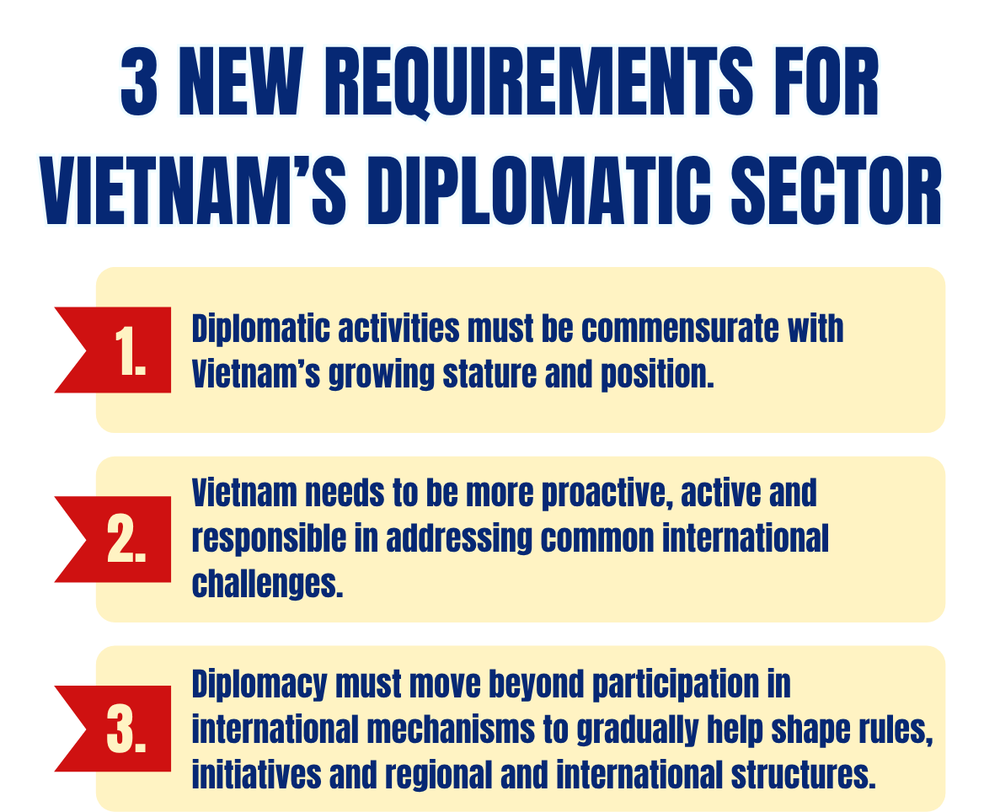
Achieving this shift, however, also requires changes in how the diplomatic sector operates. On August 4, within the framework of the 33rd Diplomatic Conference, Foreign Minister Le Hoai Trung outlined three new requirements for the sector.
This broader vision is also reflected in Vietnam’s expanding diplomatic network: Vietnam currently has 99 overseas representative missions, with plans to increase this to 115 by 2030 and 130 by 2045, reflecting the growing role expected of diplomacy in national development.
Speaking to the press ahead of the 33rd Diplomatic Conference, Foreign Minister Le Hoai Trung said that to effectively implement the Party's foreign policy in the coming period, the diplomatic sector must first organize its workforce scientifically and efficiently — especially as the entire political system pushes forward with streamlining organizational structures and cutting personnel. In addition, diplomatic staff need to continuously improve their expertise and knowledge, and step up the application of science, technology, and digital transformation across the sector.
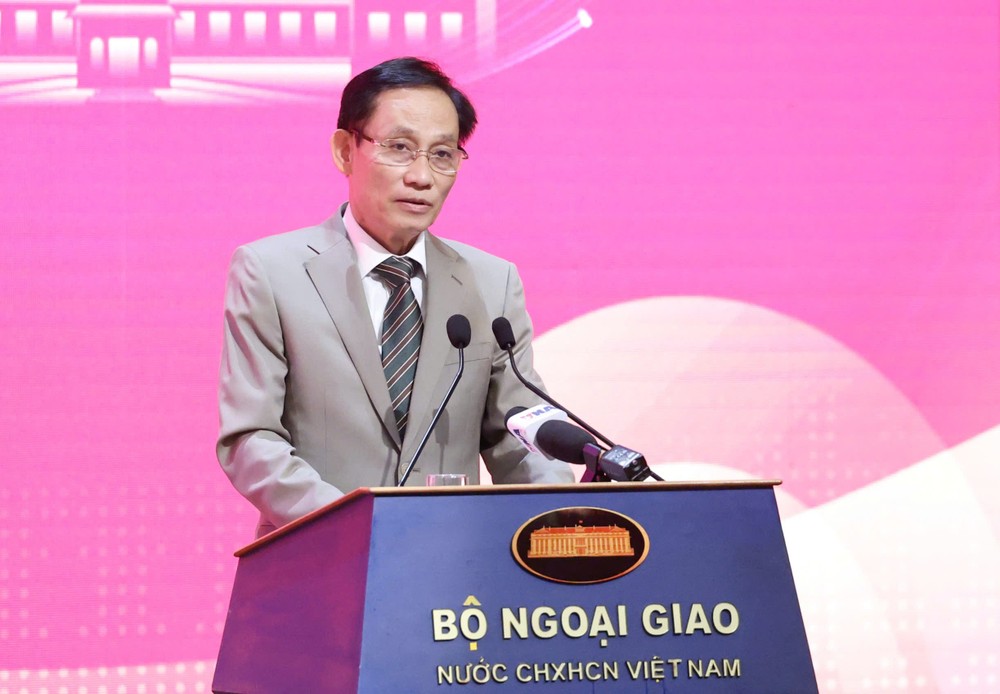
With that spirit, we are building toward a common guiding motto for the entire diplomatic sector: 'Right Direction – Strict Discipline – Professional Expertise.'
Minister of Foreign Foreign Affairs Le Hoai Trung
ECONOMIC DIPLOMACY: FROM “QUANTITY” TO “QUALITY”
The greatest expectation of the 33rd Diplomatic Conference and the 22nd National Conference on Local Foreign Affairs is a strong shift in economic diplomacy from "quantity" to "quality." From their strategic postings, Vietnamese ambassadors have shared insights that vividly reflect this new diplomatic thinking.
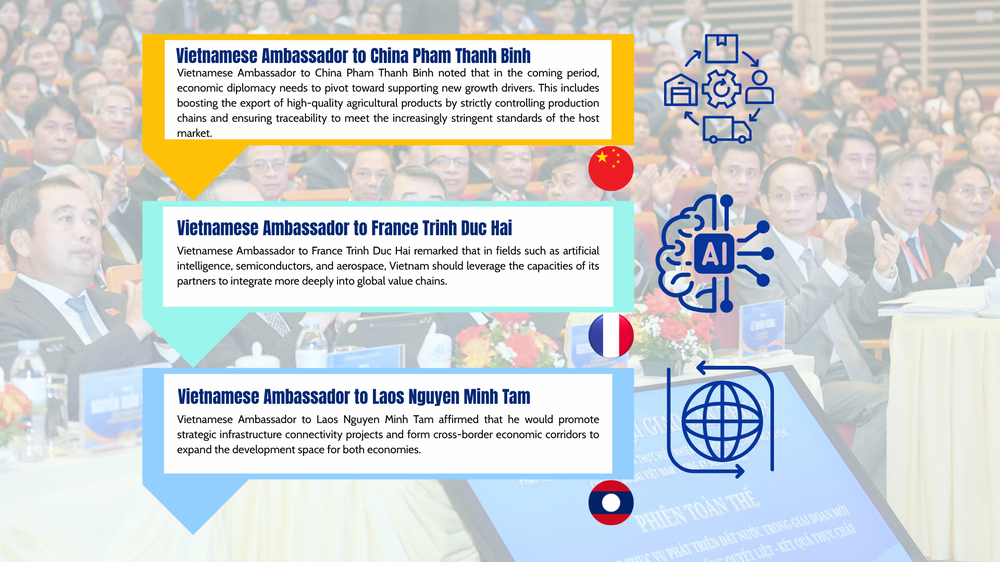
Despite different priorities, the three approaches share the same direction: identify Vietnam’s needs, find the right international resources and turn diplomatic connections into practical cooperation.
Beyond economic diplomacy, technology and digital diplomacy have emerged as the buzzwords of the moment, seen as key drivers of breakthrough progress in the wake of the conference. According to Deputy Foreign Minister Le Anh Tuan, the diplomatic sector is pressing ahead with plans to build a "digital Ministry of Foreign Affairs," harnessing artificial intelligence for strategic advisory work while making services for citizens and businesses more transparent and convenient. In this new era, he said, diplomats can no longer rely on professional expertise alone — they must also become "digital diplomats" fluent in technology.
SCI-TECH DIPLOMACY: CONNECTING KNOWLEDGE WITH NATIONAL NEEDS
Beyond trade and investment, technology is emerging as another key source of development. On August 5, Foreign Minister Le Hoai Trung said science and technology diplomacy should play a pioneering, connecting and enabling role, helping strengthen national technological capacity and Vietnam’s international position.
COORDINATED EFFORT ACROSS THE POLITICAL SYSTEM
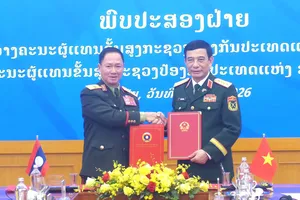
For the first time within the framework of the Diplomatic Conference, a joint session was held among the Ministries of National Defense, Public Security and Foreign Affairs, emphasizing close coordination to maintain a peaceful environment for development.
The broader message was clear: Development-oriented diplomacy requires coordination across the political system.
On August 4, Prime Minister Le Minh Hung assigned the diplomatic sector six tasks, including strengthening Party building, improving strategic forecasting, maintaining and expanding markets, advancing technology diplomacy, attracting high-quality investment, and mobilizing the resources of overseas Vietnamese and cultural diplomacy.
PERFECTING THE LEGAL FRAMEWORK FOR FOREIGN AFFAIRS
National Assembly Chairman Tran Thanh Man met with leaders from the Ministry of Foreign Affairs and Vietnamese ambassadors and heads of representative missions abroad, on the occasion of their return to Vietnam to attend the 33rd Diplomatic Conference on August 4.
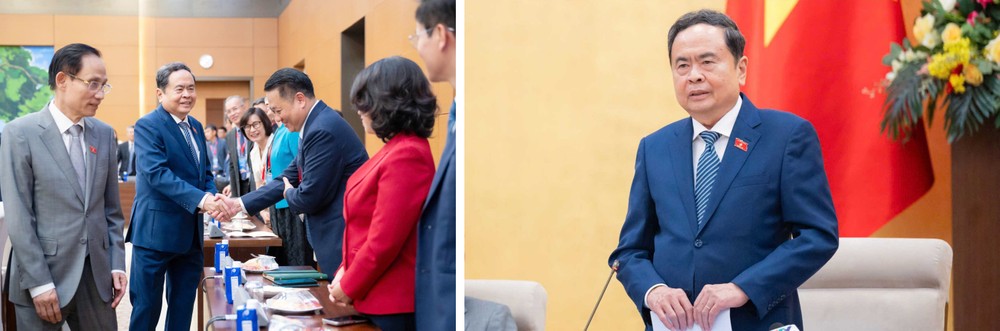
In his directive remarks, National Assembly Chairman Tran Thanh Man affirmed that the National Assembly will continue to accompany and support the diplomatic sector, proactively refining the legal framework on foreign affairs, treaties, and international agreements, promptly proposing amendments and additions to ensure that institutions keep pace with new developments; and paying attention to the regimes, policies, and working conditions of officials working abroad.
The entire diplomatic sector thoroughly implement the Resolution of the 14th National Party Congress, Resolution No. 06-NQ/TW, and other Party resolutions and directives on foreign affairs.
Chairman of the National Assembly Tran Thanh Man
Heads of representative missions closely monitor parliamentary developments, build relationships with parliamentary leaders, specialized committees, political parties, and influential legislators; connect delegations of National Assembly leaders, the Ethnic Council, and National Assembly committees with local partners; and promptly propose issues that could be advanced through parliamentary channels, he requested.
SHIFT FROM EXPANDING RELATIONS TO IMPROVING QUALITY
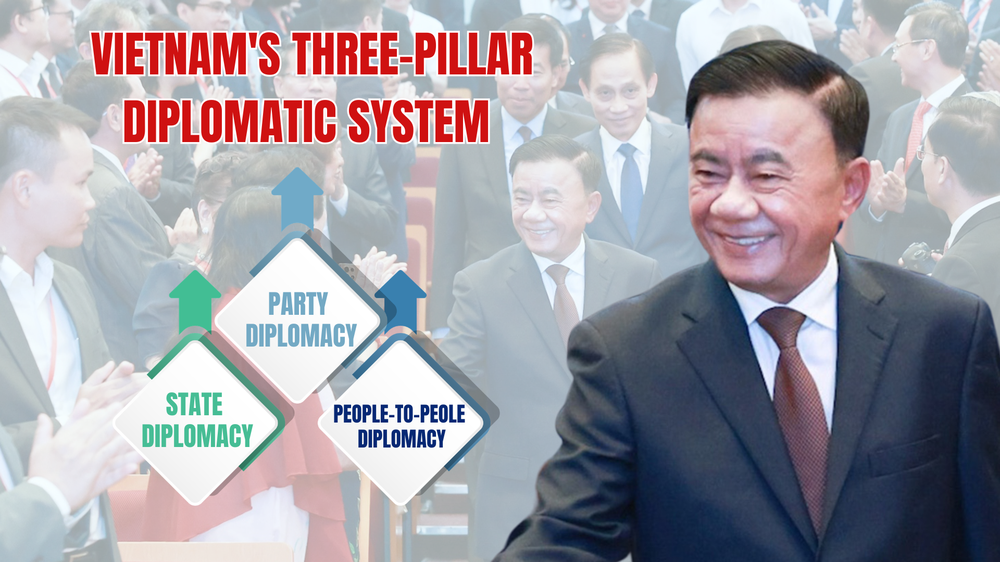
On August 5, Politburo member and Permanent member of the Communist Party of Vietnam Central Committee's Secretariat Tran Cam Tu highlighted Vietnam’s three-pillar diplomatic system: Party diplomacy, State diplomacy and people-to-people diplomacy.
Party diplomacy and people-to-people diplomacy should take a more proactive role in strengthening political trust, building international consensus and addressing risks to national interests early.
The diplomatic sector should also expand connections in priority areas such as high-quality human resources, innovation, digital transformation and sustainable development, shifting from simply expanding relations to improving their quality, effectiveness and added value, with tangible outcomes serving as the measure of success.
Content: Bich Quyen, Ha Nguyen, Minh Duy
Photos: Quang Phuc, Viet Chung, Ha Nguyen
Compilation: Hai Anh
Translation & Design: Duong Thu Huong