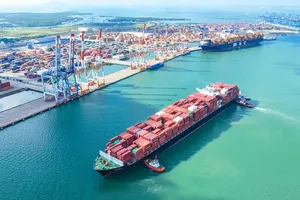
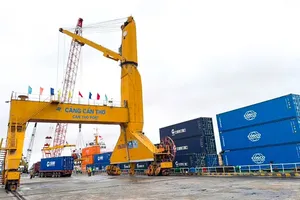
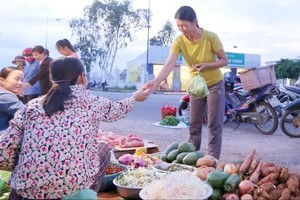
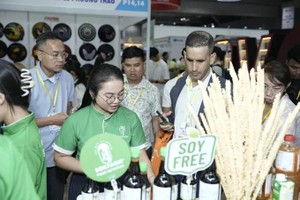
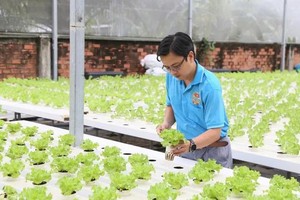
New agreements signed during the visit are opening doors for Vietnamese farm produce to penetrate deeper into China’s modern distribution systems, reaching supermarket shelves in major cities such as Beijing, Shanghai, Guangzhou and Hangzhou. This marks a significant shift from informal cross-border trade to formal retail distribution channels.
However, broader access comes with higher entry requirements. Unlike previous small-scale border trade, participation in modern retail systems demands strict compliance with traceability, food safety, consistent quality, professional packaging and clear branding. Notably, China’s General Administration of Customs will enforce Order 280 from June 1, 2026, requiring higher standards for imported agricultural products, effectively raising the bar for Vietnamese exports.
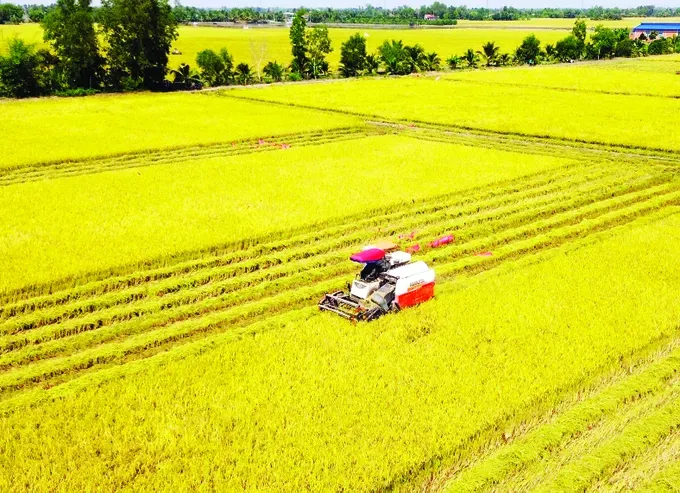
Vietnam’s agricultural sector has undergone significant progress, moving away from traditional farming toward a more market-driven approach. Stronger value chain integration has enabled key products such as rice, durian and pangasius to access high-standard markets. The one-million-hectare high-quality, low-emission rice project in the Mekong Delta illustrates a strategic push toward sustainable, value-added agriculture.
Despite these gains, significant bottlenecks persist. Fragmented production, involving millions of smallholder farmers, makes it challenging to standardize raw material zones. Some certified growing areas still fall short in scale and consistency required by modern markets.
Supply chain linkages also remain weak. Relationships between farmers, cooperatives and businesses are often short-term and lack binding commitments, making value chains vulnerable to market fluctuations. In addition, traceability systems are not yet fully integrated as quality management tools, and are sometimes treated merely as export procedures rather than mechanisms to enhance product value.
Transitioning from raw exports to value-added processing
Given these conditions, restructuring has become a prerequisite for development. Enterprises need to play a central role not merely as purchasers, but as builders of the value chain. Equipped with insight into technical standards and consumer preferences, they must actively shape production, from establishing supply zones and choosing varieties to supervising farming practices, maintaining quality, and sourcing output.
Companies must lead the shift from raw exports to deep processing. For years, Vietnamese agricultural products have largely been exported as raw materials, yielding low added value and remaining vulnerable to market fluctuations. Now, as they enter modern retail systems, products must not only meet standards but also be visually appealing, convenient, and carry a compelling story. This requires greater investment in processing, packaging, storage, cold-chain logistics and brand building.
Farmers also need to transform from independent, unstructured producers into professional actors within the value chain, working under contracts, standards, and market signals. Cooperatives should serve as key connectors, helping organize production and enhance farmers’ bargaining power.
The next phase for Vietnamese agriculture depends on a tightly linked ecosystem rather than fragmented efforts. Traceability is not merely technical, but a unifying language that helps build trust between producers and the market.
According to the Ministry of Agriculture and Environment, Vietnam’s agro-forestry-fishery exports reached US$16.69 billion in the first quarter of 2026, up 5.9 percent year-on-year. China accounted for 22.1 percent of total export turnover, surpassing the United States (18.3 percent) and Japan (7.1 percent) to become Vietnam’s largest export market. Notably, exports to China surged by 37.6 percent, the highest growth among major markets, driven by multiple key product groups across both agriculture and fisheries.
Rice stood out as a bright spot, with export value to China increasing 2.5 times. Coffee also showed positive momentum, with export value doubling despite a 16.9 percent decline in average export prices. In the fruit and vegetable segment, China remained the largest market, accounting for around 54 percent of the total share, with export value rising 76.2 percent, led by key products such as durian, jackfruit, and other tropical fruits. Seafood exports also recorded a strong growth of 58.5 percent.