Supply remains temporarily stable
According to Director of the Hanoi Department of Industry and Trade, Vo Nguyen Phong, the city’s average monthly fuel consumption stands at approximately 150,000 cubic meters, including around 110,000 cubic meters of gasoline and 40,000 cubic meters of oil products.
Hanoi currently has 453 operational retail fuel stations across the city. Fuel supply is primarily sourced from key distributors such as Petrolimex Hanoi Co., Ltd , Military Petroleum Corporation, PetroVietnam Oil Corporation (PVOIL) in Hanoi, and several authorized distribution traders.
At present, Hanoi is home to three major commercial petroleum depots with a combined storage capacity of approximately 120,000 cubic meters, which play an important role in maintaining reserves and regulating supply for the capital’s markets.
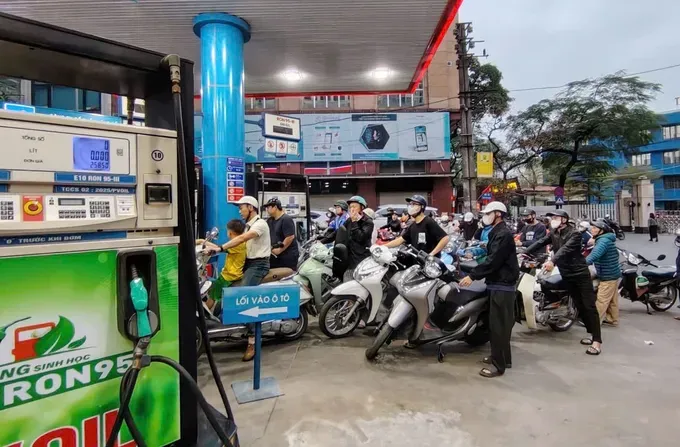
From March 6 to 8, many petrol stations in Hanoi—particularly in the inner-city areas—recorded a sharp surge in the number of vehicles purchasing fuel. Several outlets were forced to temporarily suspend sales as they had not yet replenished their supplies in time.

By March 9, the situation had gradually stabilized, with the number of vehicles purchasing fuel returning to normal levels. Most petrol stations resumed stable operations and strictly complied with regulations on price listing and public disclosure.
According to leaders of the Hanoi Department of Industry and Trade, the recent rush by residents to purchase fuel primarily stemmed from public concern and a tendency to stockpile, rather than reflecting actual consumer demand. The practice of storing petrol in cans and containers also poses potential risks to fire prevention and firefighting safety.
In order to ensure adequate supply and stabilize the market, the Hanoi People’s Committee has issued a series of directives outlining measures to secure petroleum supply and limit the impact of fuel price fluctuations on the city’s economic growth targets and socio-economic activities.
Under these directives, the city requires key distributors and distribution traders to maintain the stable operation of petrol station networks and ensure sufficient supply for the market. Meanwhile, the market surveillance force has been instructed to intensify inspections of petroleum trading activities in order to promptly detect and strictly handle violations—particularly acts of hoarding, artificially creating supply shortages, imposing unreasonable reductions in retail commissions, or failing to provide adequate supply to retail outlets.
Priority for essential sectors
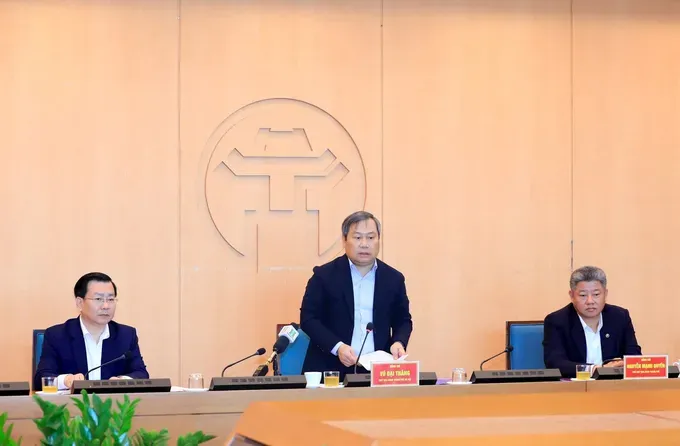
Concluding the meeting, Chairman of the Hanoi People’s Committee Vu Dai Thang emphasized that as the political and socio-economic center of the country, Hanoi must regard the safeguarding of energy security as a top political priority.
The city has requested key petroleum distributors to maintain the operation of their retail networks around the clock (24/7), strictly preventing any acts of hoarding or unreasonable reductions in retail commissions. Relevant departments, agencies, and petroleum trading enterprises were also instructed to urgently implement measures to secure supply while prioritizing fuel allocation for essential sectors of the economy.
Hanoi will give priority to fuel distribution for production activities and key projects, ensuring adequate diesel supply for trucks, excavators, and specialized equipment serving major transport and infrastructure projects, thereby avoiding any delays in construction progress.
For public transport, the city will prioritize fuel allocation for buses and taxis in order to meet essential travel demand and help reduce pressure on private vehicles. At the same time, authorities will ensure a stable fuel supply at all 453 retail petrol stations serving residents, while strictly addressing acts of speculation, profiteering, or the sale of petrol in bottles and containers around fuel stations.
In addition, Hanoi is reviewing its planning framework and stands ready to prioritize land resources for expanding the city’s energy reserve storage system. The objective is to gradually increase storage capacity from the current level to a reserve capable of meeting demand for six months to one year in the event of unusual market fluctuations.