Parents protest mandatory linked courses
Many parents of sixth-grade students at Nguyen Thi Thap Secondary School in Tan Hung Ward have raised concerns over a requirement that students participate in all school-linked programs in order to attend classes twice a day.
According to parents, the school asked them to sign a pre-prepared commitment stating that their children would “fully participate in the enhanced English program and the school’s linked programs throughout their time at the school.” The document also notes that students who do not participate would be transferred to a one-session-per-day class.
Mai Hoa, a parent of a sixth-grade student, said that during enrollment for the 2026-2027 academic year, parents were introduced to a range of linked subjects, including International Computer Driving Licence (IC3) certification preparation, STEM education, life skills training, and English classes taught by native speakers.
Parents were informed that students who did not enroll in these linked programs would not be eligible for the enhanced English class and would instead attend school on a one-session-per-day schedule, she said.
Many parents were frustrated because they could not arrange their work schedules to pick up and drop off their children if they studied only one session a day. If they wanted their children to study two sessions a day, however, parents had to register for all linked subjects for the entire four years, despite having little information about the effectiveness of these subjects.
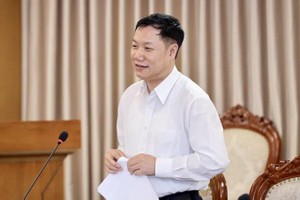
Principal Vo Bao Dao Diem of Nguyen Thi Thap Secondary School confirmed that the above content was included in the school’s “Sixth-grade enrollment registration form for the 2026-2027 academic year for enhanced English classes (semi-boarding).” The school had previously informed parents about the subjects included in the program and the applicable tuition fees.
Explaining why students must study one session a day if they do not register for the school’s program, Vo Bao Dao Diem said students who do not take native-speaker English and subjects under the school’s program only follow the Ministry of Education and Training’s basic curriculum, which provides for one session of study per day. Therefore, the enrollment form clearly states that students who register for enhanced English classes but do not participate in the above programs will be transferred to one-session classes.
The situation at Nguyen Thi Thap Secondary School is not an isolated case. In previous academic years, many schools in Ho Chi Minh City implemented linked subjects as part of their school programs. Some schools scheduled linked subjects alongside regular subjects, leaving parents in a position where they effectively could not opt out.
Clearly define subjects and learning outcomes
Principal Dinh Phu Cuong of Phu Dinh Secondary School in Phu Dinh Ward said some schools are currently “overly ambitious” in organizing subjects under their school programs. This does not comply with regulations issued by the Ministry of Education and Training or professional guidance from the Ho Chi Minh City Department of Education and Training.
According to principal Dinh Phu Cuong, subjects under a school’s program should not be included in the regular curriculum timetable, which already specifies the number of periods per day at each educational level. However, because schools want to offer many subjects under their programs at the same time, they have been forced to mix regular and school-program schedules in order to accommodate all the subjects.
The principal of Phu Dinh Secondary School cited life skills as an example. Teachers from different subject areas can help students develop life skills according to their expertise, and such content can be integrated into various subjects. In practice, however, many schools have separated life skills into a standalone subject, hired outside teachers to teach it and charged tuition fees.
To ensure the effective implementation of school programs, a representative of Chi Lang Elementary School in Thong Tay Hoi Ward said schools must clearly determine whether each subject or educational activity is truly necessary and what value it brings to students. Based on that assessment, schools can develop educational plans suited to their actual conditions.
For content that parents can choose to register for, schools should provide complete information about the objectives, significance, content, organization and tuition fees so parents can understand the programs and register voluntarily, in line with their families’ needs and circumstances.
Schools should also establish consistent objectives, remain flexible in how programs are organized, provide transparent information and respect students’ diverse choices. During the implementation of subjects, parents and schools should maintain dialogue to promptly update and adjust teaching content and methods, thereby encouraging parents to accompany and support the school.
According to Huynh Thanh Phu, principal of Bui Thi Xuan High School in Ben Thanh Ward, to help ease the financial burden on parents, subjects under school programs should follow the principle that programs taught by the school’s own teachers should be free of charge, while programs taught by outside experts may charge fees, but those fees must not exceed the maximum levels set by the Ho Chi Minh City People’s Committee and must meet all other requirements.
Subjects offered free of charge should make use of existing facilities and mobilize the school’s teaching staff, combined with additional support from outside resources.
Ho Chi Minh City tightens control over school partnerships and fees
Ho Chi Minh City requires schools to strictly manage joint educational activities and ensure full transparency regarding all service fees in the 2026-2027 academic year under a new directive issued on August 20.
On August 20, the Ho Chi Minh City People's Committee issued a directive detailing 12 focus areas for the 2026-2027 school year. One of these core tasks is ensuring open and transparent implementation of all educational revenues in accordance with regulations; strictly controlling joint educational activities, extra teaching, and extra learning; and guaranteeing equity in access to education.
Under guidelines issued by the Ho Chi Minh City Department of Education and Training, schools are permitted to offer a range of fee-based educational services as part of their educational programs. These include talent development, arts, physical education, sports coordination, and club activities.
The guidelines also allow schools to implement programs under the project aimed at enhancing information technology knowledge and skills for Ho Chi Minh City students to meet international standards during the 2021-2030 period.
Other approved services include foreign language programs, such as intensive language courses, classes taught by native speakers, language learning through supplementary software, the teaching of Mathematics and Science in foreign languages, integrated British-Vietnamese curriculum programs, and courses designed to prepare students for international language certifications.
In addition, schools may organize digital citizenship education, digital competency and artificial intelligence programs, STEM education initiatives, and high-quality educational content integrated with regional and international standards.