On July 10, the Ho Chi Minh City Investment and Trade Promotion Center (ITPC), in coordination with the State Bank of Vietnam's Region 2 Branch, held a government-business dialogue on banking issues to hear and address difficulties businesses face in implementing banking policies.

Le Anh Hoang, Deputy Director of ITPC, said Ho Chi Minh City places great importance on maintaining dialogue with businesses to promptly identify and resolve obstacles, helping stabilize production and improve competitiveness.
Although credit institutions have introduced various measures to improve businesses' access to loans and lower borrowing costs, many companies continue to face difficulties related to lending conditions, collateral requirements, credit documentation, interest rate support mechanisms and other lending regulations, he said.
At the conference, startup and export-oriented businesses highlighted persistent challenges in accessing financing, saying borrowing costs remain relatively high despite the availability of large-scale credit programs.
A representative of Hasa Bio Foods JSC, based in Ho Chi Minh City, said the company was established in May 2025 and works with farmers producing organic rice to manufacture products including rice noodles, pho noodles and rice paper. About 70 percent of its output is exported, while the remaining 30 percent is sold domestically.
The company generated nearly US$2 million in revenue in 2025 and expects sales to double in 2026 as production expands. However, it has struggled to obtain bank financing because it does not meet lenders' minimum operating history requirements.
Nguyen Van Hung, representing Hasa Bio Foods, said banks require three years of financial statements, while the company has only one report covering about half a year of operations in 2025. Despite being profitable and expecting continued growth in 2026, the company still relies on relatively expensive short-term working capital loans.
"We hope to gain access to preferential credit programs for exporters and green businesses," Hung said.
Pham Dong Huy, Director of Sa Ke Toan Cau Company, said his company has spent 14 years developing breadfruit cultivation projects and now exports to the United States, Japan and Germany. However, a lack of collateral has limited its ability to obtain bank loans, preventing further investment in machinery and equipment to meet customer demand.
The Director of Sa Ke Toan Cau Company called for lending mechanisms that would allow startups with signed commercial contracts but no collateral to access financing.

Responding to the concerns, Van Cong Binh, Director of Sustainable Development at HDBank, said the absence of three years of financial statements does not automatically disqualify a business from obtaining a loan.
Instead, banks prioritize evaluating the viability of business plans, product markets, signed contracts, the credibility of business partners, projected cash flow, management capacity and the company's equity contribution.
Regarding collateral, Director Van Cong Binh said it remains one factor in lending decisions but is no longer the only criterion. Banks can consider assets financed by the loan itself or receivables generated under commercial contracts.
He added that under supply chain financing models, suppliers serving financially strong corporations may qualify for credit based on the creditworthiness of the lead company in the supply chain rather than solely on pledged assets.
"Businesses with strong production capacity, stable markets and transparent cash flow can still access financing without collateral," the HDBank representative said.
Other banks at the event said green credit would receive increasing priority. Companies investing in energy-saving technologies, renewable energy or sustainable development initiatives are expected to enjoy greater advantages in accessing financing.
They added that a company's ability to generate cash flow, the effectiveness of its business plan and its reputation within the supply chain are becoming more important lending criteria than collateral alone.
Tran Thi Ngoc Lien, Deputy Director of the State Bank of Vietnam's Region 2 Branch, said the branch has instructed credit institutions to proactively engage with businesses, establish advisory points in wards, communes and special zones, and recommend financial solutions tailored to companies' needs to support the country's goal of achieving double-digit economic growth.
The Region 2 Branch will also work with government agencies and local authorities to establish a rapid response mechanism for receiving and promptly resolving businesses' financing difficulties, strengthening bank-business cooperation and supporting production and business activities.
Lien said the banking sector is implementing a range of monetary and credit measures to improve access to capital, including a VND185 trillion credit package for the forestry and fisheries sectors with interest rates 1 to 2 percentage points below standard lending rates.
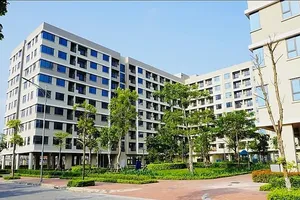
Other programs include a VND145 trillion package for social housing, worker housing and the renovation and reconstruction of old apartment buildings, as well as a VND500 trillion package supporting infrastructure investment and digital transformation with preferential interest rates 1 to 1.5 percentage points lower than standard rates.
Ho Chi Minh City is also implementing a market stabilization program to help businesses producing and distributing essential food products access preferential financing.
















)