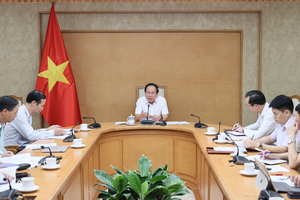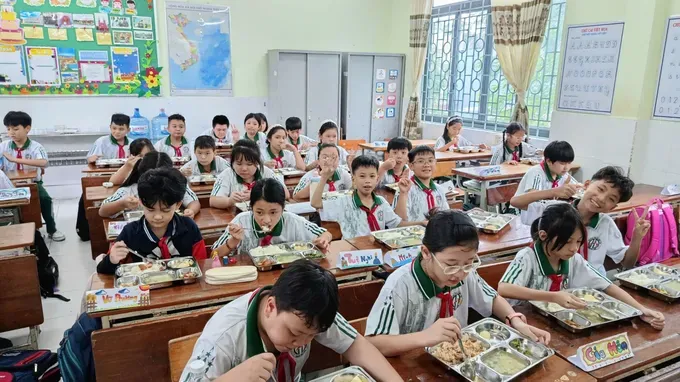
Under the dispatch, the Prime Minister asked chairpersons of provincial and municipal People’s Committees to direct and take full responsibility for the organization of boarding and semi-boarding meals at educational institutions in their localities. They must promptly address and rectify shortcomings and inadequacies in implementation, ensuring that there is no lax management, inadequate inspection and supervision, or ambiguity over accountability when incidents occur.
Local authorities are required to step up inspections and supervision of food supplies, prepared meals, and catering services while strictly controlling the origin and quality of food and ingredients, as well as food preparation, storage, transportation, delivery and receipt, meal sample retention, and other food safety requirements in accordance with regulations. Violating organizations and individuals must face strict penalties, while suppliers that fail to meet requirements must be resolutely suspended or replaced.
Chairpersons of provincial and municipal People’s Committees must assign commune-level People’s Committees to take responsibility for selecting and signing contracts with suppliers of prepared meals and catering services for public educational institutions under their management. They must also manage, inspect, and supervise contract performance and must not select food suppliers solely on the basis of the lowest price.
For educational institutions that are qualified to operate on-site kitchens, commune-level People’s Committees must direct the selection of and contract signing with food and ingredient suppliers in accordance with regulations, ensuring clear origins, safety, quality, and compliance with nutritional requirements.
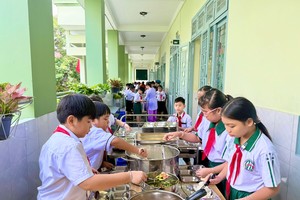
Educational institutions are responsible for directly receiving and inspecting meals, supervising their quality and quantity, overseeing the delivery and receipt of food, organizing meals, and caring for children and students at school. They must promptly report to competent authorities upon detecting potential risks or violations of regulations.
The Prime Minister also called for greater transparency, disclosure, inspection, and supervision, as well as accurate information on menus, suppliers, food sources, and other relevant details concerning school meals, enabling parents to stay informed and participate in monitoring.