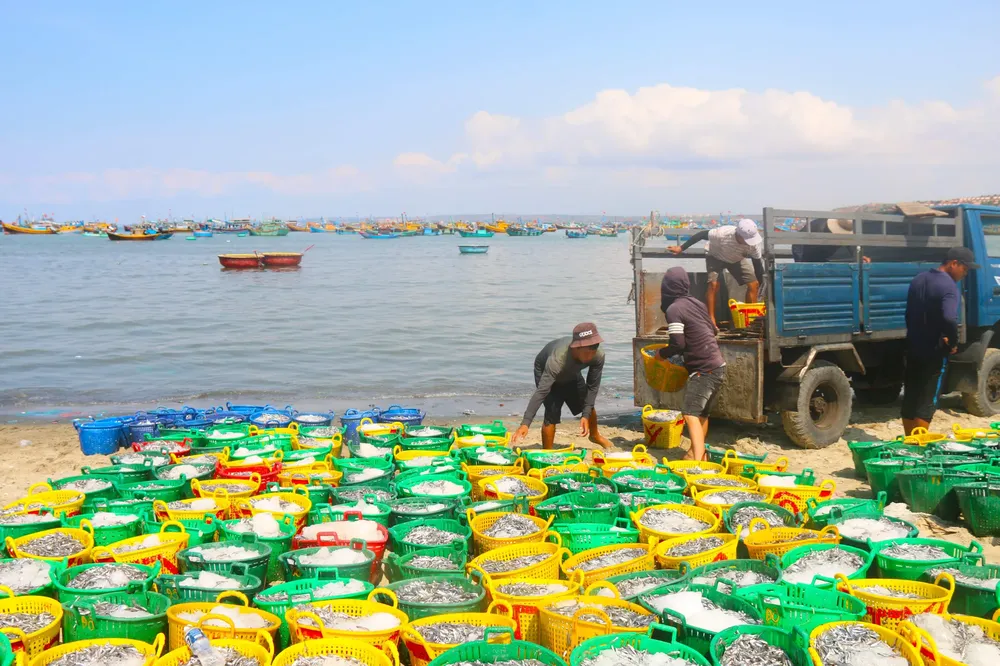
In the mid-days of April 2026, from the first light of dawn, the front beach of the Mui Ne coastal area of Lam Dong Province has been buzzing with the sounds of voices, engines, and crashing waves. The urgent atmosphere of labor lasts throughout the morning as dozens of fishing vessels line up to dock, their hulls overflowing with fresh anchovies.
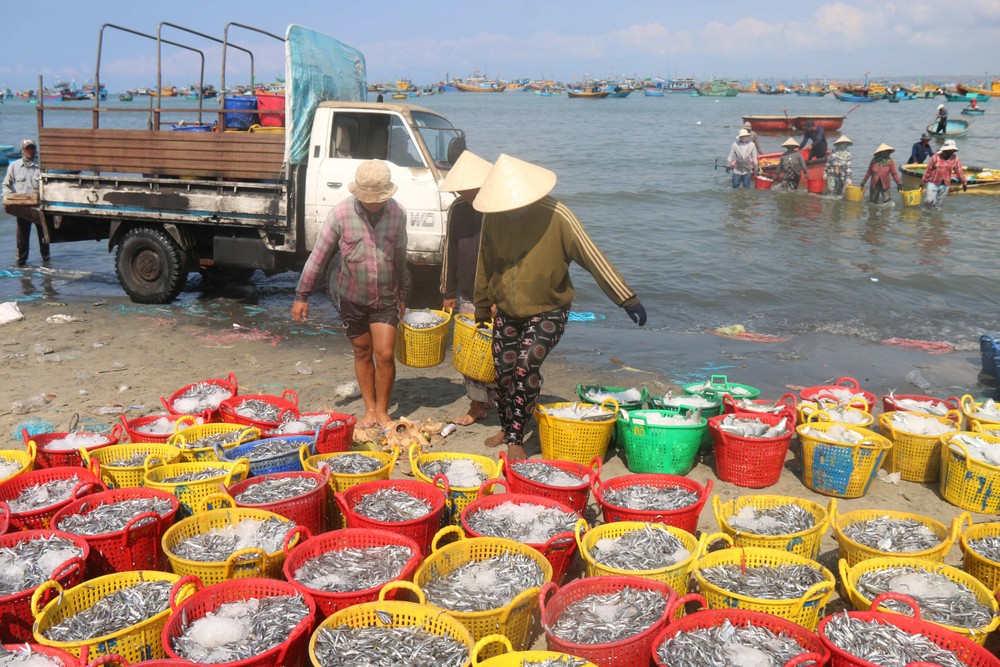
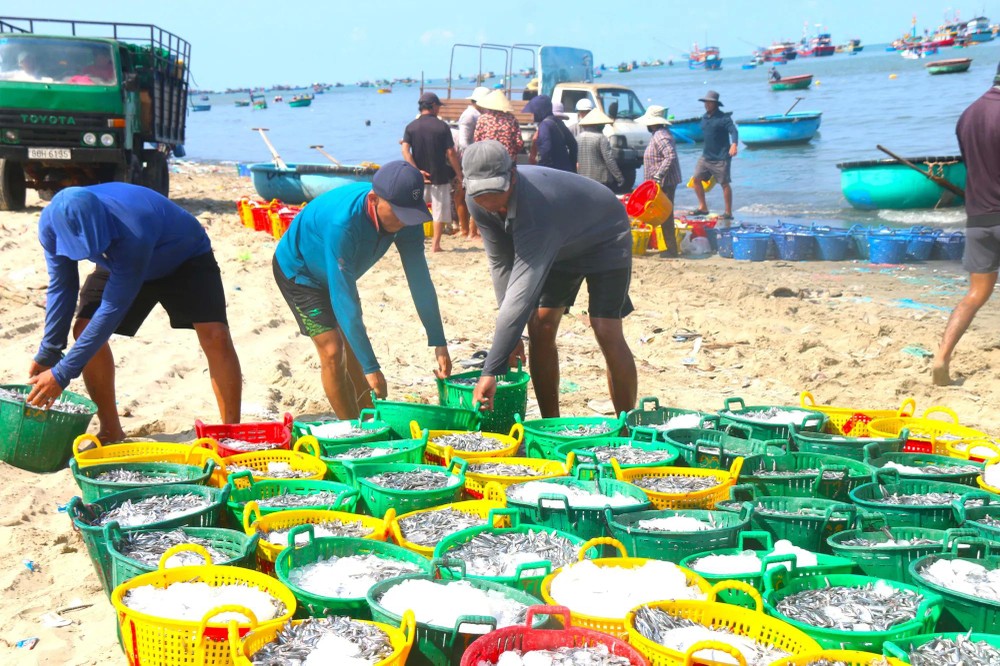
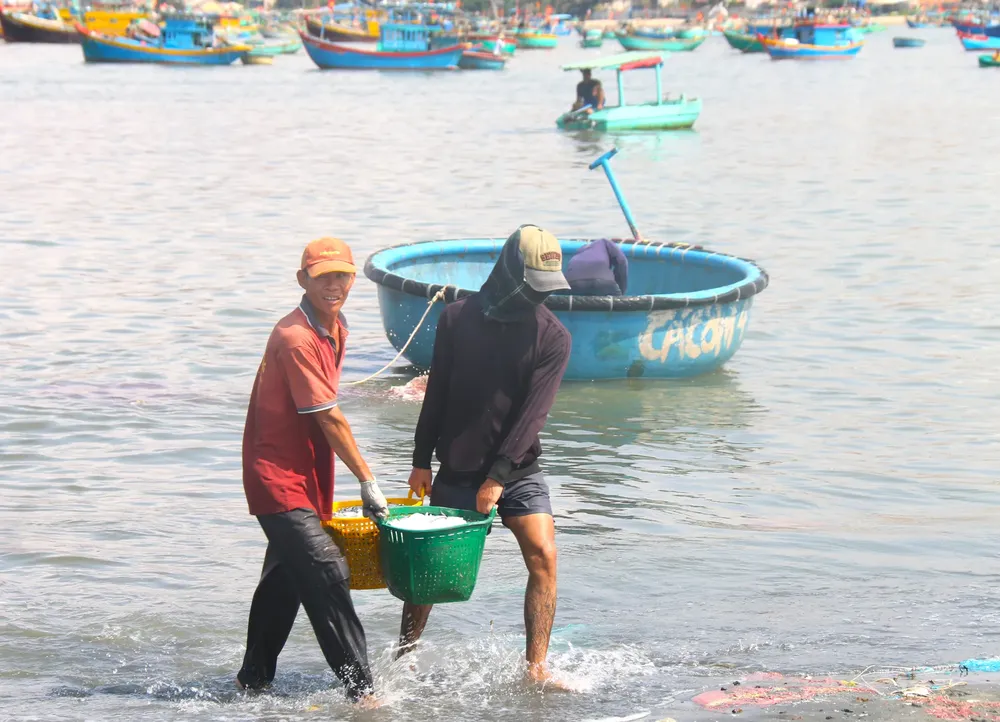
After more than two weeks of dense anchovy appearances, fishermen in Mui Ne Ward have entered the peak harvest season. Returning from offshore, heavy nets of fresh striped anchovy are quickly transferred to shore. On the sand, groups of workers swiftly sort, weigh, and carry the fish, forming a bustling miniature "fish market" right at the water's edge.
Nguyen Van Ut, a veteran fisherman, shared while busy transferring fish with his crew: "We head out at midnight and return by morning. This trip yielded over a hundred baskets of fish; selling them right on the beach brought in more than VND40 million."
According to local fishermen, prices have dipped compared to the start of the season from over VND30,000 a kg down to approximately VND19,000 - VND22,000 per kg but thanks to high yields, fishermen remain highly profitable.
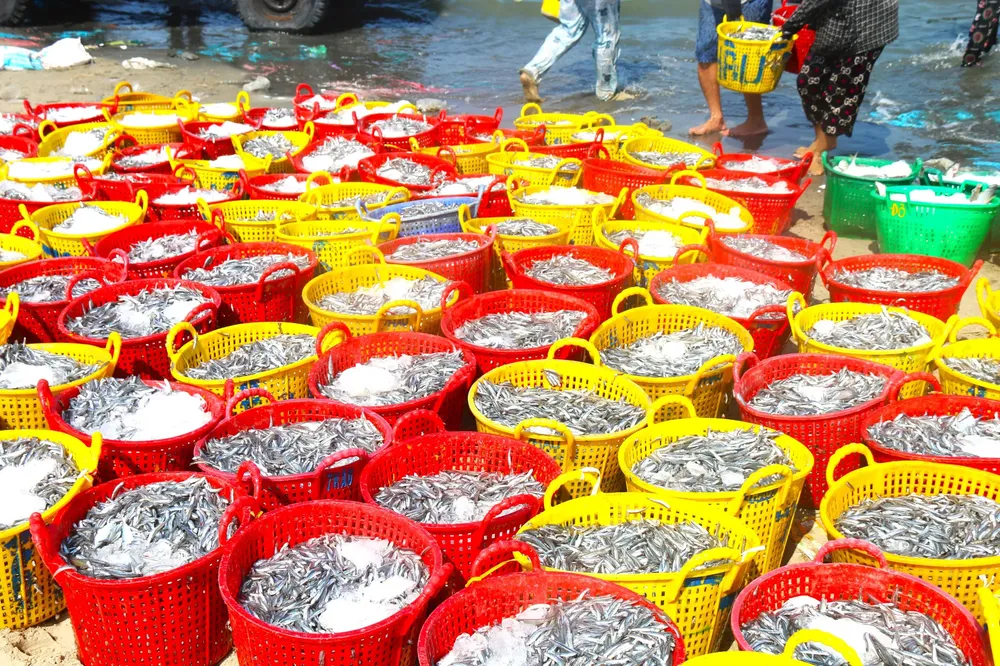
Nearby, fisherman Tran Van Thu’s boat also docked with nearly 200 baskets of black anchovies, equivalent to over 3.4 tons. In just one morning, the entire haul was purchased by traders, bringing in tens of millions of Vietnames dong for the short sea voyage.
A notable feature here is the "flexible" trading method. Fish are not weighed by the kilogram but estimated by the basket, with each basket weighing approximately 17kg. The average price is around VND330,000 per basket, depending on freshness and size. These brimming baskets, shimmering silver in the early sun, are quickly loaded onto trucks for delivery to processing facilities.
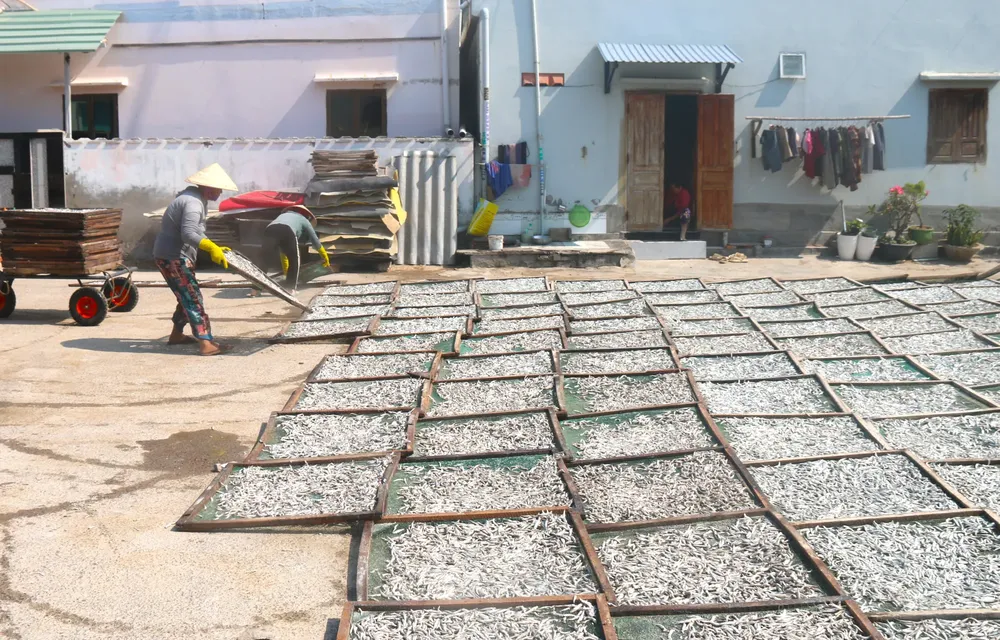
According to traders, this year's anchovies are not only plentiful but of high quality, making them ideal for traditional fish sauce production or steaming for export. "Every day I purchase hundreds of tons of fish, primarily supplying steaming kilns and fish sauce producers," said Nguyen Thi Bay, a long-time trader at the beach, with excitement.
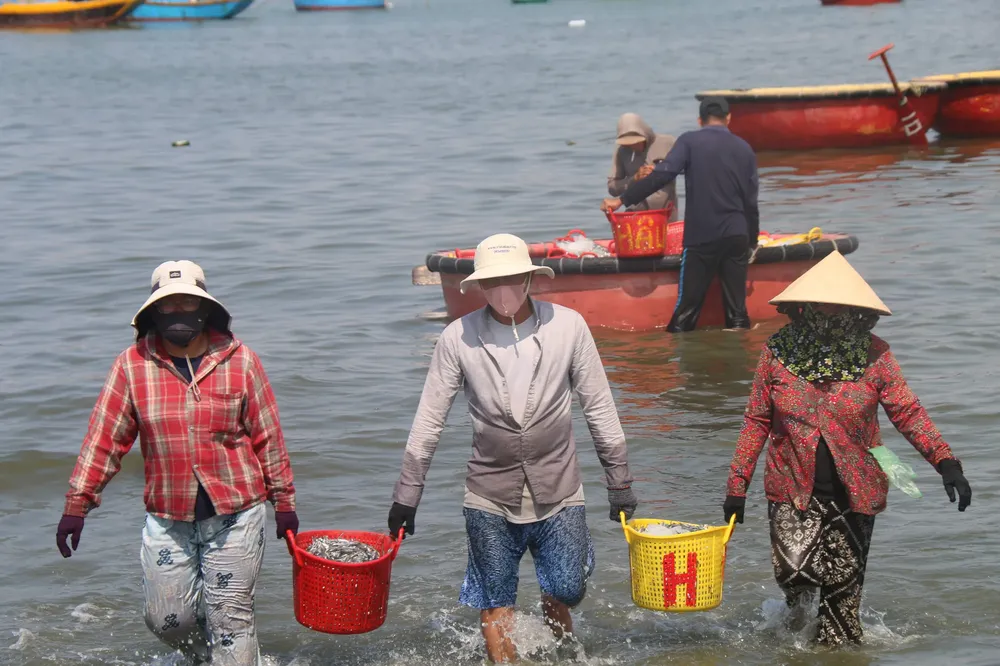
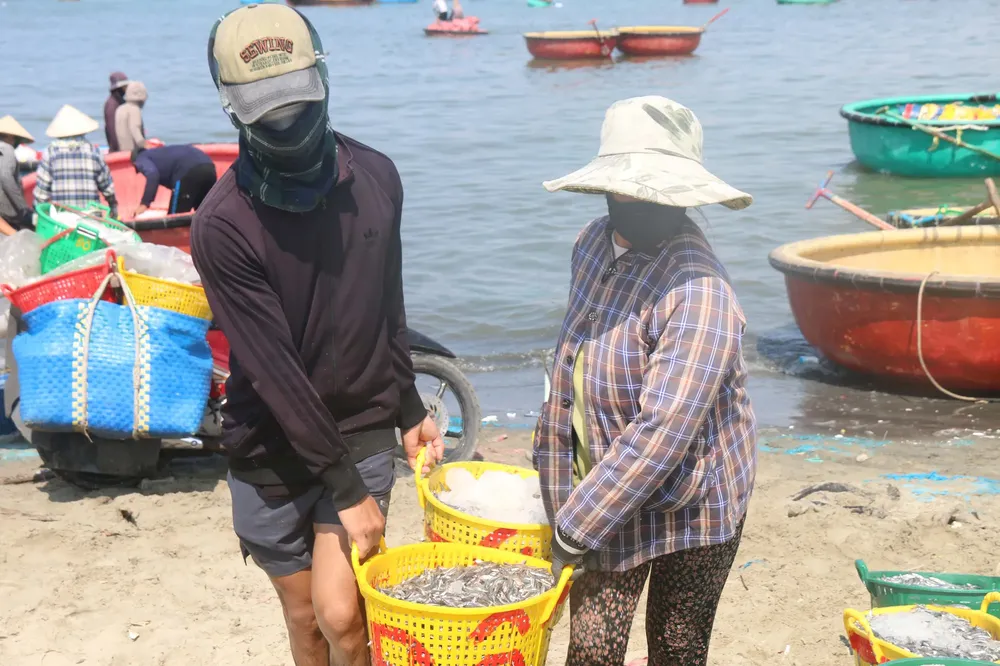
The anchovy season has provided income for fishermen and created jobs for many local laborers. Right on the beach, dozens of women and elderly residents participate in carrying, sorting, and packing.
Despite the heavy labor, the income is stable. Local femal porter Huynh Thi An revealed that she was paid VND3,000 to VND5,000 for each 17kg basket. Working from early morning until noon, she can earn between VND400,000 and VND500,000. For many, this is a significant source of income during the agricultural off-season.
Beyond Mui Ne, coastal areas such as La Gi and Tuy Phong are also entering a vibrant anchovy season. Boats cycle in and out constantly, carrying the hope of a bumper season.
According to local authorities, favorable weather and stable fishing grounds in the early months of 2026 have facilitated seafood exploitation. In particular, anchovy resources have appeared in high density, concentrated in inshore areas and south of Phu Quy, contributing to the province's overall catch volume.
Data indicates that the fisheries production in Lam Dong Province for the initial quarter of 2026 is projected to exceed 53,000 tons, representing a 3.5 percent rise in comparison to the corresponding period of the previous year. This statistic not only signifies encouraging trends from the sea but also acts as an incentive for fishermen to persist in their endeavors and maintain their connection to the ocean.