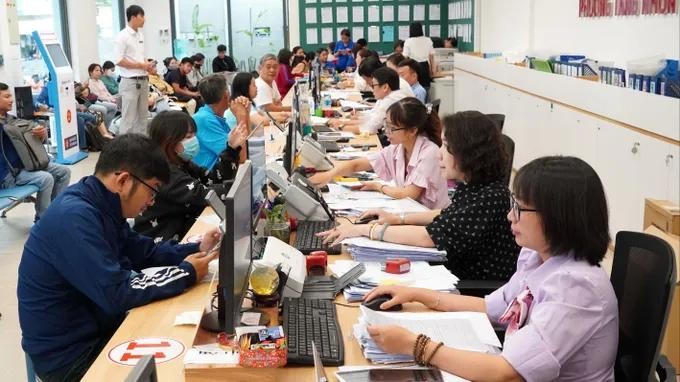
Implementing the regulation to end the use of non-specialized personnel at the commune level from May 31, 2026, many wards, communes, and special administrative units across Ho Chi Minh City have proactively reviewed and developed plans for appropriate restructuring and placement. The goal is to ensure benefits while stabilizing the mindset of this workforce during the transition period.
Pressure mounts as wards brace for end of non-specialized staff
These days, Nguyen Phuc Duc, in charge of propaganda work at the Party Committee of Tang Nhon Phu Ward, continues to report to the office as he has worked over the past eight years. While still performing his familiar duties, Duc has mentally prepared for the May 31 milestone, when the use of non-specialized personnel will officially end under the broader policy.
After more than eight years of service, including five consecutive years of outstanding performance, Nguyen Phuc Duc does not consider himself a “temporary worker.” “Our work is no different from that of civil servants. We often handle two to three areas simultaneously, along with many unassigned tasks,” he said. While supporting the policy of streamlining the apparatus, Duc expressed hope for a reasonable transition mechanism so that capable and experienced personnel with strong local knowledge can be appropriately reassigned.
Tang Nhon Phu Ward is among the most populous areas in Ho Chi Minh City, with more than 208,000 residents. In 2026, 80 official staff positions have been allocated. Meanwhile, the ward currently has 68 non-specialized personnel directly involved in Party, government, mass organization, and socio-political work. According to ward authorities, without this workforce, each civil servant would on average serve around 2,741 residents, creating significant pressure.
In practice, non-specialized personnel in Tang Nhon Phu Ward have long carried out duties comparable to those of civil servants. Each individual typically manages two to three fields, most hold university degrees, and many have extensive experience in specialized areas such as accounting, internal affairs, information technology, and social policy. An immediate reduction would shift the entire workload of these 68 individuals onto the existing staff, affecting processing times and, over the long term, impacting the morale and health of frontline officials facing an increasing workload.
Similar pressures are emerging elsewhere. In Linh Xuan Ward, which has 47 non-specialized personnel, cutting this workforce would leave each official responsible for approximately 2,400 residents. Chairwoman Nguyen Thi Kim Cuc of the Ward People’s Committee noted that many residents still require direct guidance when completing online administrative procedures. Without hands-on support, the effectiveness of administrative reform efforts could be undermined.
Wards map out support as 5,500 non-specialized staff face transition
The city is expected to see more than 5,500 commune-level non-specialized personnel either leave their positions or be reassigned before May 31. Localities have proactively reviewed their workforce and proposed transitioning some individuals into civil service or public employee roles, or referring them to jobs in the private sector.
Nguyen Thi Thu Huong, Secretary of the Party Committee and Chairwoman of the People’s Council of Hoa Hung Ward, said the ward is developing multiple plans to support and appropriately place affected personnel. In the short term, some individuals are being temporarily assigned to positions aligned with their expertise at the ward’s Construction Investment Project Management Board, local militia forces, or the Public Service Provision Center. For the remaining cases, Hoa Hung Ward continues to review and connect with local organizations to identify suitable employment opportunities.
“In the coming period, the locality will continue to proactively seek solutions, mobilize resources, and coordinate with relevant units to provide maximum support for this workforce, helping stabilize their livelihoods and morale during the transition,” Nguyen Thi Thu Huong said.
In Binh Tan Ward, Pham Thi Tuyet Nga, Vice Chairwoman of the Ward People’s Committee, said the locality has reviewed and categorized non-specialized personnel into three groups to determine appropriate measures. Those wishing to leave are being assisted in completing procedures to receive benefits in accordance with regulations. Those eligible for recruitment into the civil service will be listed and submitted to the Ho Chi Minh City Department of Home Affairs for appraisal. The remaining individuals will be considered for placement in public non-business units under the ward, based on available positions and staffing quotas.
Some localities have proposed allowing continued contract-based employment for non-specialized personnel under a phased roadmap, potentially extending up to five years from 2026. This approach aims to ease immediate pressures while creating conditions for a gradual career transition.