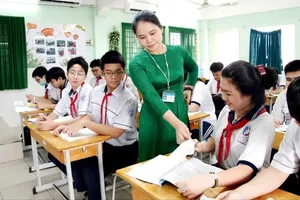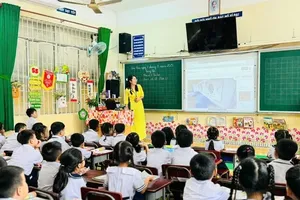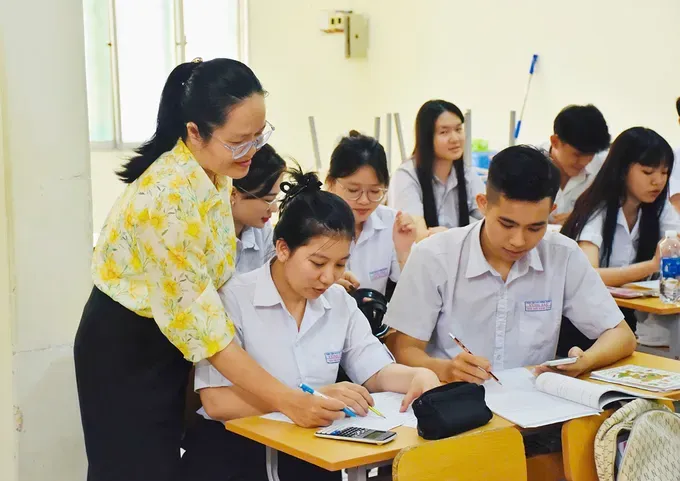
Since its promulgation in February 2025, Circular 29 has attracted significant public attention due to its novel provisions. Accordingly, public schools are only permitted to provide free extra tutoring on campus for three specific student groups of underperforming students, gifted individuals requiring advanced training, and graduating students voluntarily preparing for exams.
In addition, teachers are strictly prohibited from conducting paid extra classes for their own official students. After over a year in practice, this regulation has significantly curbed the rampant increase of extra classes. Consequently, educators now strongly prioritize their official curricular instruction, while students are successfully cultivating better independent study habits.
Nevertheless, the reality has also created new complications. Principal Nguyen Dinh Thai of Hoa Hoi High School in HCMC stated prior to Circular 29 schools allocated up to four weekly tutoring sessions. Currently, subjects receive only one or two free review periods. Consequently, ineligible students with genuine demand cannot participate, causing extra tutoring to migrate toward expensive external centers or private residences.
Public schools charge merely VND10,000-12,000 (US$0.46) per period due to government funding and offer exemptions for disadvantaged learners. Conversely, private centers charge VND20,000 ($0.76) per period, or even higher. The Principal explained that these external facilities must independently invest in their own commercial infrastructure. This fundamental difference in operating costs makes higher tuition fees an absolutely inevitable reality for all affected students and their families seeking additional educational support.
Tran Thi Diep from Tam Thang Ward of HCMC disclosed that she spends VND3.6 million ($137) monthly for her two children to take extra Math, English, and Literature classes at an extra curriculum center.
After school, Nguyen Thi Hai Yen from Vung Tau Ward of HCMC feeds her children before rushing them to a tutoring center until nearly nine o’clock. Although these external classes severely disrupt family life, Yen asserts it is an entirely voluntary choice. Given intense exam pressures, extra tutoring has become a necessity for gaining admission into competitive public high schools and prestigious universities, she clearly explained.
The intense exam pressure, it seems, is the primary reason many families enroll their children in extra classes to seek peace of mind. Meanwhile, the infrastructure of many such centers fails to guarantee adequate learning conditions and safety standards, particularly regarding fire prevention and fighting. Also, the management of teaching quality and curriculum remains challenging to control.
Vice President of the Vietnam Psycho-Pedagogical Association Nguyen Ngoc Nguyen observed that while Circular 29 tightened in-school tutoring, it failed to address root causes. Since fundamental demands remain unresolved, this activity merely shifts externally, inadvertently increasing the financial burden on parents.
According to the Vice President, the core issue isn’t regulatory tightening, but educational quality and examination organization. Official class hours must empower students to firmly grasp knowledge and develop independent study skills, eliminating reliance on extra tutoring. Concurrently, curriculums must suit student capacities to avoid cognitive overload. Most importantly, intense exam pressure must be recalibrated.
Only when testing closely aligns with academic curriculums, combined with practical student streaming and career orientation, can this knot be effectively and permanently untangled.
The Ministry of Education and Training (MOET) is currently soliciting feedback on a draft Circular amending and supplementing Circular 29. The Circular will be revised to not prohibit legitimate extra tutoring and learning, thereby not restricting the lawful learning demands of students and the teaching rights of educators according to the law. The focal point of the draft is to fortify management solutions following regulations, strictly minimizing disguised extra tutoring, the coercion of students into taking extra classes, and profiteering from these activities.
The MOET’s amendment of Circular 29 to acknowledge the legitimate needs of learners and the teaching rights of educators is deemed necessary; however, in the long run, systemic solutions are imperative.
Former Director Hoang Ngoc Vinh of the Professional Education Department under the MOET argues vaguely permitting legitimate tutoring without clear definitions creates loopholes for unjustified expansion.
To eradicate distorted tutoring practices, Vietnam needs profound innovation in assessment methods. The education sector must move away from measuring competence through rote memorization and scores. Overhauling examination approaches and question designs is essential. As long as format drilling and trick teaching persist, the phenomenon of studying merely to pass will undoubtedly endure.
On the other hand, many opinions suggest that to prevent situations where teachers coerce their own students into attending external centers, clear regulations are needed, stipulating that teachers employed at schools are prohibited from teaching at extra-curriculum centers. If a teacher desires a higher income, they could opt to resign from the school and teach exclusively at such a center.
Alongside elevating teaching quality, schools must promote independent research and provide robust career orientation to help students discover personal passions. Concurrently, administrative management requires strict reinforcement to ensure that loosening tutoring regulations does not stifle student creativity or cause educational regression.
Because education profoundly impacts the future human resources of Vietnam, the Government should attentively analyze diverse feedback. Exhaustive research is entirely necessary to formulate appropriate tutoring rules. This balanced approach must simultaneously guarantee the right to develop competencies while fostering equity and mitigating negative phenomena to the greatest extent.