The 2025-2026 academic year marked the first time the Education and Training sector implemented the Politburo’s Resolution No.71-NQ/TW, dated August 22, 2025, concerning developmental breakthroughs in education and training.
The Government, along with various ministries, departments, sectors, localities, educational institutions, and a massive contingent of teachers nationwide, has made strenuous efforts to roll out numerous solutions aimed at fundamentally and comprehensively overhauling the quality of education and training.
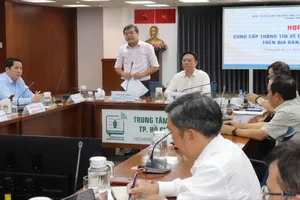
Speaking at a conference summarizing the 2025-2026 academic year and deploying tasks for the 2026-2027 term, Permanent Deputy Minister of Education and Training Pham Ngoc Thuong stated the nation is currently short of 45,691 classrooms and 27,084 functional rooms.
The national average for minimum teaching equipment stands at a mere 50.6 percent. Alarmingly, roughly 1 million children aged 3-5 aren’t enrolled in classes, and 1.6 million school-aged children lack proper conditions to attend.
Regarding disadvantaged regions, Lam Dong Province People’s Committee Chairman Ho Van Muoi pointed out three specific bottlenecks. These include stark disparities in educational quality, severe teacher shortages for integrated subjects, and profoundly uneven digital infrastructure. Meanwhile, in major urban areas, student populations are surging rapidly, but classroom conditions just haven’t caught up.
According to various local leaders, the fundamental cause exacerbating exam pressure and rampant extra tutoring is the stark discrepancy between enrollment quotas and actual learning demands. The sheer volume of students surging in a short timeframe has simply overwhelmed immediate response capacities.
Concurrently, the land fund earmarked for education remains remarkably tight. Sluggish school construction means classrooms are constantly falling behind the public’s actual demands.
By late 2026, the country had had 36,794 public general education institutions with 582,659 classrooms, achieving an 89.6-percent rate of solidly built rooms.

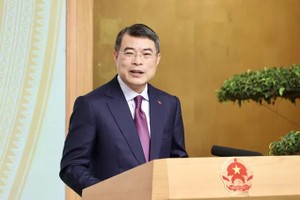
Heading into the 2026-2027 school year, the sector has laid out core tasks to tackle these facility bottlenecks. Prime Minister Le Minh Hung demanded the Ministry of Construction coordinate with localities to urgently review planning, ensuring adequate land funds for schools in urban zones and border communes. He stressed that new residential zones must not be developed without accompanying schools.
The Prime Minister directed localities to prioritize investment capital for areas severely lacking classrooms; furthermore, they must rigorously review redundant public headquarters to continue allocating them for educational facilities.
Statistics from the Ministry of Education and Training reveal that as of June 2026, the entire country was short of 104,516 tenured teachers compared to official quotas. It’s projected that even after nationwide school reorganizations, the 2026-2027 academic year will still desperately need an injection of roughly 43,267 teacher payrolls.
For Minister of Education and Training Hoang Minh Son, the primary culprit behind localized surpluses and shortages inherently lies in fragmented recruitment mechanisms and a sheer lack of local regulation. In some places, quotas exist but haven’t been filled. Elsewhere, the structural ratio of educators is wildly skewed, and workforce deployment simply isn’t genuinely flexible.
Consequently, solving this puzzle isn’t just about blindly pumping up numbers; it’s about recruiting accurately and utilizing efficiently. To combat this severe shortage before the new school year kicks off, the Ministry has urged localities to forcefully deploy three synchronous solutions.
Authorities must vigorously execute the merging of educational institutions to form large-scale schools. This involves reassigning a significant chunk of managerial staff to direct teaching, while efficiently coordinating the teacher workforce across satellite campuses.
Provincial and municipal departments must be explicitly designated as central hubs for recruiting and mobilizing educators. They need to rigorously review payroll quotas while seamlessly regulating existing teachers across their jurisdiction.
Where full tenured quotas aren’t allocated, localities should sign flexible contracts with qualified personnel. They must proactively hire external experts and coaches to handle highly specialized subjects where recruiting official teachers remains notoriously difficult.
Standardizing curricula, issuing STEM and AI educational frameworks
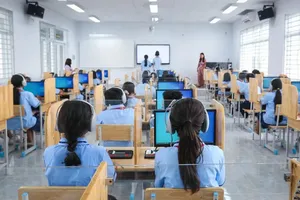
According to Minister Hoang Minh Son, the Ministry is actively drafting a blueprint focusing on science, technology, IT, digital capacity, and artificial intelligence. For the 2026-2027 school year, the Ministry will streamline content, ramp up practical activities, experiential learning, STEM, digital capacity, AI, foreign languages, arts, and physical education, while systematically integrating English as a second language.
Within this framework, general education curricula will be massively adjusted to reinforce modern topics. Regarding higher education, the nation will eliminate poor-quality programs to meticulously track labor market demands. Key institutions will scale back quotas to intensely focus on elevating training quality and postgraduate education.
Alongside standardizing curricula, Hanoi Department of Education and Training Director Nguyen Van Hien petitioned the Ministry to issue guiding circulars on STEM equipment standards. He also pushed for legal frameworks helping localities propel extra-curricular educational activities.
As for turning English into a second language, HCMC Department of Education and Training Deputy Director Nguyen Bao Quoc noted that human resources remain a formidable challenge. Specifically, teachers capable of instructing purely in English haven’t met the mark, and general proficiency remains quite limited.
Coupled with that, recruitment and remuneration policies aren’t enticing enough to reel in talent, and public awareness remains starkly uneven.