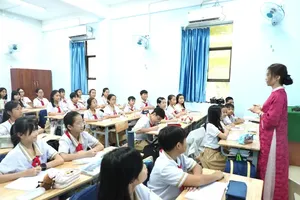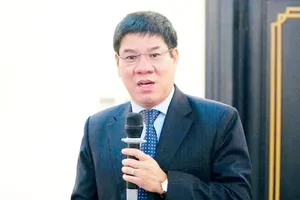
For Prof Dr Huynh Van Son, President of HCMC University of Education, the current contingent of educators is highly proactive and ready to embrace novel teaching methodologies. The pressing issue is figuring out how to provide adequate conditions for authentic innovation.
The glaring void in teacher training lies in the stark discrepancy between cognitive awareness and practical capacity. Teachers understand the urgent requirement to foster student competencies, yet they often find themselves bewildered when translating this into lesson plans and assessment tools. At the end of the day, educators desperately need training in what they genuinely lack, rather than just being fed standard curriculum mandates.
Authentic efficacy is manifested through tangible shifts in professional capacity, not merely by the sheer quantity of seminars or certificates. Furthermore, while teachers are demanded to revamp their methods, student evaluation remains glaringly unsynchronized. If Vietnam continues to test the mere ability to regurgitate knowledge, it's incredibly difficult to find motivation for genuine change.
As a rule of thumb, teacher policies must be viewed through a systemic lens. Aside from incrementally boosting income, it’s essential to pay closer attention to working environments and reducing administrative burdens.
Teachers don’t just need digital infrastructure and learning materials; more importantly, they must be fundamentally respected, trusted, and empowered. Notably, welfare policies must be tailored for educators in disadvantaged regions, those undertaking specific tasks, and sectors suffering from personnel shortages.
Policies must guarantee that teachers can comfortably survive and thrive within their profession. It’s simply impossible to demand an educator to innovate fueled solely by a sense of duty. To maximize their intrinsic potential, it’s imperative to construct a developmental pathway attractive enough so that excellent teachers can clearly envision a robust future in the profession, possessing ample opportunities to study, research, and be rightfully acknowledged.
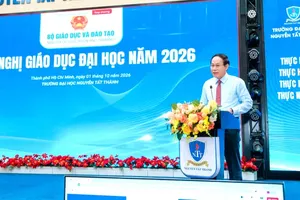
As stated by Dr Tran Dinh Ly, Vice President of Nong Lam University, navigating the information technology boom poses a significant hurdle. “In this era of explosive information technology, my deepest concern is how to forge a human resource pool that genuinely satisfies a rapidly mutating world,” he explained.
Higher education doesn’t just desperately need excellent input quality; it must continuously and seamlessly convert that into training quality, professional competency, and the tangible value that learners can generate post-graduation. Training curricula across various professions must relentlessly pivot from “teaching what we already have” to “training what society and the future actually need,” effectively satisfying the rigorous demands stemming from reality.
Many universities currently boast stellar enrollment results, yet they glaringly lack a long-term vision. Several foundational training majors, which crucially serve the prerequisite of sustainable development, still haven’t managed to entice learners. Meanwhile, the nation is in dire need of highly skilled personnel to safeguard food security, propel green agriculture, drive the bio-economy, manage natural resources, and effectively adapt to climate change.
“I highly expect the State to introduce more policies regarding ordering, investing in, and actively supporting learners in these essential fields,” he stated, hoping for a more robust shift from mere “linkages” to “co-creation” among the State, universities, scientists, enterprises, learners, and society at large.
Ultimately, higher education must boldly transition from obsessing over how many students are recruited to focusing on what profound value is created for society, accurately measuring quality through output results and the ability of learners entering the fiercely competitive labor market.
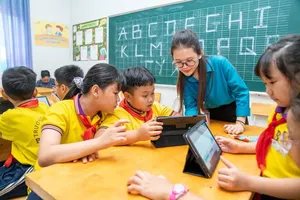
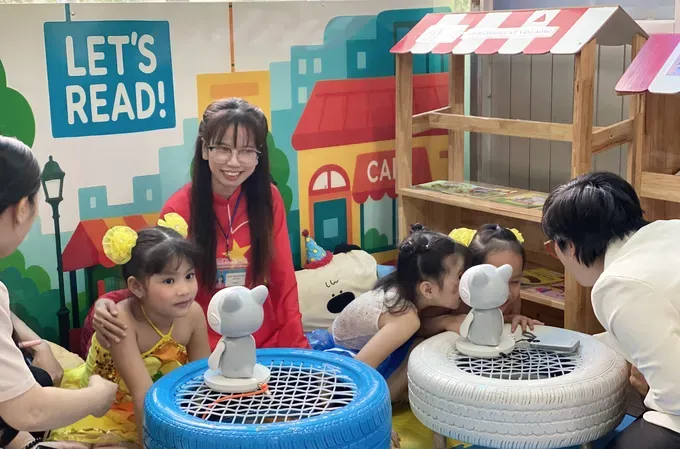
For Chau Hien Duc, Ho Chi Minh Communist Youth Union Secretary and Grade-4 Level Teacher Leader at Luong Dinh Cua Primary School in HCMC, the 2026-2027 academic year ushers in stringent new demands. Teachers mustn’t merely impart standard skills, but actively mold citizens equipped with robust digital capacity, creative thinking, and a profound sense of responsibility. To realize this ambitious goal, educators need to proactively innovate within every single educational activity and daily interaction.
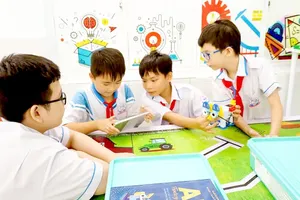
Digital transformation within schools shouldn’t be simplistically misunderstood as merely utilizing computers, interactive screens, or artificial intelligence. Instead, it must meticulously target effective teaching, foster better individualization, and generate additional opportunities for students to genuinely discover new ideas.
Within every lesson, students are expertly guided on how to search for, filter, and rigorously verify information. They’re strategically oriented to use the internet responsibly, resolutely avoiding sharing personal data, refusing to participate in cyberbullying, and utilizing AI to serve their studies with utmost honesty. All in all, authentic pedagogical innovation stems from a marginally better lesson, timely attention to a student, or a technological application deployed exactly at the right time.
“I sincerely hope schools will create more favorable conditions for teachers to boldly innovate, seamlessly share digital materials, and widely replicate practical initiatives,” she noted. “Ultimately, we must fundamentally embrace digital transformation to ensure students develop comprehensively, resolutely refusing to chase hollow achievements while strictly aiming for concrete efficacy from every single learner.”