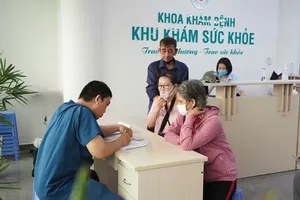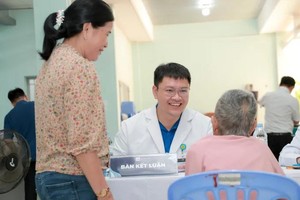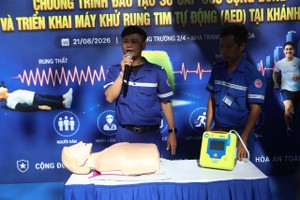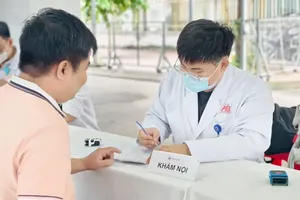
The conference was chaired by Vice Secretary of the Party Committee and Chairman of the Vietnam Fatherland Front Committee of Ho Chi Minh City, Nguyen Phuoc Loc.
Delivering his directive remarks at the conference, Mr. Nguyen Phuoc Loc acknowledged the efforts of 30 communes, wards, and special zones in the eastern area of Ho Chi Minh City in implementing community health examinations. However, he noted that the achieved results remain only an initial foundation. In the context of increasingly higher healthcare demands and the rapid pace of population aging, Ho Chi Minh City needs more fundamental and long-term solutions.
The implementation of periodic health check-ups for residents from 2026 is a major policy with profound social significance. It also marks an important shift from a “treatment-oriented” mindset to a “proactive healthcare” approach, from late disease detection to early detection, early management, early treatment, and safeguarding public health from the grassroots level.
Ho Chi Minh City aims that by 2030, each resident will receive at least one periodic health examination per year, with results updated to electronic health records for lifelong health management.
He requested that Party committees and authorities at all levels identify this as a key political task, ensuring that no aspect of citizens’ healthcare is overlooked, particularly for vulnerable groups.
For localities with large geographical areas or remote regions, flexible and proactive arrangements should be made so that people are not restricted in accessing healthcare services due to geographical distance or transportation conditions.
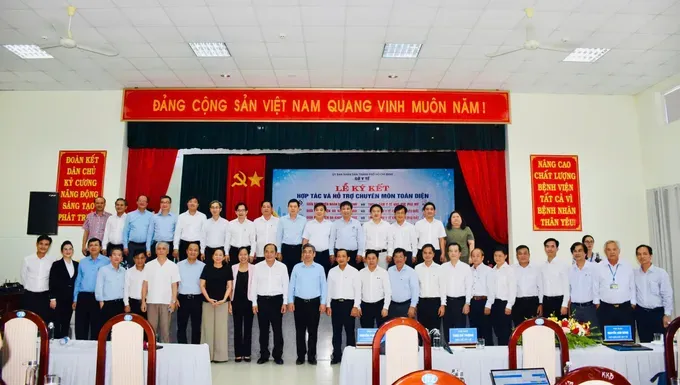
On the same day, the Ho Chi Minh City Department of Health held a ceremony to sign comprehensive professional cooperation and support agreements between Gia Dinh People’s Hospital and Phu My Regional Health Center; Ba Ria General Hospital and Chau Duc Regional Health Center; Vung Tau General Hospital and Long Dat Regional Health Center; and Pham Ngoc Thach Hospital and Pham Huu Chi Lung Hospital.
Attending and delivering remarks at the ceremony, Vice Secretary of the Party Committee and Chairman of the Vietnam Fatherland Front Committee of Ho Chi Minh City Nguyen Phuoc Loc commended the healthcare sector’s efforts in developing a multi-center, multi-tier, and multi-polar healthcare system. This aims to ensure that all residents have access to high-quality medical services, leaving no one behind.
He believed that close coordination between local authorities and the healthcare sector would contribute to improving the quality of healthcare and residents’ quality of life, while helping build Ho Chi Minh City into a specialized healthcare hub in Asia.
According to the Ho Chi Minh City Department of Health, the healthcare sector is implementing three synchronized support models, including the rotation of doctors and healthcare workers from city-level hospitals to local areas; comprehensive support from higher-tier hospitals to regional health centers; and the merger or transformation of regional health centers into branches of major hospitals.