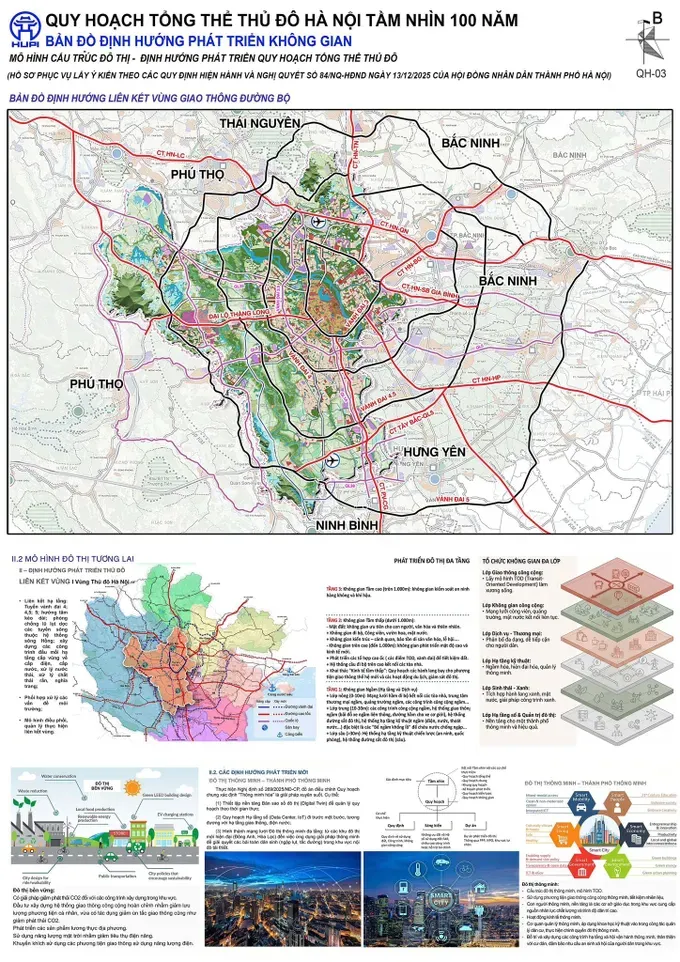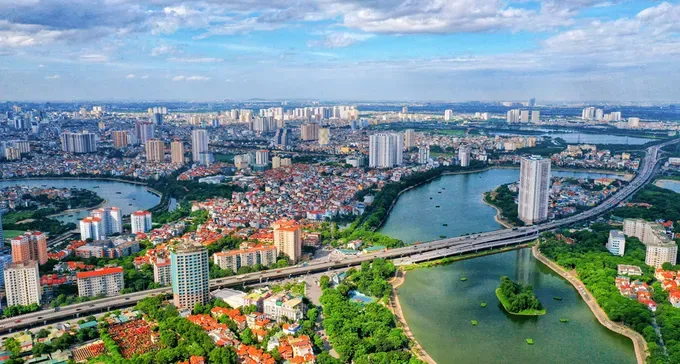
This master plan is regarded as a historic blueprint, expected to define Hanoi’s urban landscape over the coming decades while laying a solid foundation for sustainable and comprehensive development. It also aims toward the milestone celebration of the 1,100th anniversary of Thang Long – Hanoi.
Accordingly, the capital’s master plan is developed based on the guiding philosophy of “Civilization – Culture – Modernity.” Unlike previous planning frameworks, this iteration establishes a comprehensive vision spanning an entire century, positioning Hanoi as a primary growth pole of the Red River Delta and a globally connected city.
The core objective is to fundamentally address longstanding internal challenges, including infrastructure overload and environmental pollution, while simultaneously unlocking new development spaces grounded in the digital economy and green economy.
Regarding the urban development model, the master plan defines Hanoi’s spatial structure based on a clustered, multi-centered urban model. The focus is on establishing key urban growth areas in the North, including Dong Anh, Me Linh, Soc Son; the West, namely Hoa Lac, Xuan Mai; and the South, such as Phu Xuyen.
These zones are planned to evolve into hubs for services, international integration, as well as science and technology, education, and logistics. They are expected to serve as economic “levers” for the entire capital region, while remaining under the city’s unified administrative governance system.
Notably, the plan identifies nine principal spatial development axes, with the Red River landscape corridor designated as the “backbone axis” — a central convergence of cultural, economic, and recreational activities. The harmonious development of both riverbanks is expected to shape a civilized and modern urban landscape, while ensuring strong connectivity between newly developed urban areas and the millennia-old heritage core.
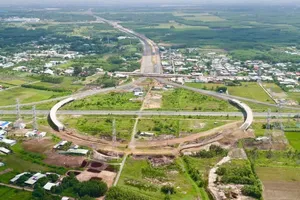
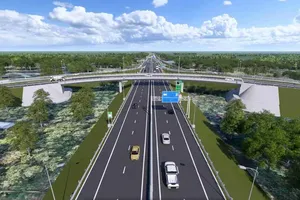
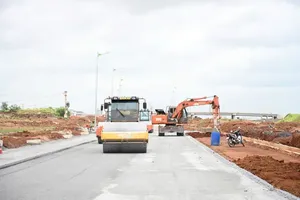
To realize this vision, the Hanoi People’s Committee plans to mobilize resources of up to VND11 quadrillion (US$418 billion) by 2045, with priority given to completing a strategic transport infrastructure framework, including ring roads and a metro line network.
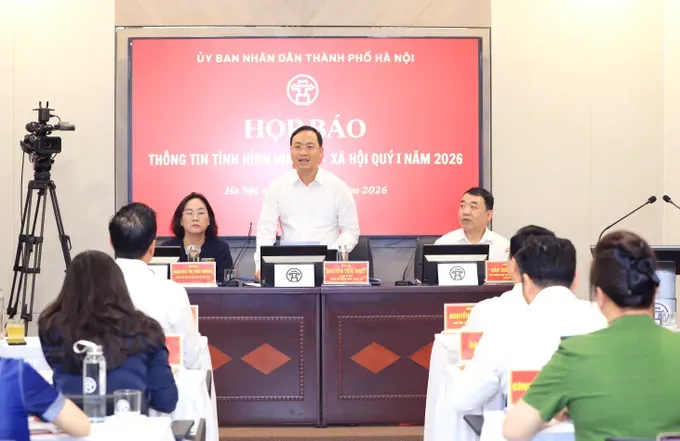
According to the Hanoi People’s Committee, the implementation of the above-mentioned master plan is closely associated with the introduction of specific mechanisms under the amended Capital Law. This serves as a critical legal lever, enabling Hanoi to exercise greater autonomy in land management, public investment, and talent attraction.
In particular, the transit-oriented development (TOD) model will be strongly promoted around metro stations, fostering the formation of compact, modern urban areas and alleviating population pressure on the historic inner city. Hanoi also emphasizes that the master plan is not merely a set of construction targets, but a commitment to improving the quality of life. The 100-year vision aims to build a “Green – Smart” capital, where heritage values are preserved in parallel with the development of financial centers and high-tech industrial zones.