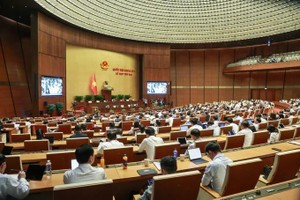
On November 4, during its 7th session, the 17th Hanoi People’s Council passed a resolution piloting specific mechanisms and policies for the investment of five metro lines, with a cost cap of $120 million per kilometer.

The five metro lines, namely lines 1, 2, 8, 10, and 14, span a total length of 253.5 km, with a combined investment exceeding VND1 quadrillion (US$38.9 billion). Hanoi aims to complete these lines by 2030.
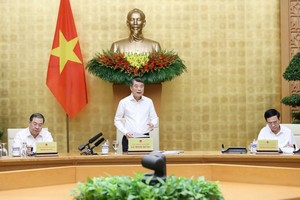
Clarifying the proposal before the Municipal People’s Council, Vice Chairman of the Hanoi People's Committee Truong Viet Dung noted that launching five metro lines concurrently demands strict oversight of construction timelines, capital raising, financial liabilities, and post-completion operations.
The City People’s Committee proposed maintaining the US$120 million/km cap, while continuing to refine the calculation methodology, clarify the scope of costs, and strictly oversee contract execution. Cost control measures must not come at the expense of quality, safety, or technological standards.
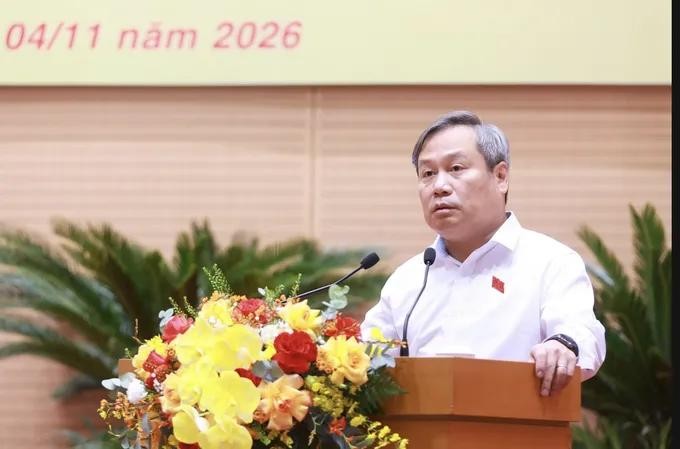
Speaking during the session, Lieutenant General Nguyen Thanh Tung, Director of the Hanoi Police, raised concerns regarding scenarios where construction costs might exceed the $120 million/km cap. He suggested that an appropriate adjustment mechanism should be in place, noting that any cost overruns across all five projects could be substantial.
In response, Vice Chairman Truong Viet Dung clarified the components used to determine the cost cap and asserted that if costs exceed $120 million per kilometer, the contractor must bear the burden; there is no scenario in which the city would provide additional funding.
Speaking before the City People’s Council, Chairman of the Hanoi People’s Committee Vu Dai Thang added that this price point serves as the basis for negotiating the selection of a strategic contractor, preparing the total investment estimate, monitoring contract values, and defining contractor responsibilities.
The city’s new transit infrastructure comes with an absolute price ceiling of $120 million per kilometer—and not a penny more. The Chairman affirmed that no cost adjustments or extra expenses will be permitted, adding that city monitors will rely on project designs, independent audits, and contractual terms to strictly enforce the spending cap during construction.